
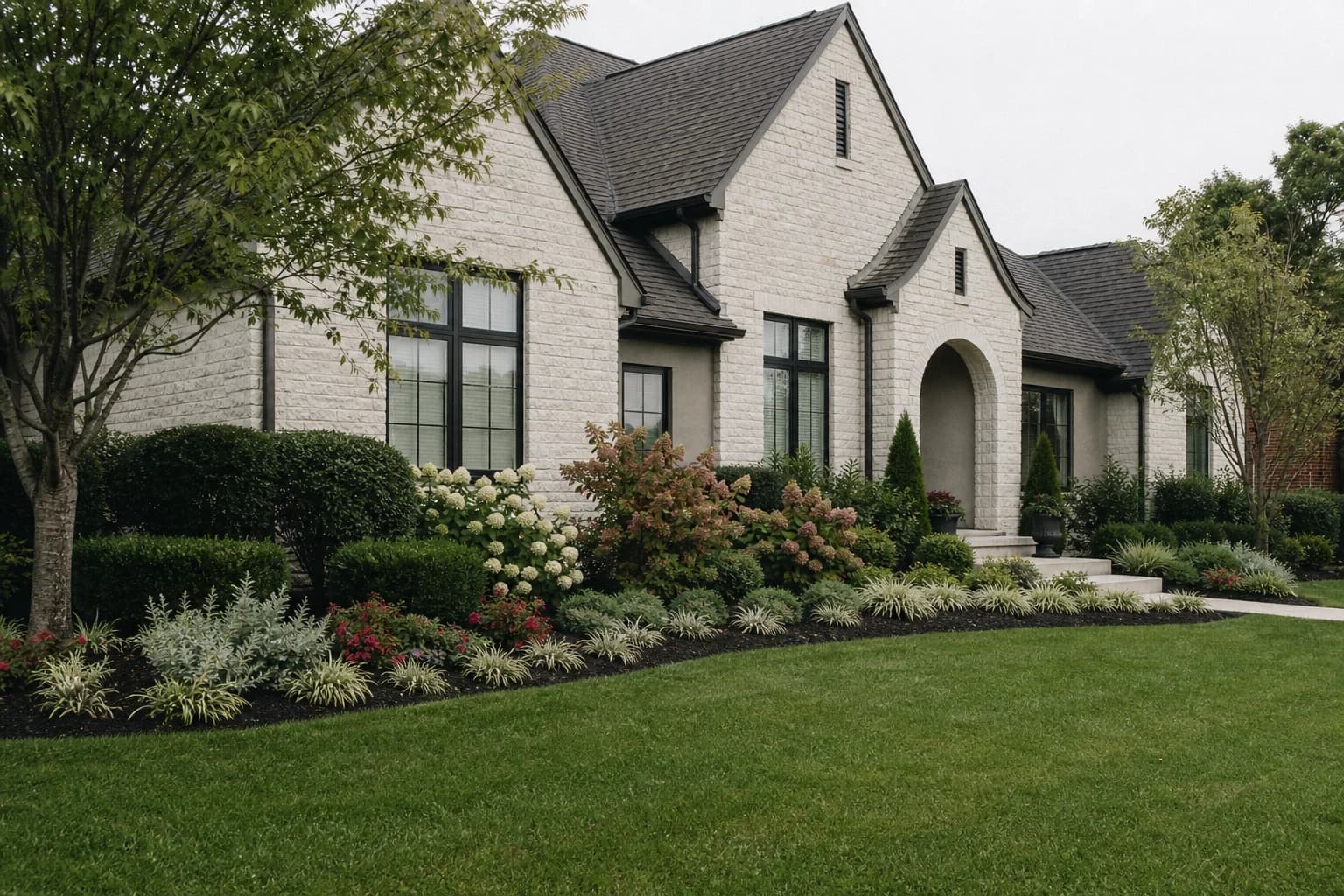
The Best Shrub Is the One You Do Not Have to Fight
A shrub should not spend its life being hacked away from a window, leaning across a walkway, or fading in the wrong light. Good plant selection prevents that fight before it starts.
Begin with the house. Look at the windows, entry, corners, downspouts, and the depth of the planting bed. Then decide what the planting needs to do: hold its shape through winter, add flowers, soften a shaded area, or give a tall wall some balance.
Four Useful Jobs Around the Front of a House
Plant names matter, but the job comes first. These are four common roles we plan around Lexington homes.
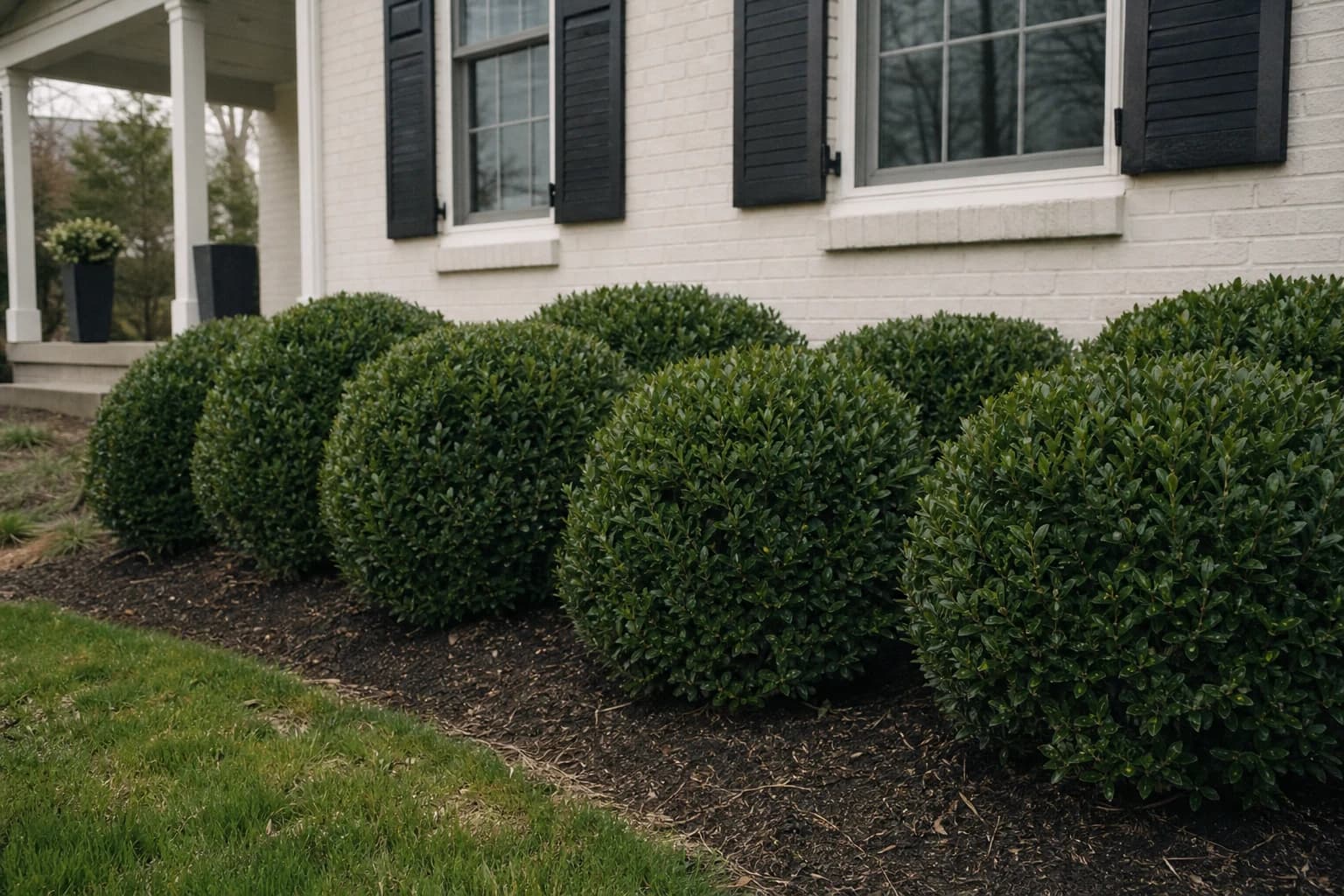
YEAR-ROUND STRUCTURE
Hold the Bed Together All Year
Boxwoods and taxus can give a front bed a steady backbone after flowers fade and leaves drop. Repeating a few strong shapes usually looks calmer than filling the bed with one of everything.
The variety still matters. Some boxwoods stay compact while others become much larger, so the label on the pot deserves more attention than the size of the pot.
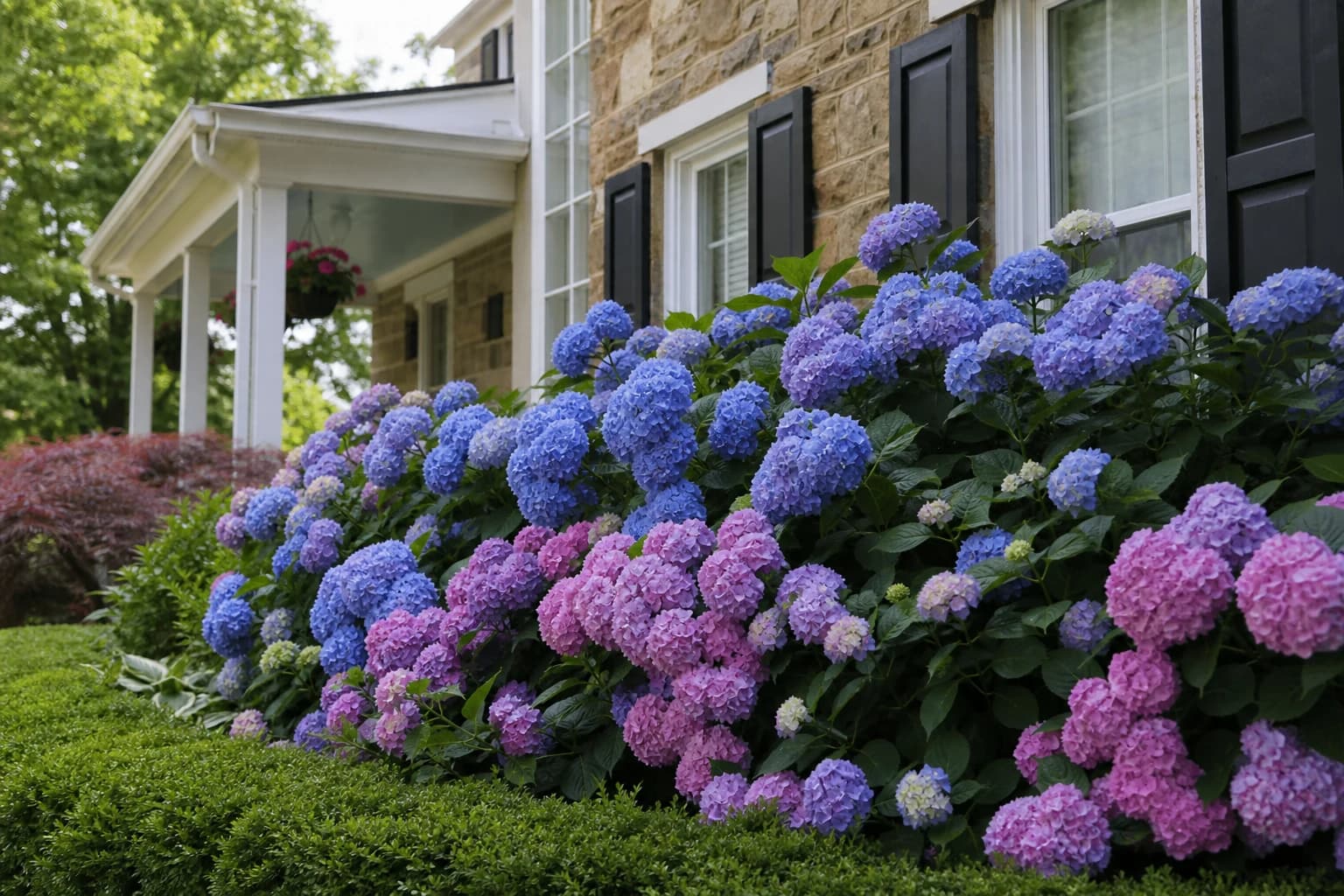
SEASONAL COLOR
Bring Color Without Taking Over the Entry
Hydrangeas can bring generous summer color, but the type and location make a real difference. Bigleaf hydrangeas often appreciate gentler morning light and protection from hot afternoon sun. Panicle hydrangeas can usually handle brighter exposure.
Place flowering shrubs where their color supports the entrance instead of blocking it. A few well-positioned plants can do more than a crowded row.
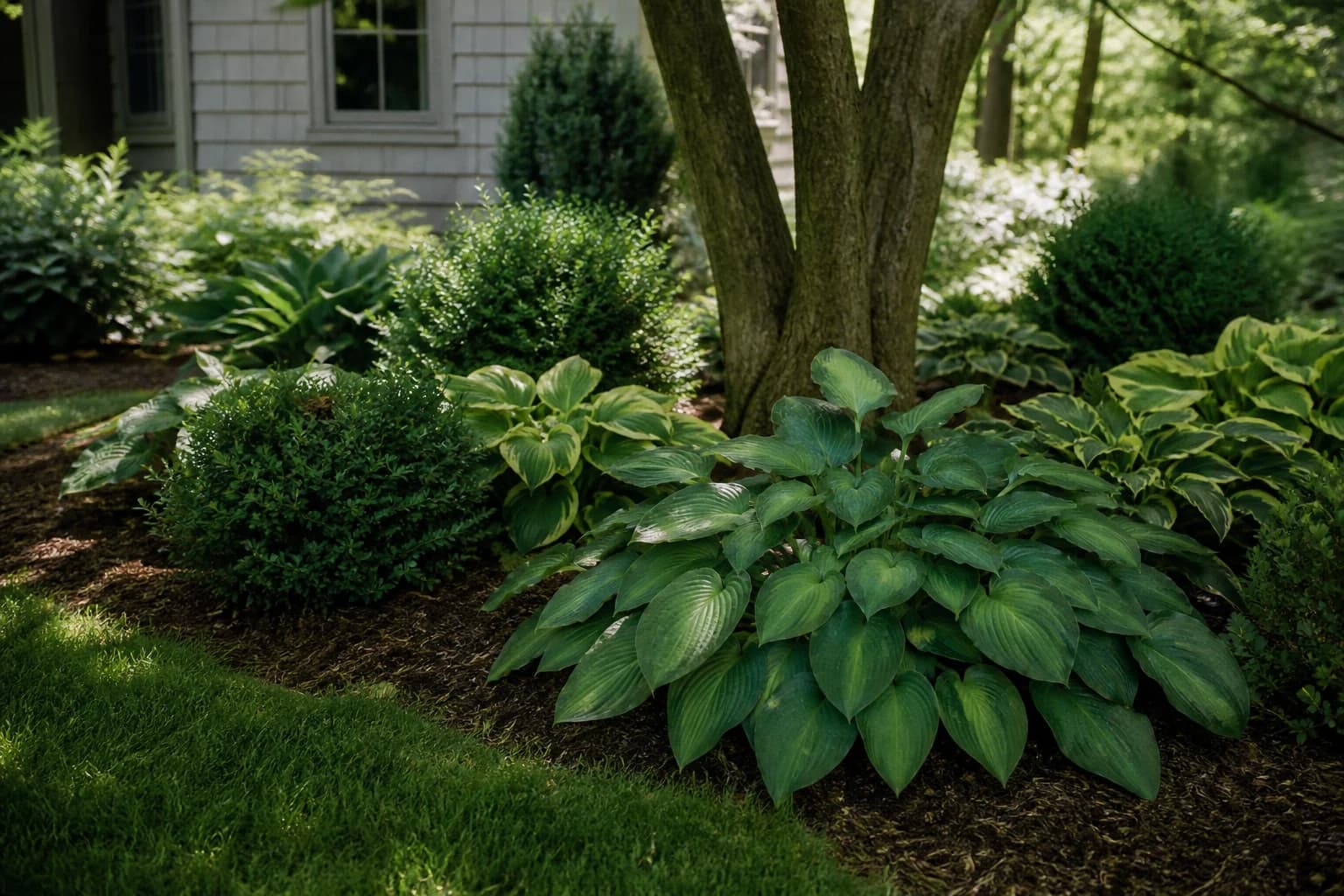
SHADED BEDS
Make a Shaded Bed Feel Intentional
Shade is not empty space. Hostas can add broad leaves and texture beneath trees or on the cooler side of a house, while selected evergreen shrubs keep the bed from disappearing in winter.
The useful question is not whether a plant tolerates shade. It is how much filtered light reaches the bed and whether the soil stays evenly moist or soggy after rain.
HEIGHT AND BALANCE
Add Height Where the House Can Handle It
A narrow evergreen can balance a tall corner or give a blank wall more presence. It should not be squeezed beneath a low window or planted where it will crowd the roofline.
When the real goal is to block a road, neighboring window, patio, or property line, that becomes a tree and privacy-screening decision rather than a simple foundation shrub choice.
Sun, Shade, and the Side of the House
Two beds on the same Lexington property can behave like two different yards.
Morning sun and afternoon shade
This can be a comfortable setting for many hydrangeas and shade-tolerant shrubs because the harshest part of the day is softened.
Hot afternoon sun
Choose plants that can handle heat and brighter exposure, then plan watering around the first growing season.
Deep or filtered shade
Use foliage, texture, and a few reliable evergreen forms instead of expecting heavy flowering from plants that need more light.
Wet clay or a nearby downspout
Fix the water problem before planting. A shrub cannot outgrow poor drainage at the foundation.
A Simple Formula for a Front Foundation Bed
- 1.
Start with steady structure
Use a repeated evergreen shrub or another dependable form to give the bed shape through every season.
- 2.
Add one clear season of color
Choose flowering shrubs or perennials that work with the light and complement the home instead of competing with it.
- 3.
Keep the front edge lower
Lower plants and a clean mulch line make the deeper shrubs easier to see and keep the bed from feeling heavy.
- 4.
Repeat before adding more
Repeating a useful plant creates rhythm. Adding another variety creates another maintenance decision.
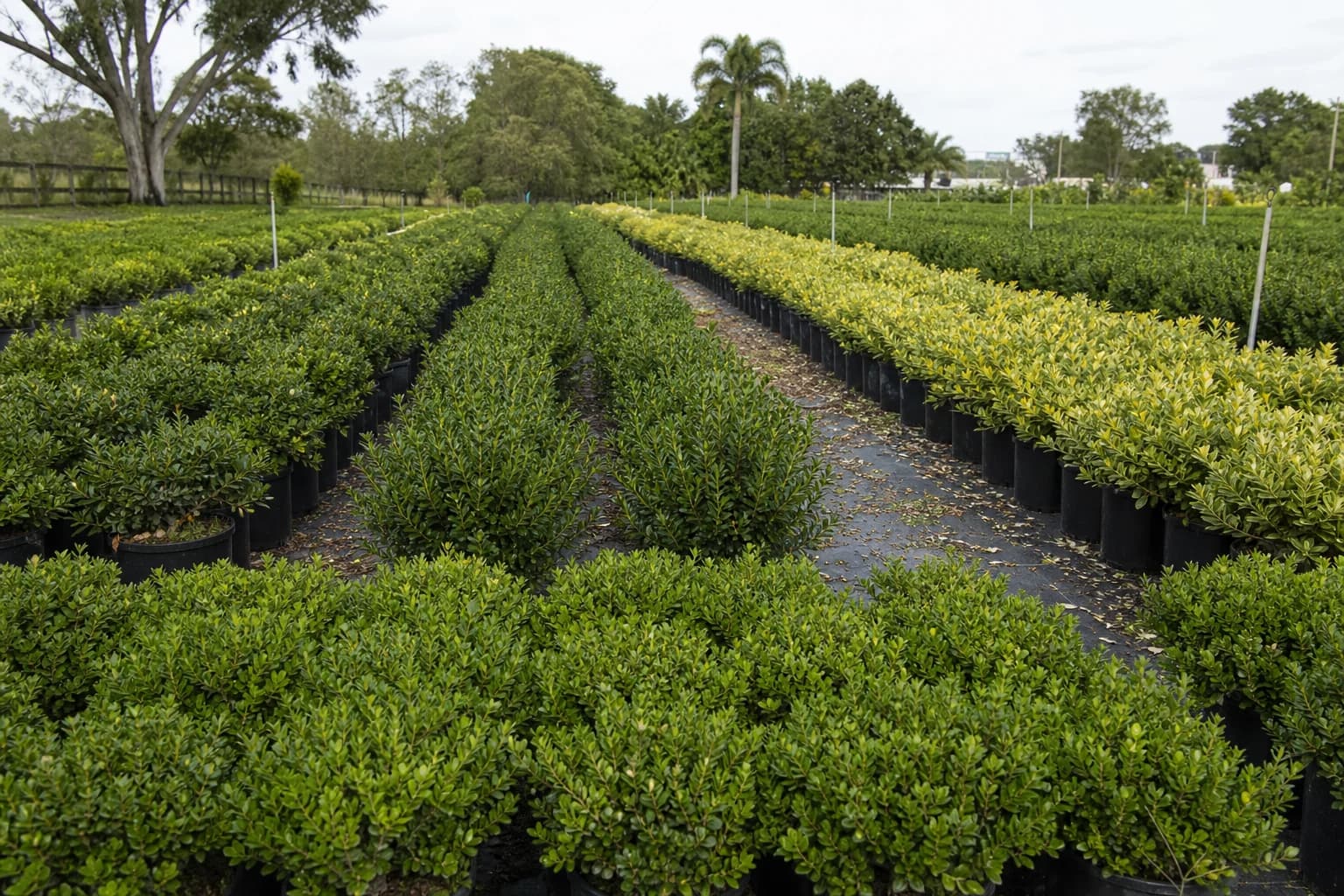
Some of Our Plants Start With Orlando's
GROWN AND SOURCED WITH CARE
We Know More Than the Name on the Tag
Orlando's grows several plants we regularly use, including varieties of boxwood, taxus, hydrangeas, hostas, and arborvitae. We also work with local providers and Clover Farm in the Northern Kentucky and Southern Indiana region when a project needs a different variety, size, or quantity.
That experience matters before planting day. We can compare the plant, the property, and the finished look instead of treating the nursery aisle like a catalog.
When we install the planting, we prepare the bed, set the plants, finish with mulch, clean the site, and explain the aftercare the new landscape needs.
Five Questions to Ask Before Choosing a Shrub
What should this plant do?
Choose structure, flowers, shade texture, height, or screening before choosing a variety.
How much light reaches this exact spot?
Watch the bed through the day instead of judging it from one moment.
What is above and beside it?
Windows, steps, walkways, utilities, and rooflines should narrow the choice.
What happens here after rain?
Standing water, washed mulch, and compacted clay are warnings to solve before planting.
How much pruning and cleanup do I want?
A plant that fits your maintenance habits will look better longer than one chosen only for its flowers.
Replace One Shrub or Rework the Whole Bed?
Replace one shrub
A single replacement makes sense when the surrounding plants still fit, the bed drains well, and the new shrub can match the existing rhythm.
Update the planting
Use a focused planting update when the bed shape works but several shrubs are overgrown, unhealthy, or poorly matched to the light.
Explore landscape plantingRedesign the layout
Start with design when the bed is too narrow, the plants hide the house, drainage affects the layout, or the whole front needs a clearer direction.
Explore landscape design