
Yard Drainage Problems in Lexington, KY: What Causes Standing Water and What Fixes It
A practical guide for diagnosing soggy lawns, downspout washout, standing water, and French drain questions before you request a drainage walkthrough.
QUICK ANSWER
Most yard drainage problems start with grade, runoff, soil, or a blocked path for water to leave.
Public market sources commonly place simple drainage corrections in the low-thousands and French-drain style work anywhere from roughly $10 to $50 per linear foot, but Lexington yards vary based on clay soil, slope, outlet location, trenching depth, and lawn restoration.
- Standing water in a low spot usually needs grading or a defined outlet before finish work.
- Downspout washout is often a surface-routing issue before it becomes a full underground drainage project.
- French drains work best when subsurface water has a clean path to a proper discharge point.
Use This Guide to Identify the Drainage Problem Before You Ask for a Fix
Good drainage work starts with the source of the water, the outlet, and the grade. This guide helps you name the problem clearly without guessing that every wet spot needs the same solution.
Best for
Homeowners dealing with standing water, soggy grass, downspout runoff, or mulch washout after rain.
Primary handoff
Drainage solutions when the source, slope, and outlet need to be inspected in person.
Pricing posture
Public market ranges are useful for orientation only; Orlando's quote depends on site access, length, depth, outlet, and restoration.
VISUAL DIAGNOSIS
Match the symptom to the likely drainage conversation
These are starting points for scoping, not final diagnoses. The site walkthrough still needs to confirm slope, soil, water source, and outlet.
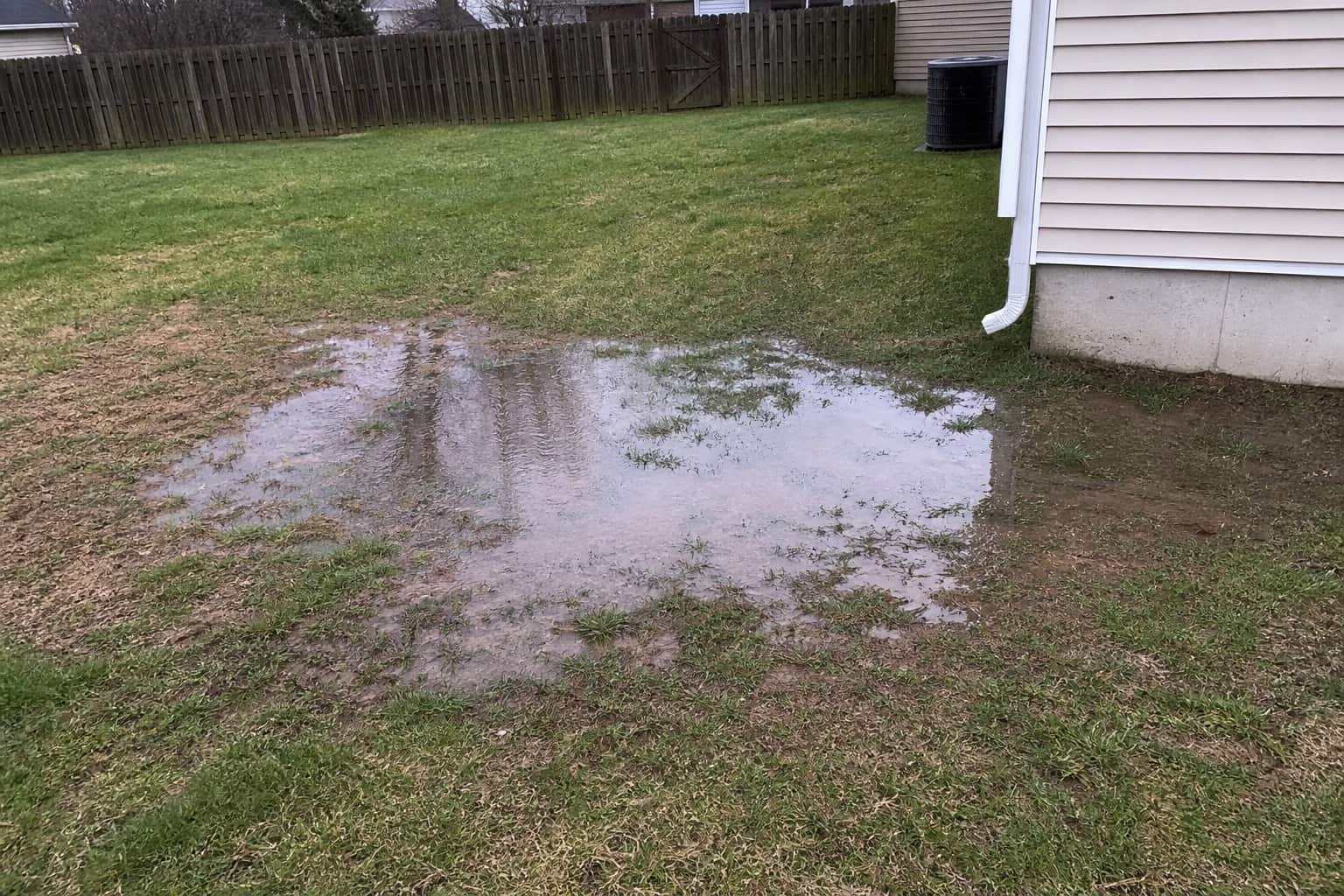
Pooling
Water sits in the lawn after rain because the low spot has no clean exit.
Expect a grade, swale, drain, or outlet conversation before any turf repair is scoped.
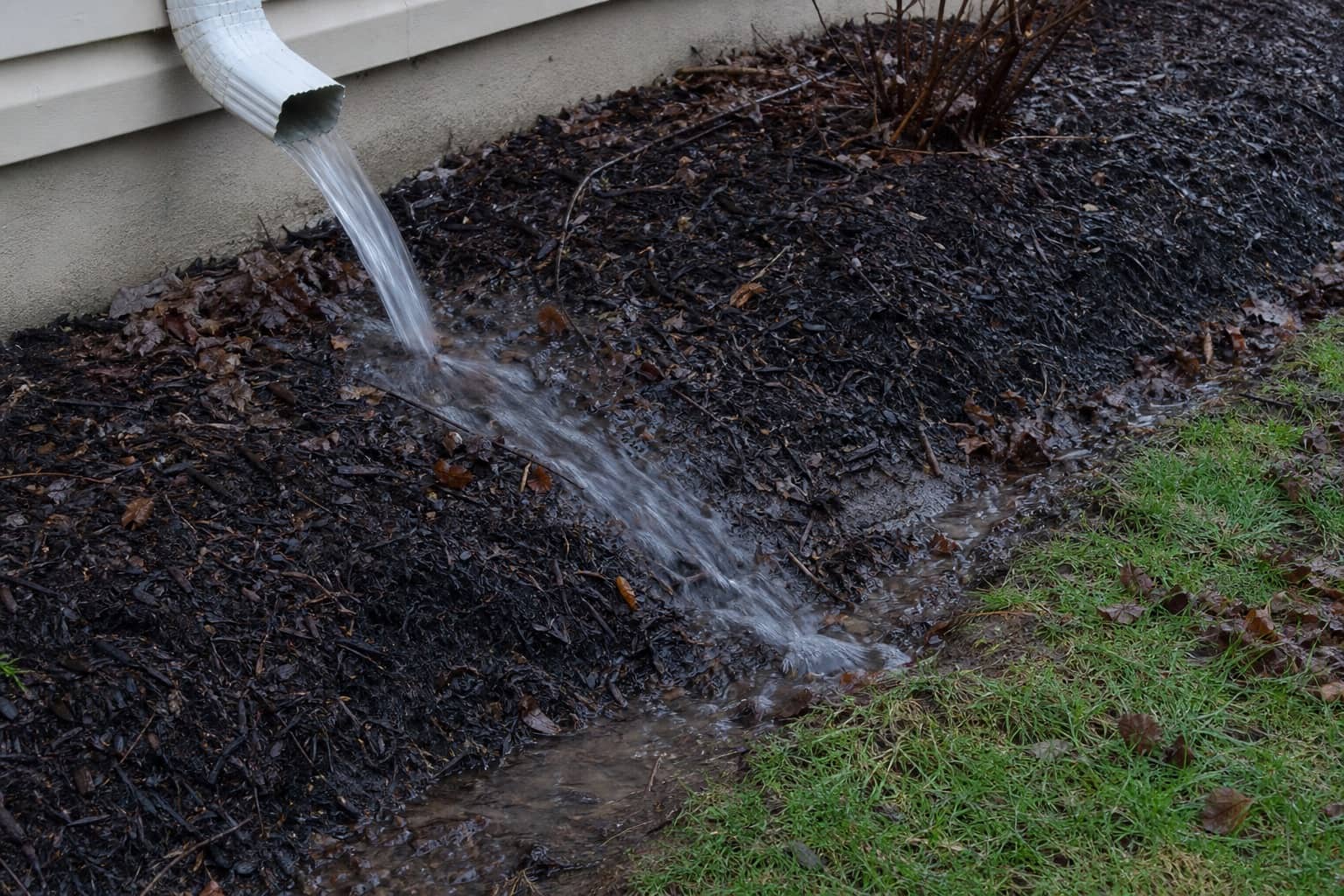
Washout
Roof water is being dumped into a bed or lawn area faster than the surface can handle it.
Downspout routing, surface grading, and bed repair should be evaluated together.
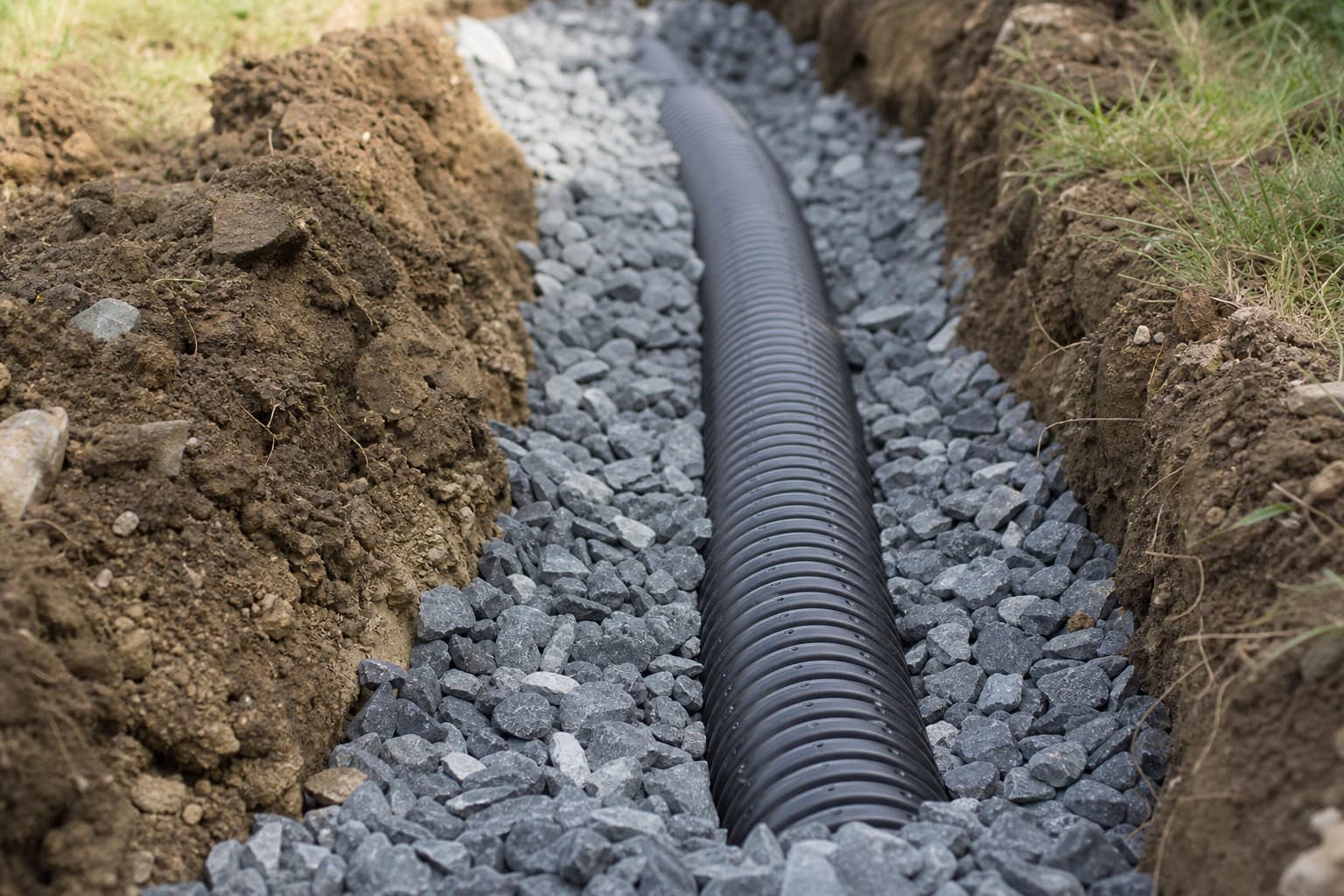
Subsurface water
Wet soil below the surface may need collection pipe, stone, fabric, and a real discharge point.
A French drain only makes sense if water can be collected and sent somewhere useful.
THE SHORT VERSION
- A drainage estimate should identify the water source, low point, outlet, access path, and restoration needs.
- French drains are not universal fixes; surface grading or downspout routing can be the better answer.
- Drainage should be solved before sod, mulch, patios, or retaining walls are used to cover the same problem.
SYMPTOMS
Common yard drainage symptoms and what they usually mean
Use the symptom to start the right conversation. The same wet area can have different causes depending on grade, roof runoff, soil, and where water can discharge.
- Standing water
A low spot, compacted soil, or blocked outlet keeps water trapped after rain.
This can point toward grading, a swale, or a drain tied to a proper outlet.
- Soggy side yard
Tight access, shade, clay soil, and roof runoff often combine in narrow side yards.
The fix may need drainage plus restoration if the grass is already damaged.
- Mulch washout
Water is moving across a bed too quickly or a downspout is discharging into the wrong spot.
A bed repair without rerouting water usually fails again.
- Water near the foundation
Grade, downspouts, and hard surfaces can move water back toward the house.
This needs careful routing and should not be treated as a cosmetic lawn issue.
FIX TYPES
Drainage fixes solve different water problems
The right fix depends on whether the water is moving on the surface, sitting below the surface, or being dumped from a roof or hardscape.
Surface grading
Best when the yard needs a cleaner path for surface water to move away.
- •Low spots
- •Minor slope correction
- •Swales
- •Surface runoff
Pipe and stone
Best when subsurface water needs to be collected and moved to a discharge point.
- •French drains
- •Catch basins
- •Perforated pipe
- •Stone backfill
Downspout routing
Best when roof water is causing bed washout, soggy grass, or water near the house.
- •Buried extensions
- •Pop-up emitters
- •Outlet planning
- •Bed protection
HANDOFF
When the drainage guide should become an estimate request
If
Water stays visible for more than a day after rain or returns after every storm.
Then
Request a drainage walkthrough so the grade, water source, and outlet can be inspected.
BEST NEXT STEP
This is drainage-led work and should be scoped before repair or finish work.
See drainage serviceIf
The lawn is already damaged by standing water.
Then
Solve the drainage first, then decide whether sod or lawn repair makes sense.
RELATED SERVICE
Fresh sod performs better after the water issue is corrected.
See sod installationIf
The water problem sits against a slope, wall, patio edge, or washed-out grade.
Then
Drainage may need to be coordinated with wall, patio, or grading work instead of handled as a narrow pipe job.
RELATED SCOPE
Slope and hardscape issues can change the drainage design.
See retaining wallsREQUEST READY
What to send before a drainage walkthrough
A clearer first message helps the crew understand whether the issue is surface runoff, downspout discharge, or a deeper drainage problem.
Photos after rain
Show the standing water, flow path, and nearby downspouts.
Approximate area
Estimate the length or size of the affected lawn, bed, or side yard.
Timing
Note whether water disappears quickly, sits overnight, or stays for days.
Access
Mention gates, narrow side yards, fences, slopes, or utilities.
Goal
Say whether you want a dry lawn, foundation protection, patio protection, or sod-ready grading.
Related Proof for Drainage-Led Scoping
These examples are not drainage price sheets. They show the finish standards and related service owners that often come after a drainage issue is understood.
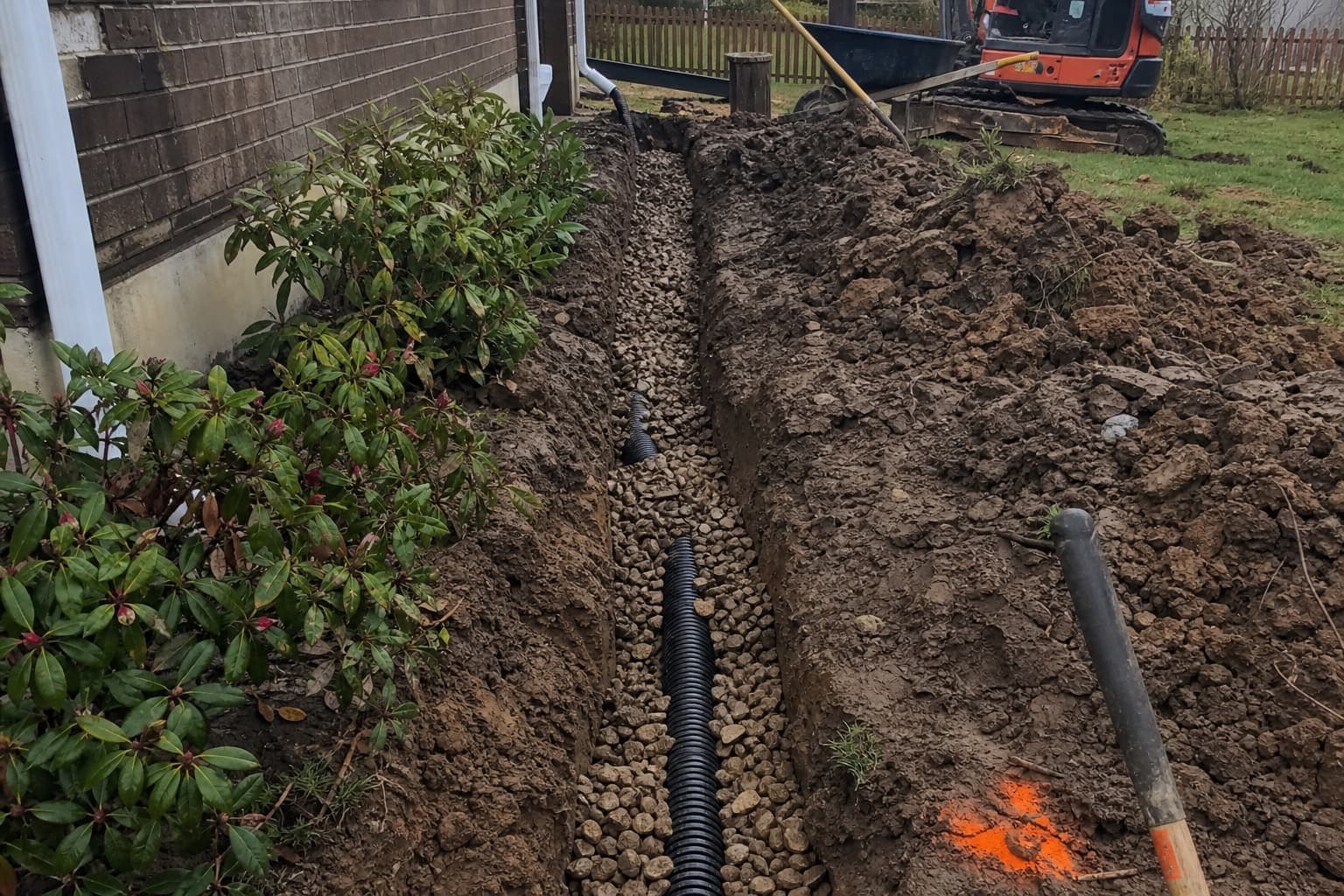
Drainage Solutions
The direct service owner for standing water, French drains, downspout routing, and wet-yard diagnosis.
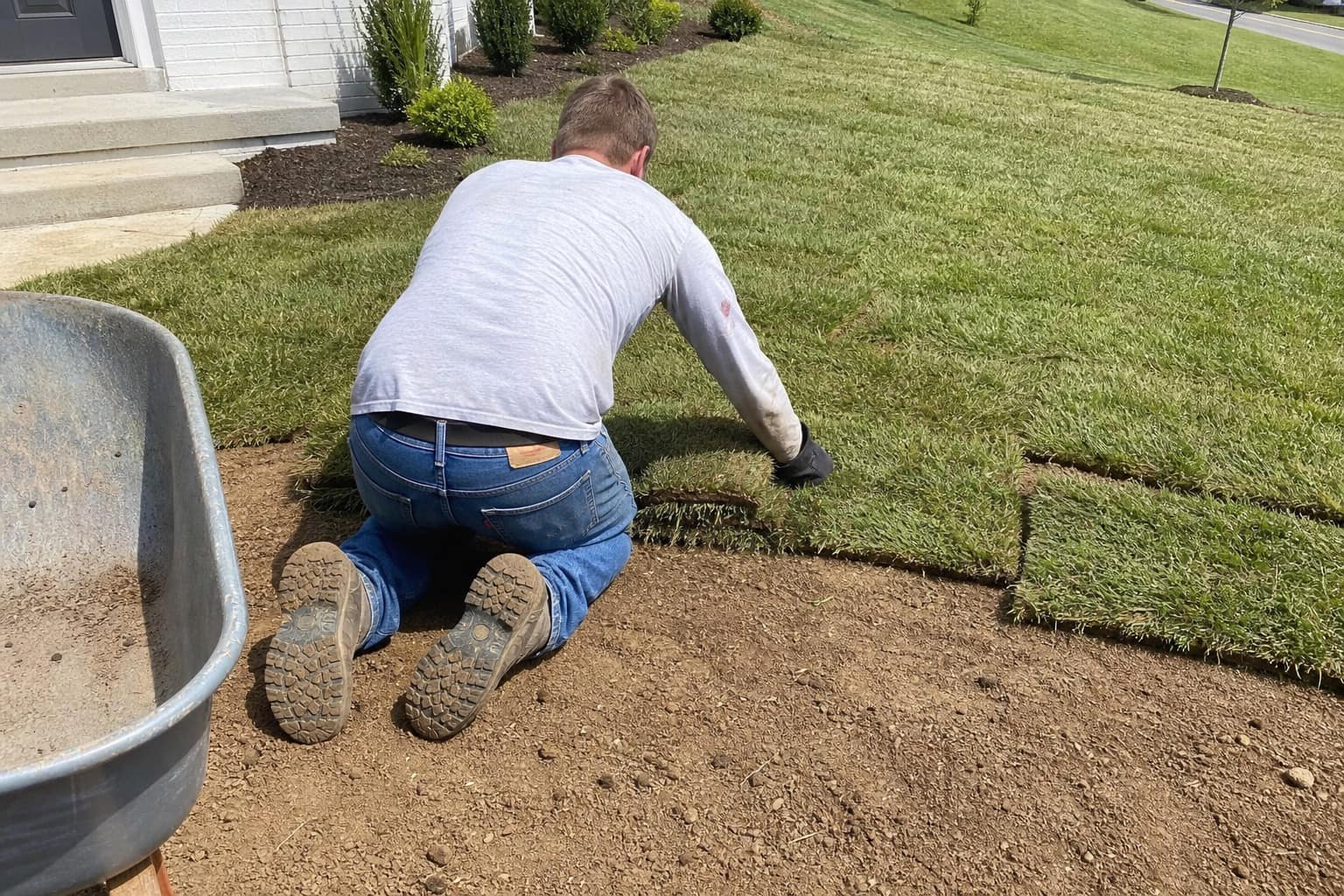
Sod Installation
Useful after the wet area has been corrected and the lawn needs a clean reset.
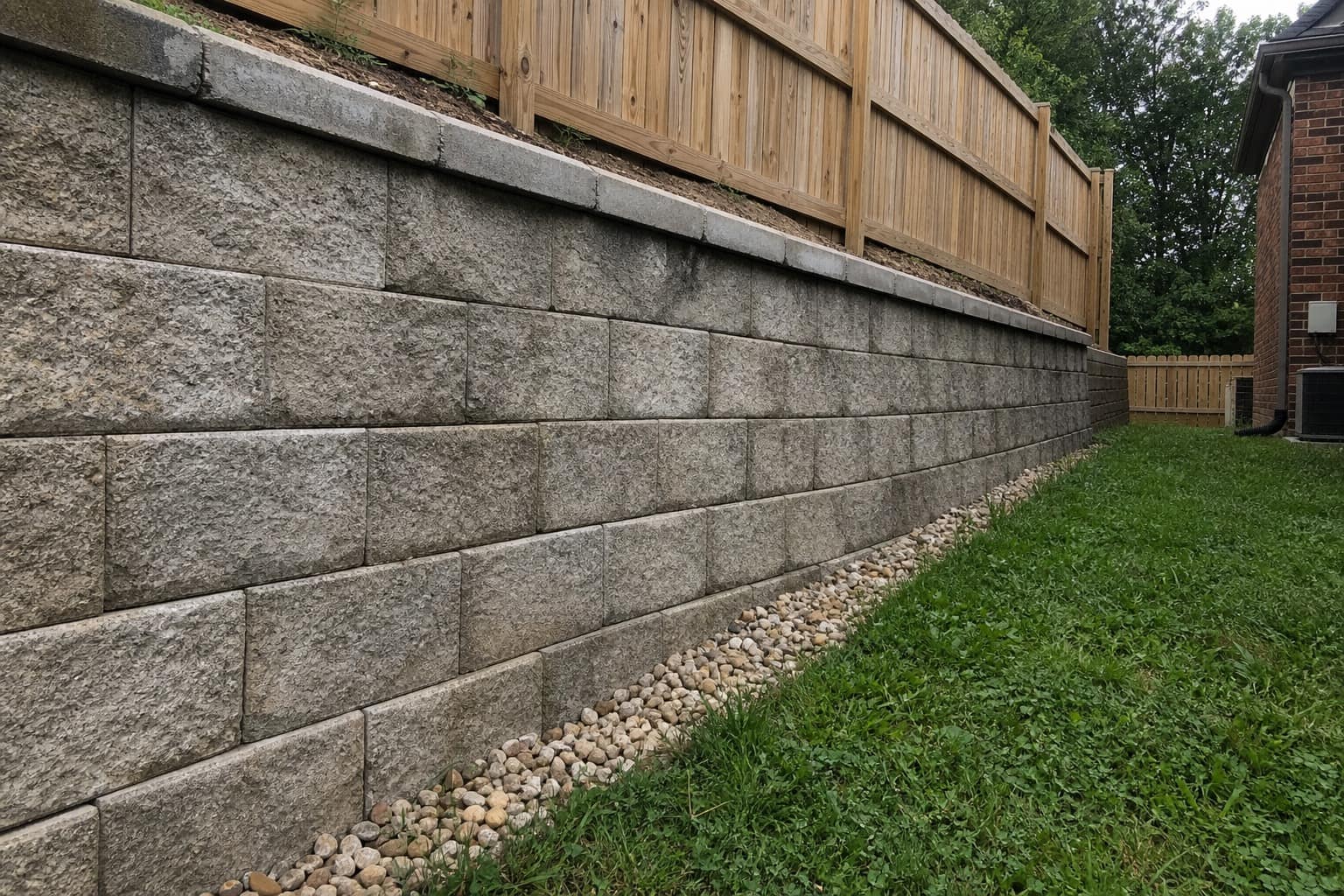
Retaining Walls
Relevant when slope, erosion, or soil movement is part of the same drainage problem.
Continue With the Right Drainage-Adjacent Service
Use these service pages once the guide helps you identify the real owner of the problem.
Yard Drainage FAQs
Short answers for homeowners deciding whether a drainage walkthrough is worth requesting.
Does every wet yard need a French drain?
No. Some drainage problems are surface-grade or downspout-routing issues. A French drain is most useful when subsurface water can be collected and discharged correctly.
Can you install sod over a wet area?
Sod should usually wait until the drainage issue is corrected. Otherwise the new lawn can root poorly, stay muddy, or fail in the same low spot.
Can I get a drainage price from photos only?
Photos help, but the final scope usually needs an in-person look at slope, access, water source, and where the water can legally and safely discharge.
Still have questions? We're happy to walk through your project.
Ready to stop guessing where the water should go?
Send photos, rough dimensions, your city or neighborhood, and when the water shows up. Orlando's can tell you whether the next step should be a drainage walkthrough.