Quick answer
Measure the bed area in square feet, choose the target depth, multiply those numbers, then divide by 324. Round thoughtfully so you do not under-order, especially for irregular beds or tree rings.
Key takeaways
Depth matters as much as bed size when estimating mulch.
Irregular beds should be broken into simpler rectangles or sections.
If the beds need cleanup or edging first, order planning should include labor and material.
How to estimate mulch in cubic yards
Use this simple process before ordering delivery or requesting an installed mulch estimate.
Measure bed length and width
For irregular beds, split the area into smaller rectangles and add them together.
Choose depth
Most refreshes use a thinner depth than a full reset on bare or thin areas.
Multiply square feet by depth
Use depth in inches, not feet.
Divide by 324
This converts the square-foot-inch estimate into cubic yards.
Round for waste and shape
Irregular edges, tree rings, and uneven beds can use more than the clean math suggests.
What changes how much mulch you need
Target depth
A 3-inch reset uses more material than a 1-inch touch-up. Depth is often the biggest difference after total bed area.
Bed shape
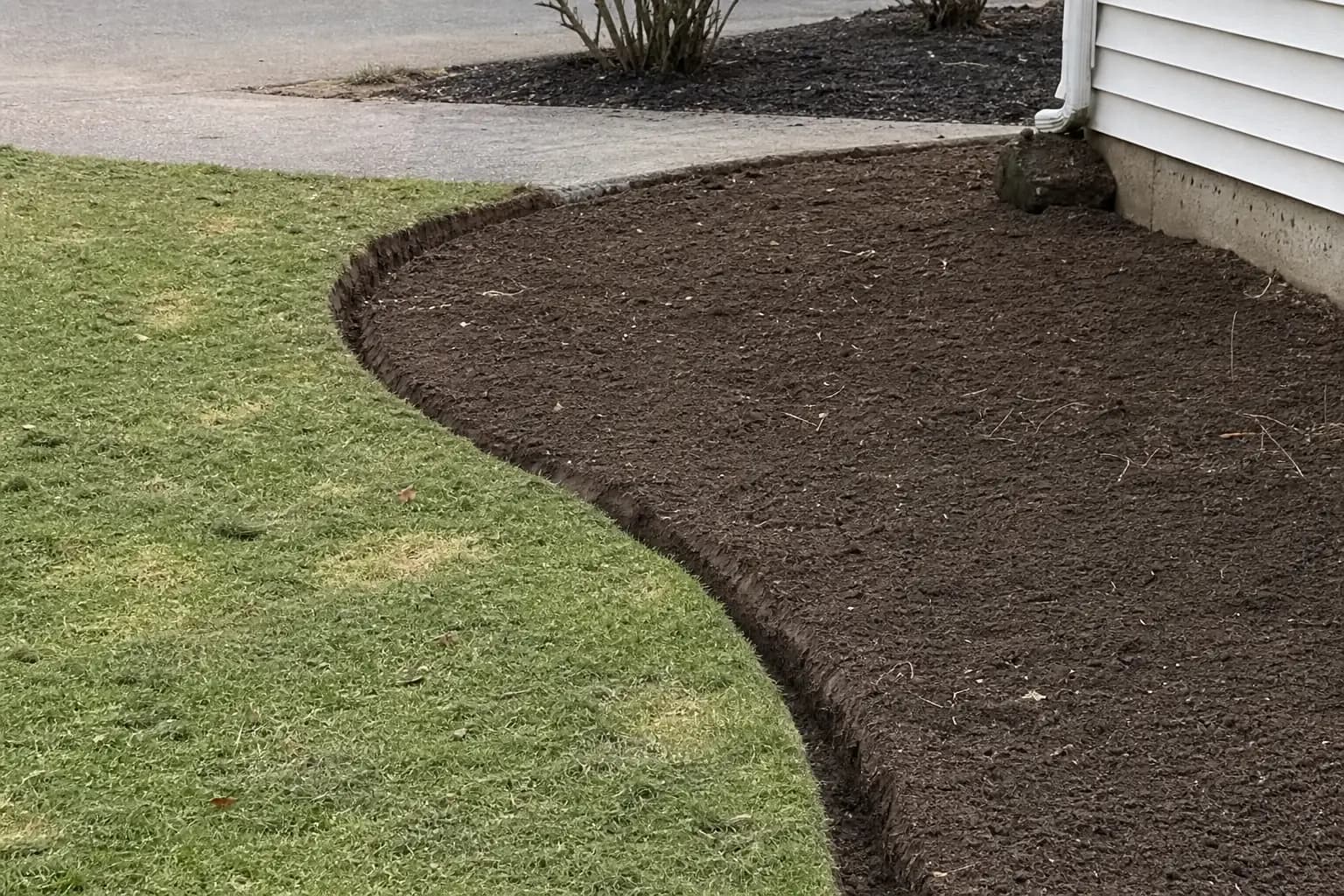
Curves, tree rings, and irregular foundation beds make exact measurement harder. Break odd shapes into simple sections.
Existing mulch
Old buildup can mean less fresh mulch is needed or prep is needed first. Too much mulch against plants can create problems.
Spillage and settling
Bulk material can settle and spread differently across uneven beds. Rounding slightly helps avoid running short.
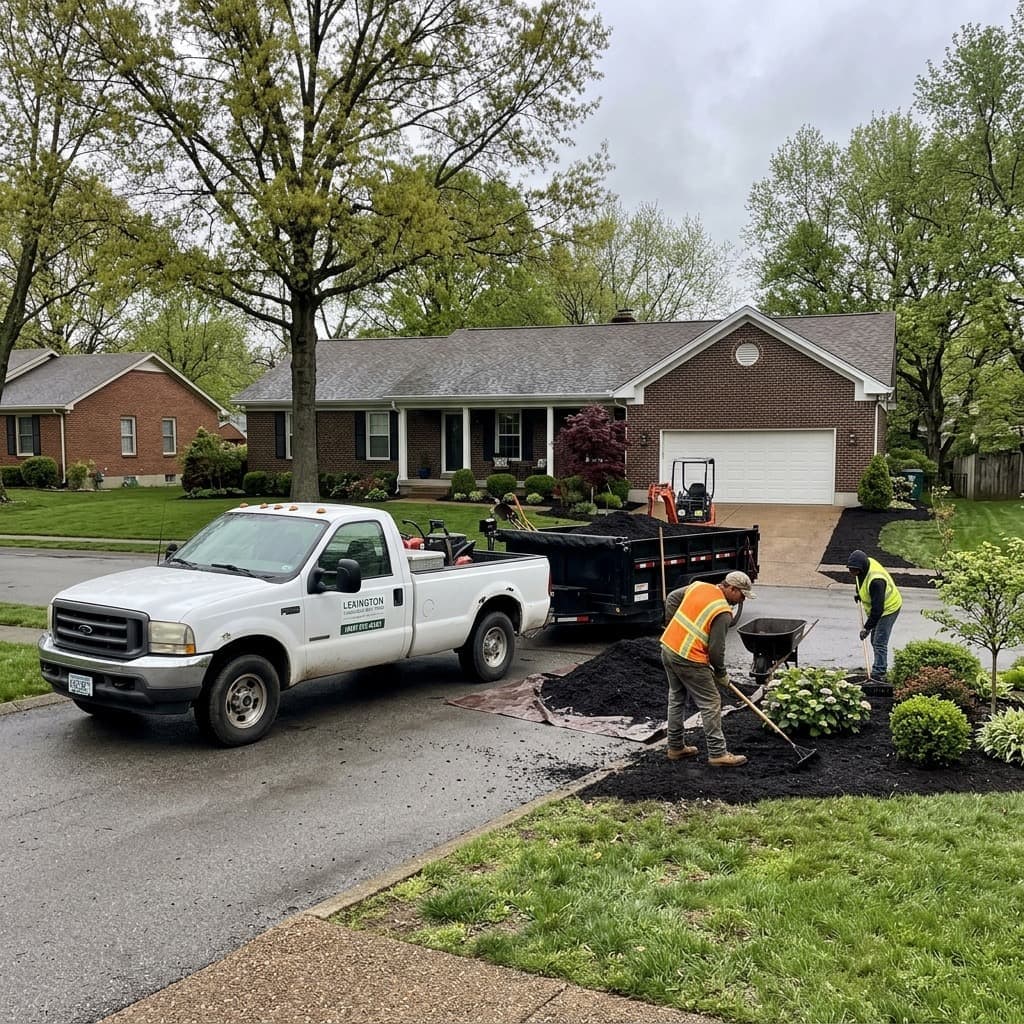
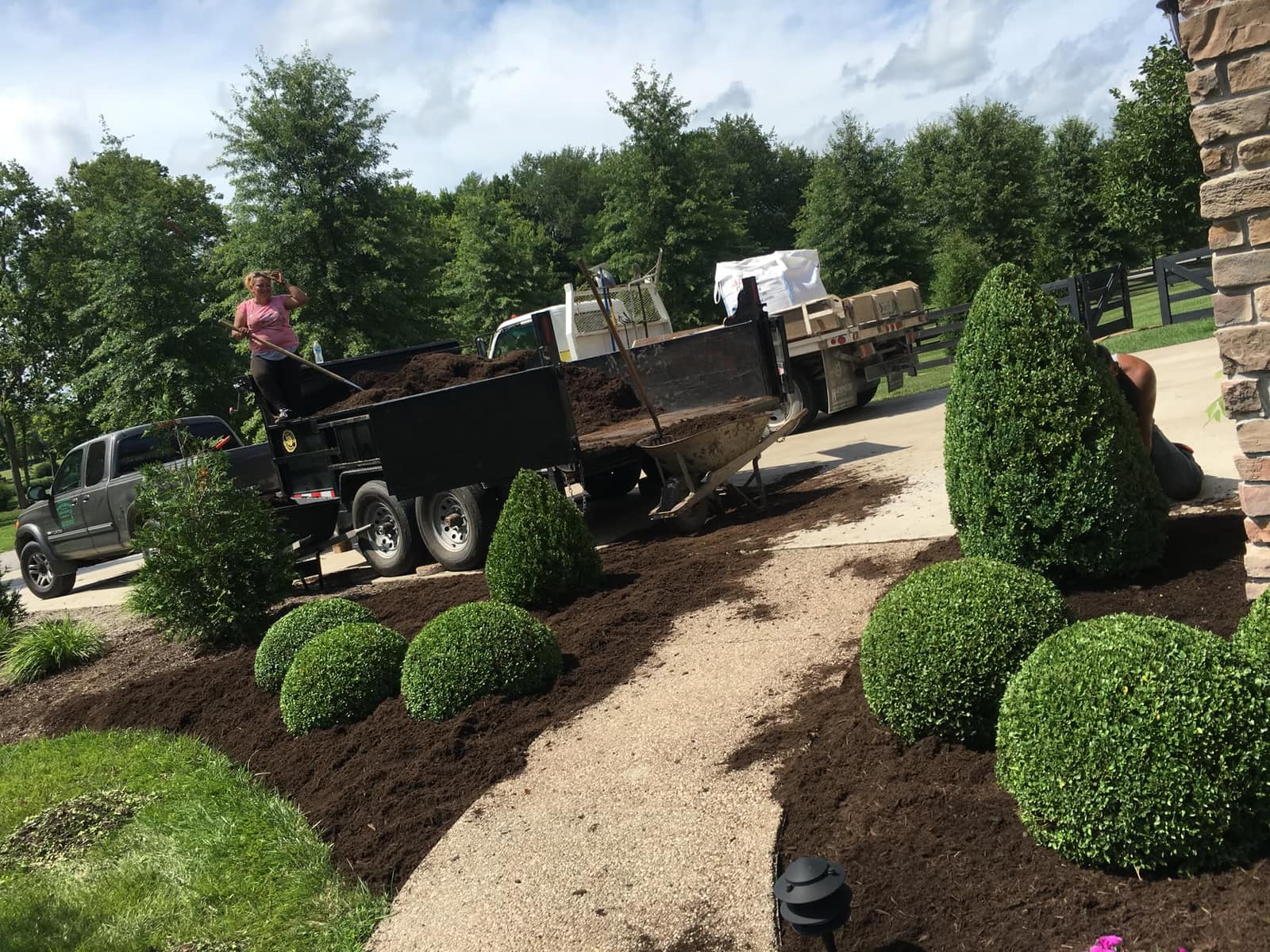
Delivery only or installed mulch?
The beds are buried in leaves or weeds.
Handle bed prep before calculating the final mulch order.
Read bed prep guide