
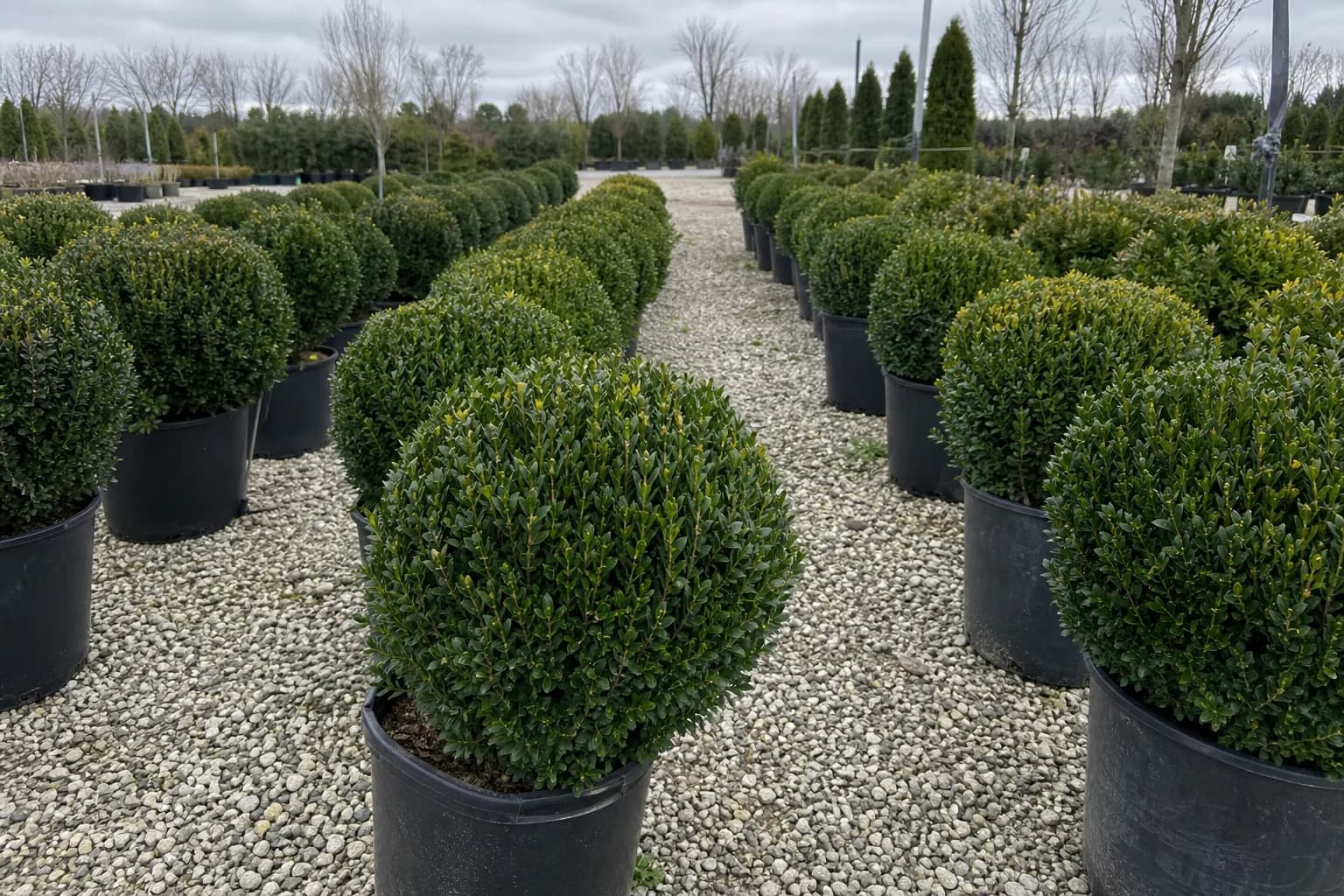
Best Boxwood Alternatives for Lexington Landscapes
A practical guide to replacing boxwoods in Lexington foundation beds with evergreen structure, lower-maintenance shrubs, deer-aware choices, and better site fit.
QUICK ANSWER
Choose boxwood alternatives by role, not by plant name alone.
If the goal is a formal evergreen edge, choose a compact evergreen replacement. If the goal is lower maintenance or a softer foundation bed, mix evergreens with flowering shrubs, perennials, or native options that fit the light and mature size.
- Formal replacements need structure and pruning tolerance.
- Foundation replacements need mature size and light fit.
- Deer pressure and disease history should affect the plant list.
Use This Guide When Boxwoods Are Failing or Do Not Fit the Site
The best replacement depends on the role the boxwood was supposed to play: formal evergreen structure, low hedge, foundation mass, deer-resistant planting, or a softer mixed bed.
Best for
Browning, declining, overgrown, disease-prone, or wrong-size boxwoods in Lexington foundation beds.
Primary handoff
Planting installation when replacement choices and spacing need to become an installed bed.
Guardrail
This is a replacement-and-role guide, not another generic shrub list.
Different boxwood replacements solve different problems
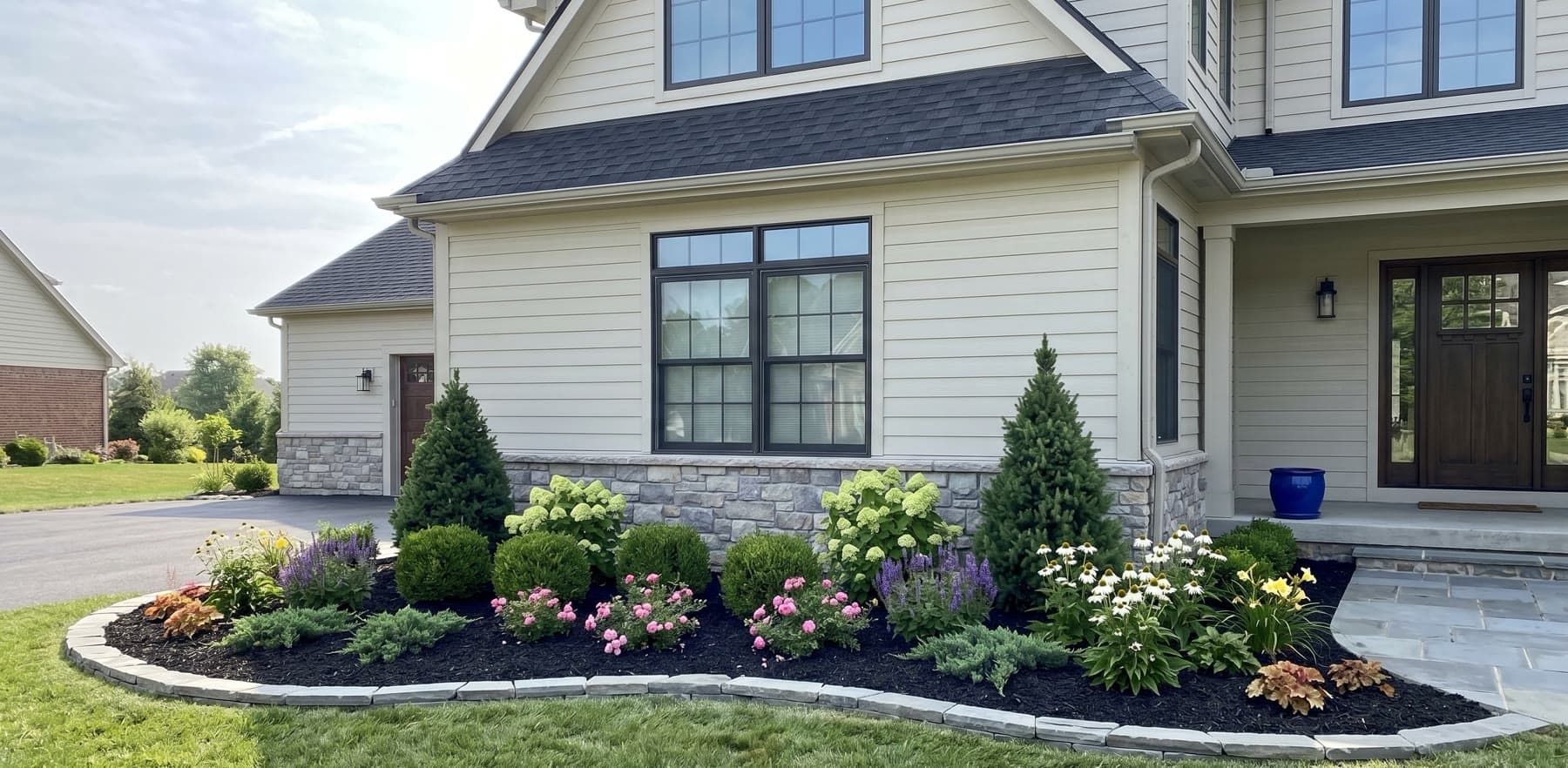
Mixed foundation
Use layered planting when a softer foundation bed is the goal.
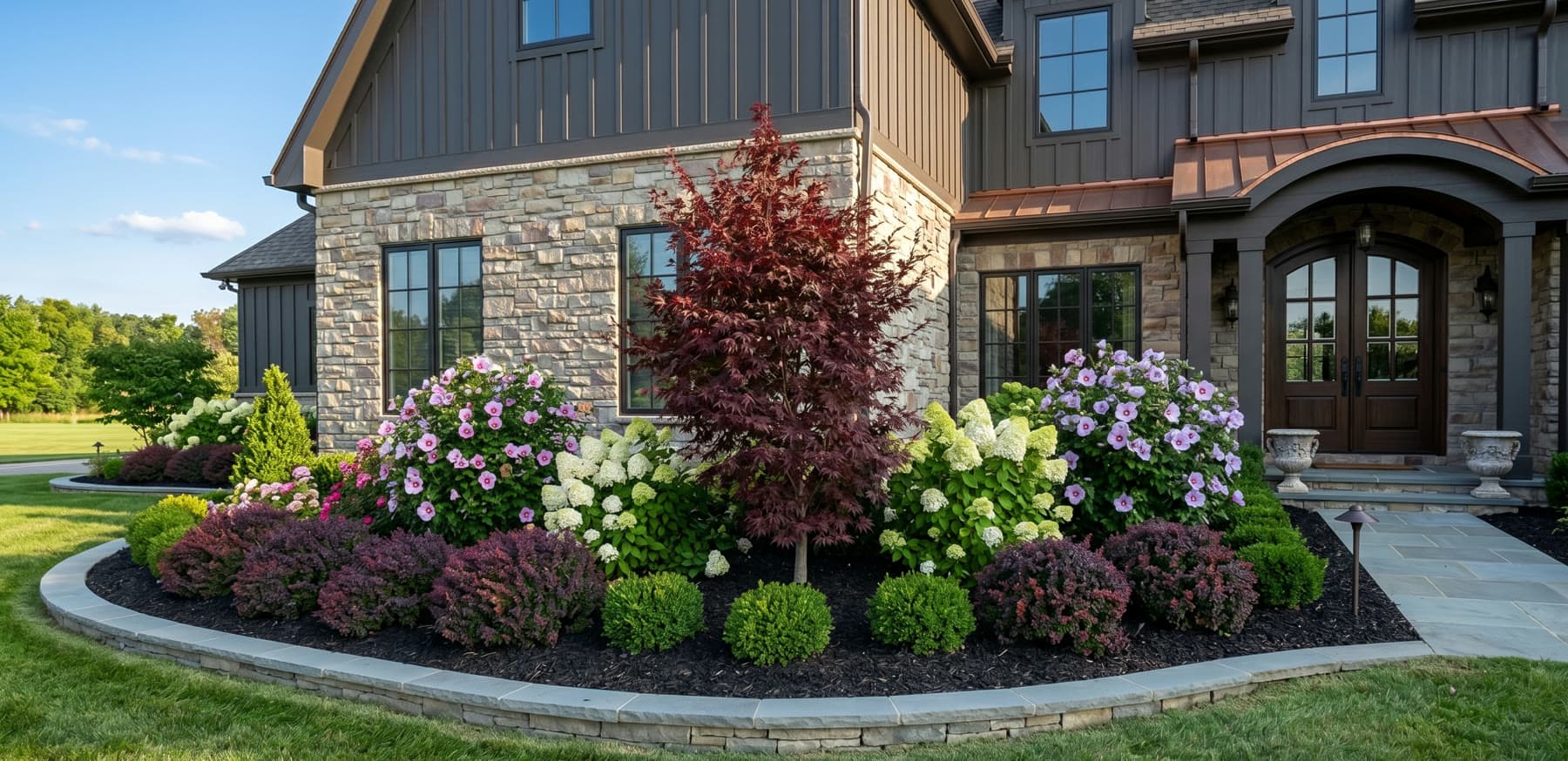
Sun structure
Full-sun beds need plants that can handle heat and reflected light.
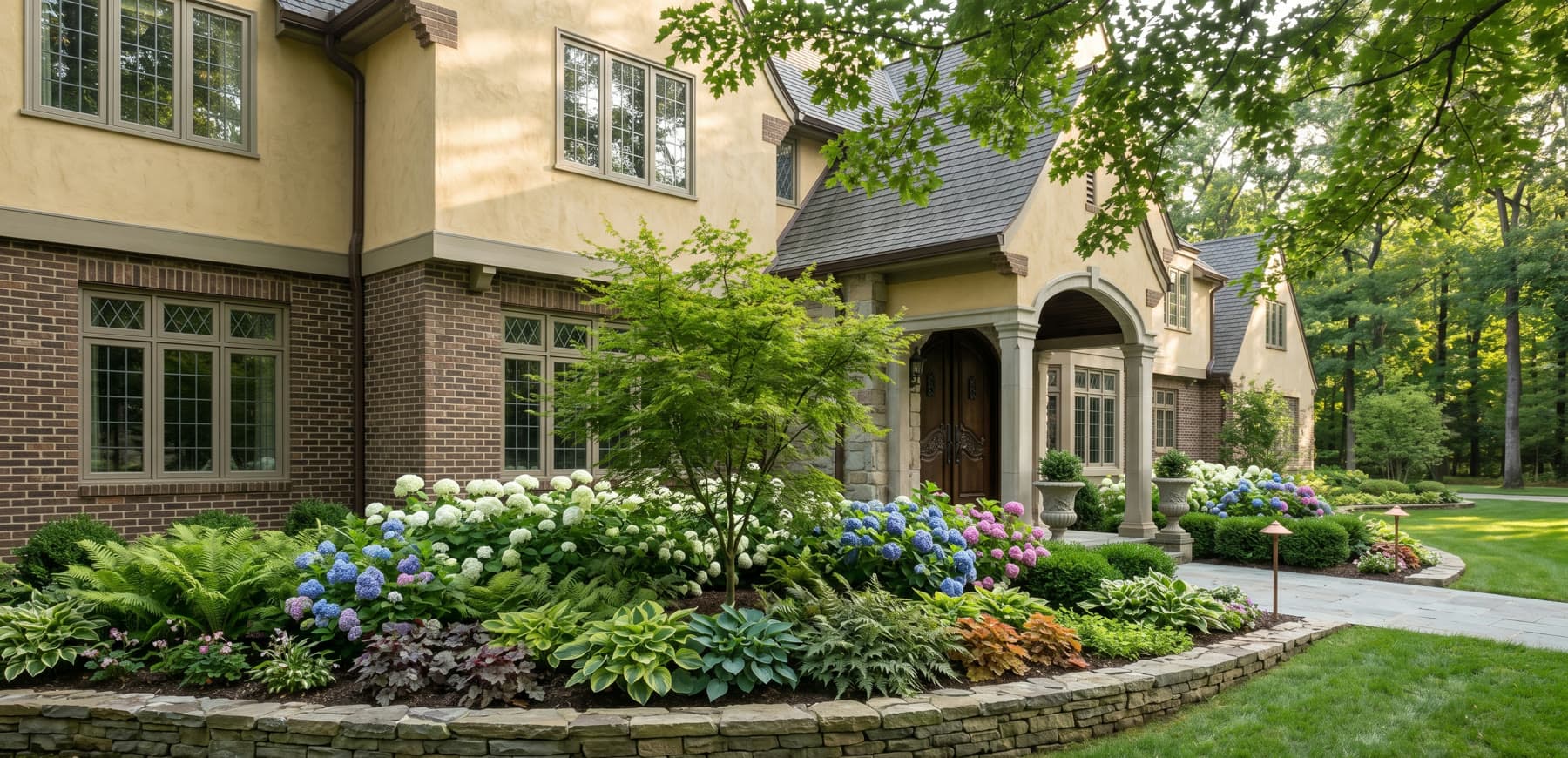
Shade structure
Part-shade beds need a different replacement list than hot front entries.
THE SHORT VERSION
- Replace boxwoods by function: formal hedge, evergreen mass, foundation structure, or mixed bed.
- Mature size matters more than day-one nursery size.
- If boxwoods failed before, site conditions and disease pressure should be part of the replacement decision.
REPLACEMENT TYPES
Boxwood alternatives by landscape role
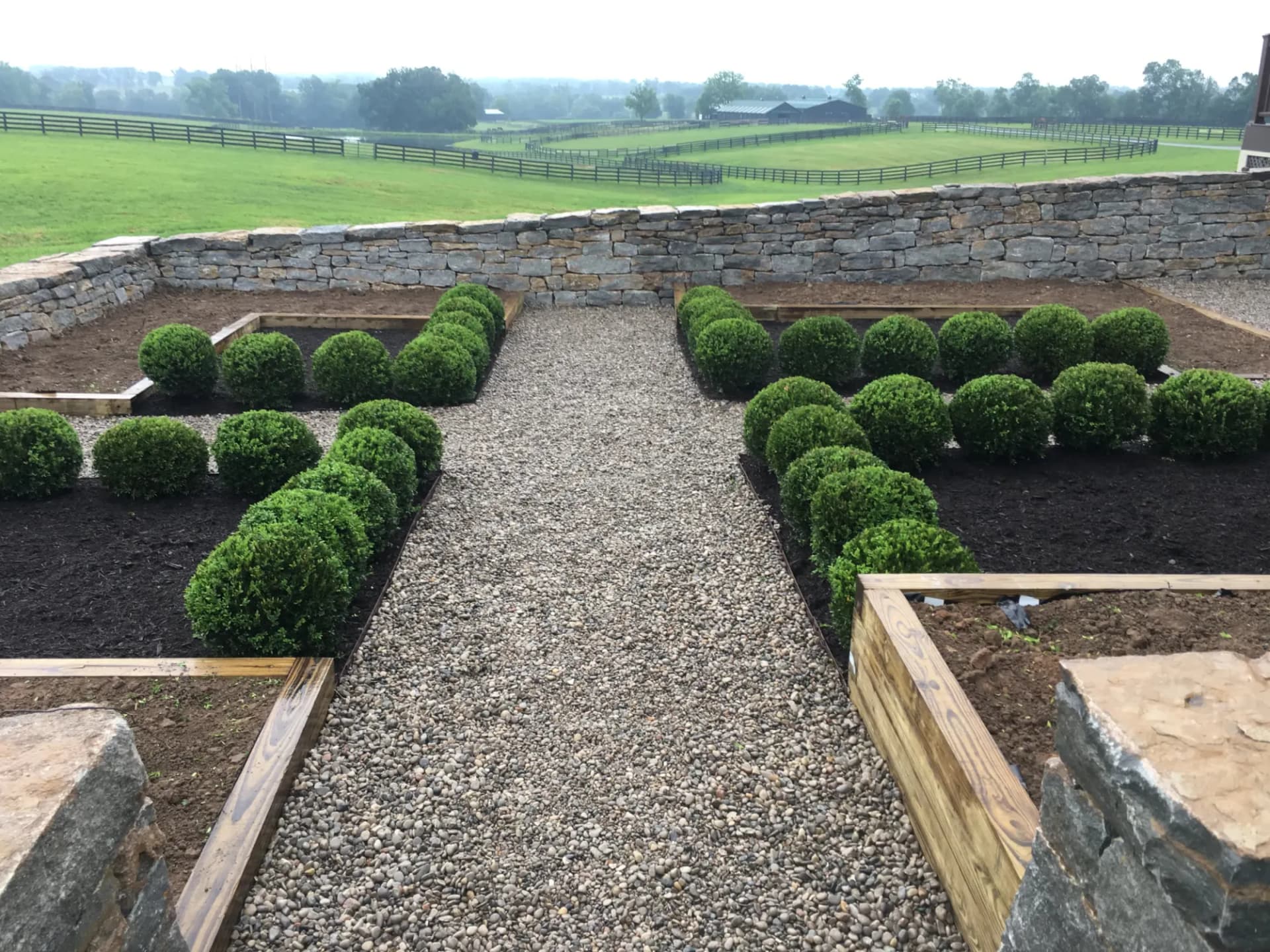
Formal evergreen look
Use compact evergreens or shrubs that can hold structure near entries and foundations.
- •Clean shape
- •Controlled size
- •Pruning tolerance
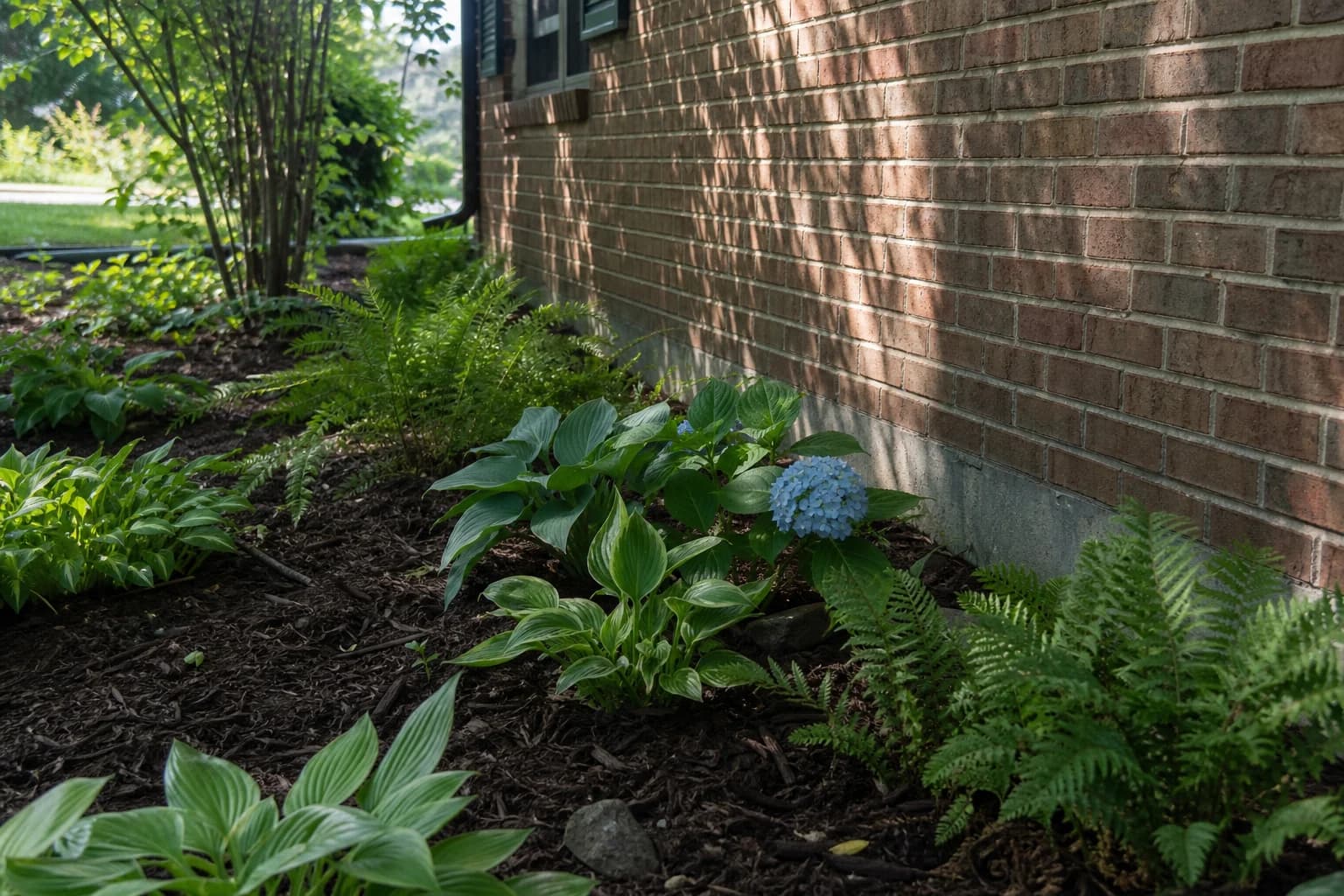
Softer mixed bed
Use layered shrubs, flowering plants, and perennials so the bed does not rely on one species.
- •More seasonal interest
- •Less monoculture risk
- •Better texture
Lower maintenance
Use plants that fit the light, mature size, and deer pressure without constant correction.
- •Right plant, right place
- •Less shearing
- •Better long-term fit
SITE FIT
What to check before replacing boxwoods
- Light
Full sun, part shade, and shade support different replacement plants.
A hot west-facing bed needs different choices than a shaded porch.
- Mature size
Replacement shrubs should fit the bed without constant pruning.
Do not replace an overgrown boxwood with another plant that will outgrow the same space.
- Deer pressure
Browsing can limit evergreen and flowering shrub options.
A plant that looks good in the nursery may not hold up near deer paths.
- Disease history
Repeated boxwood decline should lead to a more resilient replacement plan.
Avoid rebuilding the same problem with the same plant.
HANDOFF
When boxwood replacement needs a planting plan
If
A few boxwoods are declining in an otherwise good bed.
Then
Replace by matching role, size, and light conditions.
BEST NEXT STEP
Planting installation can handle replacement shrubs and spacing.
See plantingIf
The whole foundation bed feels dated or overgrown.
Then
Treat the project as a design or renovation conversation.
BROADER SCOPE
A full bed reset needs more than one replacement plant.
See landscape designIf
Deer keep damaging evergreen shrubs.
Then
Compare deer-resistant plant options before replacing.
RELATED GUIDE
Deer pressure changes the plant list.
Read deer-resistant guideRelated Proof for Boxwood Replacement
Use these pages to move from replacement research into planting, design, or foundation bed planning.

Continue With the Right Replacement Path
Use these pages after deciding whether the project is a simple replacement or a larger foundation bed redesign.
Boxwood Alternative FAQs
Short answers for homeowners replacing boxwoods in Lexington beds.
What should I replace boxwoods with?
Start with the role the boxwood played: formal evergreen edge, foundation mass, low hedge, or mixed-bed structure. The replacement should fit that role and the site conditions.
Should I replace all boxwoods at once?
If decline is isolated, a smaller replacement may work. If the whole bed is dated, oversized, or disease-prone, redesigning the bed is usually cleaner.
Are boxwood alternatives lower maintenance?
They can be, but only if they match the light, mature size, soil, and deer pressure of the site.
Still have questions? We're happy to walk through your project.
Ready to replace boxwoods with plants that fit the site?
Send photos of the boxwoods, light exposure, deer pressure, and the look you want so Orlando's can recommend the right replacement path.