
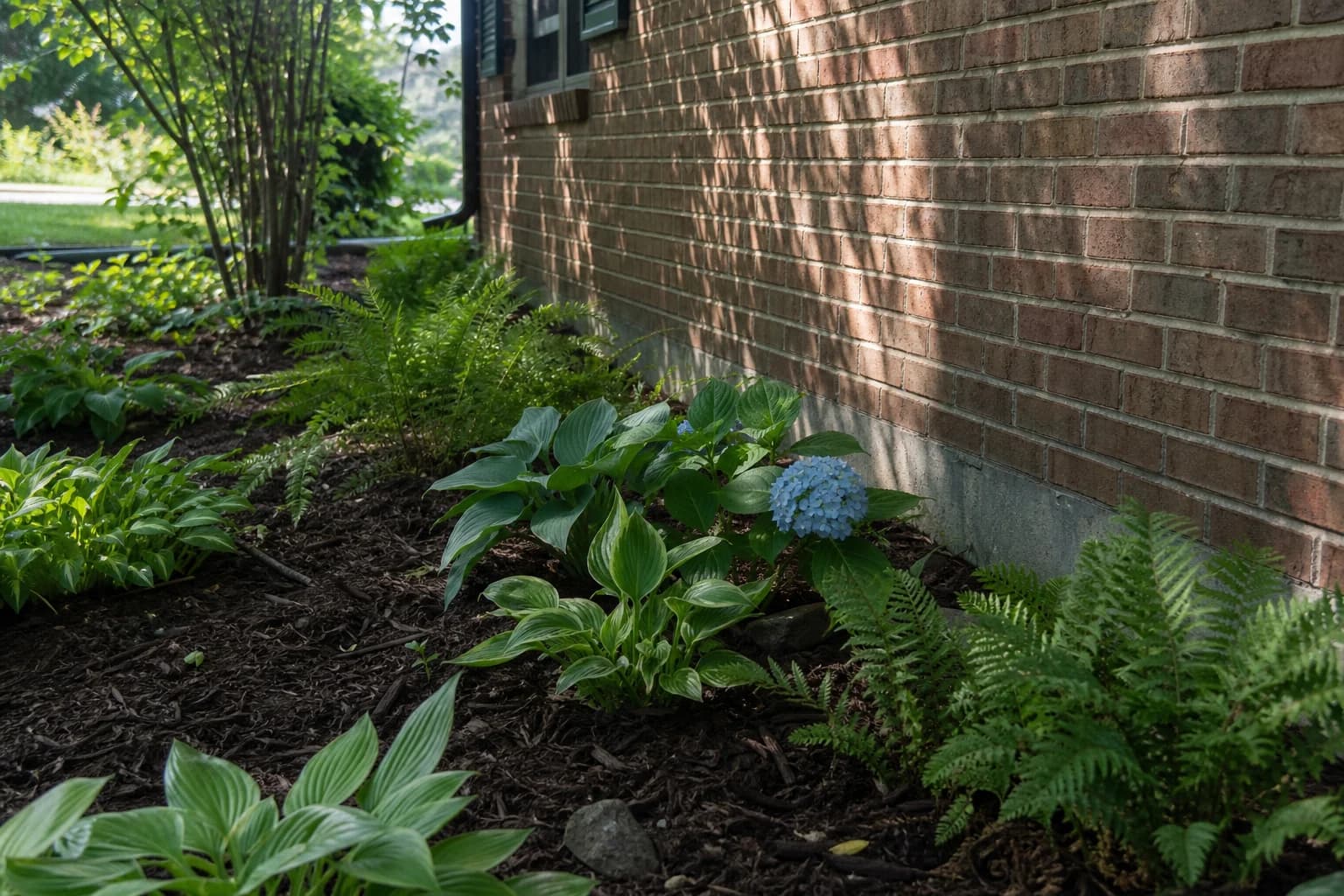
Best Foundation Plants for Full Sun, Part Shade, and Shade in Lexington
A site-condition guide for Lexington homeowners choosing foundation plants — organized by light exposure so the right plant goes in the right bed the first time.
Use This Guide to Match Foundation Plants to Your Bed's Light Exposure
Light condition is the first filter for plant selection, not the last. This guide covers the best foundation plants for full sun, part shade, and shade in Lexington — so the plant you choose fits the site it is actually going into.
Best for
Homeowners matching foundation plant choices to their bed's actual sun exposure
Primary handoff
Planting installation first, then landscape design when the bed has mixed conditions or needs broader planning
Guardrail
Organized by light condition only — plant roles and general selection stay with the foundation shrubs guide
Compare the finished feel of sun, shade, and mixed foundation beds
These illustrative examples show why light exposure changes plant selection. The point is not to copy the exact bed, but to match the plant palette to the conditions.
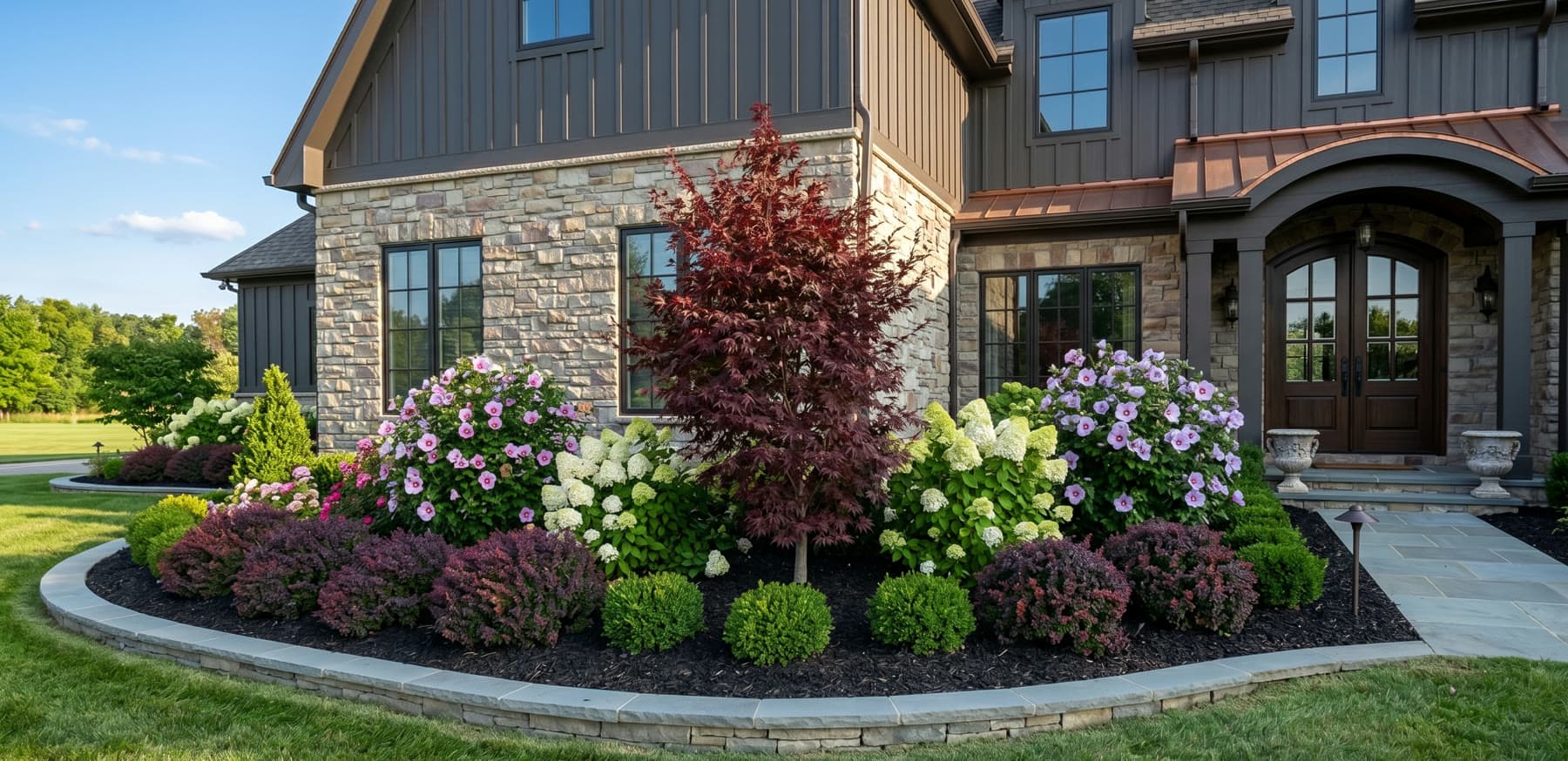
Full sun
Sunny beds can support stronger flowering and ornamental structure, but the plants need to handle Lexington heat and afternoon exposure.
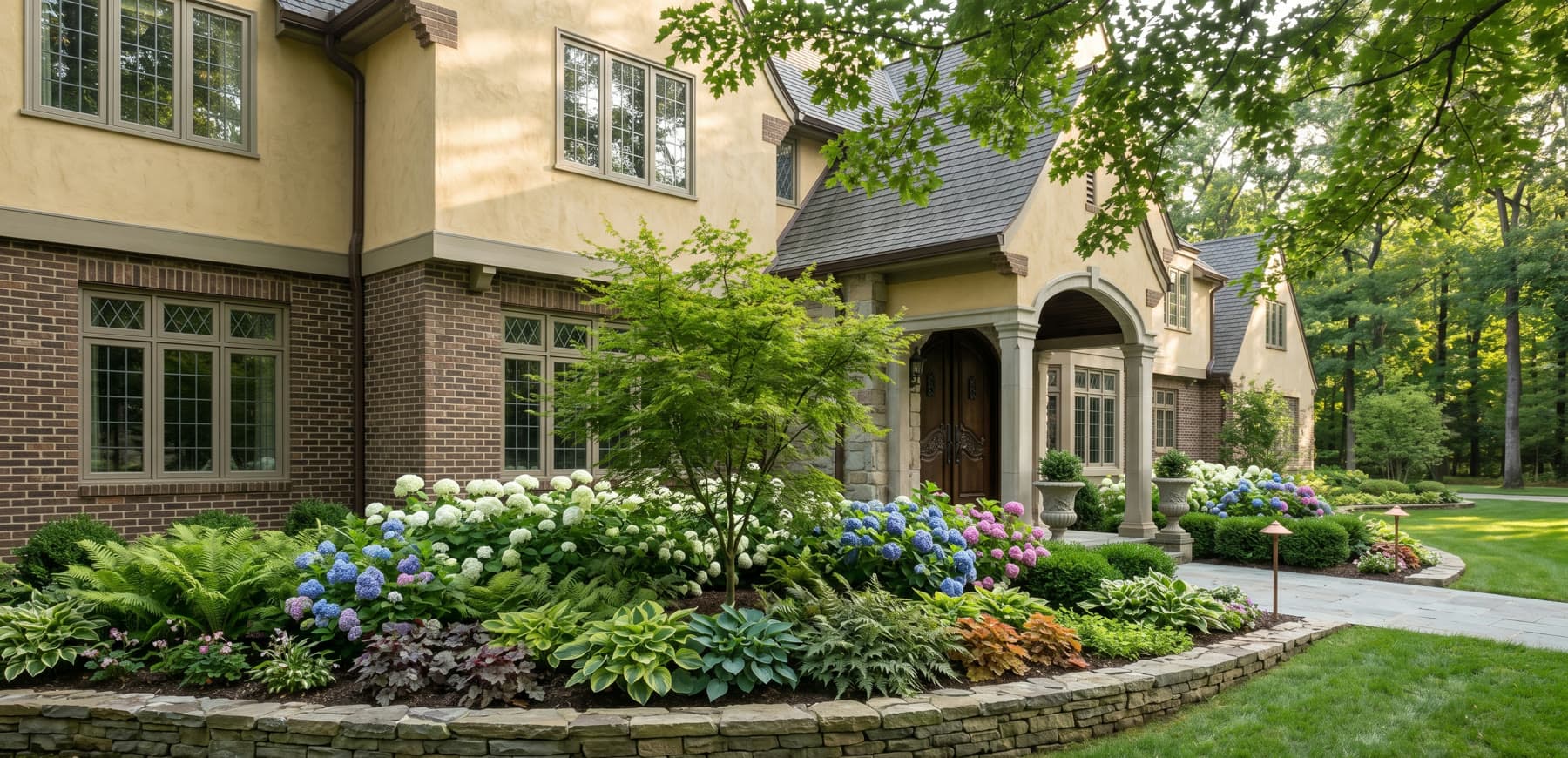
Shade
Shade beds usually lean on texture, foliage, and layered structure instead of forcing sun-loving plants into low light.
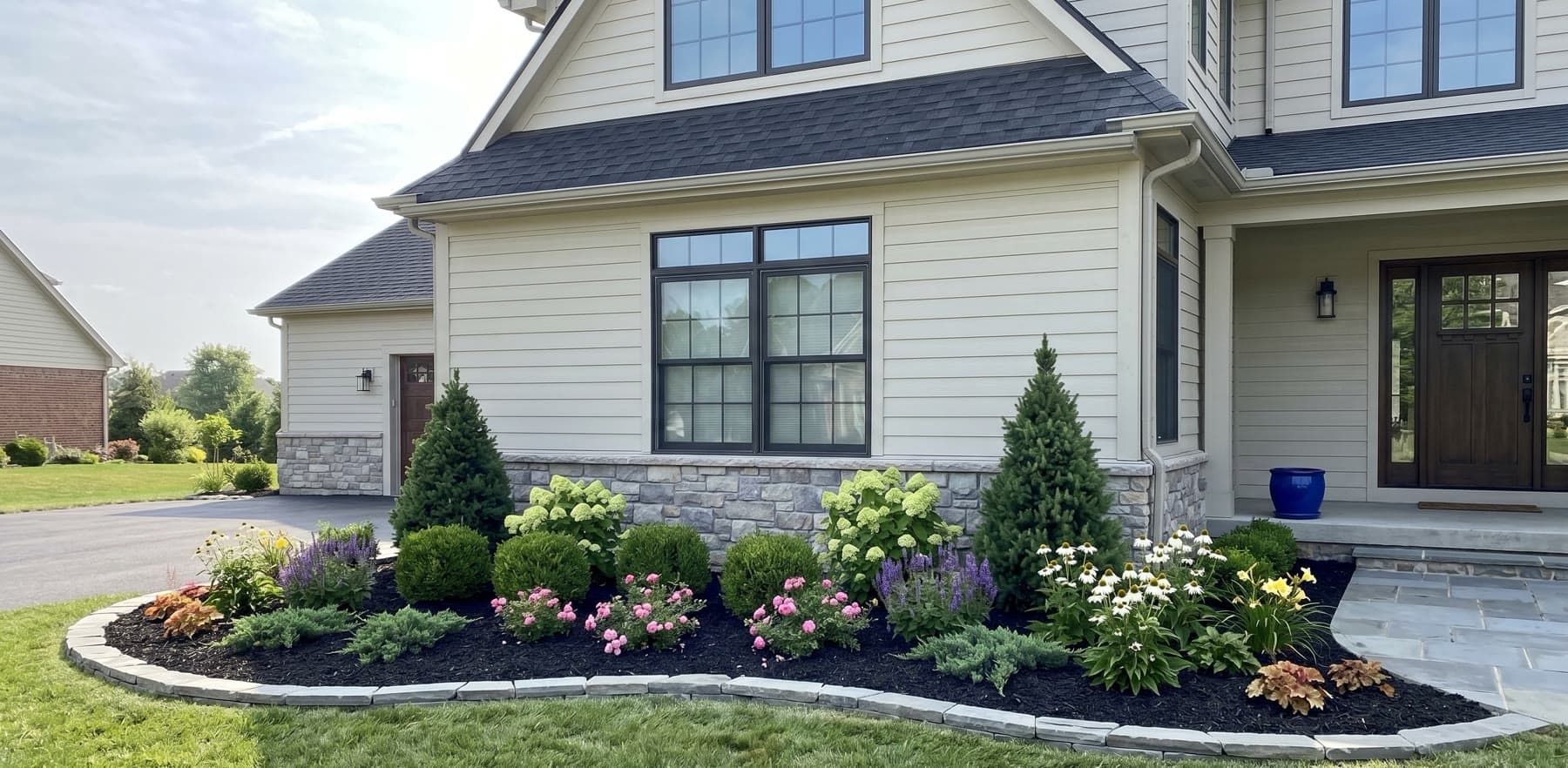
Mixed exposure
Beds that wrap a house often need zones: one plant palette for the brighter side and another for shaded or filtered-light sections.
LIGHT
Why light exposure is the first question, not the last one
The most common reason a foundation plant fails is not bad care — it is wrong light. A hydrangea that thrives against one side of the house can burn and struggle on the opposite side. Before choosing plants, the first question should be: how much sun does the bed actually get?
The three zones are practical to identify on your own. Full sun means the bed receives six or more hours of direct sunlight during the growing season. Part shade is three to five hours of direct sun, or light that is filtered or dappled through a canopy. Shade means less than three hours of direct sun — typical of north-facing beds or spots under dense tree cover. Watch the bed at different times of day over a few days rather than guessing from memory.
Lexington's mature tree canopy in older neighborhoods creates shade conditions that shift seasonally. A bed that looks full sun in March can shift into part shade by June once the canopy leafs out. If the trees are mature oaks or maples, the shade effect is meaningful and should be part of the plant selection conversation before the install.
FULL SUN
Foundation plants that perform in 6+ hours of direct sun
South and west-facing beds in Lexington take on heat in a way that northern climates do not. July and August afternoon sun on those exposures can be punishing. The plants that hold up need genuine heat tolerance, beyond simple sun tolerance. That is a different bar than simply requiring full sun.
Knockout roses handle full sun and summer heat without demanding excessive water once established. Dwarf crape myrtle is a reliable choice when the goal is vertical structure plus late-summer color in a hot, exposed location. Boxwood tolerates full sun in Lexington when it has consistent moisture, but it can bleach in extreme south-facing exposures without some protection. Juniper is one of the most heat-tolerant options for ground-level structure in full sun — it does not mind poor soil and asks for almost nothing after establishment.
For perennial layers in a full sun bed, daylily, Russian sage, and catmint are reliable choices that provide seasonal color without demanding irrigation. None of these are mentioned here for general garden appeal — each earns its place in a full sun Lexington bed because it genuinely handles the light and heat load that comes with that exposure.
PART SHADE
Foundation plants for 3-5 hours of sun or dappled/filtered light
Part shade is the most forgiving light zone for foundation planting, and Lexington has more of it than most homeowners realize. East-facing beds that receive morning sun and afternoon shade are a design advantage, not a limitation. That exposure protects plants from the harshest summer heat while still giving them the light they need to bloom.
Bigleaf hydrangea and oakleaf hydrangea both perform well in part shade. Bigleaf hydrangea benefits from afternoon protection — morning sun east-facing beds are actually ideal for it. Oakleaf hydrangea tolerates more sun but genuinely thrives in part shade and is native to the Southeast, which gives it good soil adaptability. Azalea belongs in part shade beds in Lexington; it struggles in full afternoon sun and rewards the right placement with reliable spring color.
For layered texture in a part shade bed, astilbe, heuchera, and Japanese painted fern each bring foliage character through the season without requiring full sun to perform. Part shade does not mean fewer options — it often means more interesting plant combinations than a straight full sun bed allows.
SHADE
Foundation plants for north-facing or heavily shaded beds
Shade plantings are foliage-driven rather than flower-driven, and that is a different character — not a deficiency. A well-planted shade bed with varied leaf texture and layered structure reads as deliberate and finished. The goal is not to force sun-dependent plants into a low-light environment. It is to choose plants that actually thrive there.
Hosta is the backbone of most shade beds in Lexington and for good reason — it is reliable, comes in an enormous range of sizes, and handles the clay soil and shade conditions that challenge most other plants. Ferns are the best structural companion: autumn fern and Christmas fern both persist through the Lexington winter and provide year-round texture. Bleeding heart is a shade-garden classic that provides early spring flower interest before the summer canopy fully closes in.
For deeper shade — north-facing beds against brick or stone in older Lexington neighborhoods like Chevy Chase or Beaumont — aucuba and hellebore are worth considering. Aucuba holds glossy structure year-round. Hellebore blooms in late winter when almost nothing else does and asks for very little in return. Japanese forest grass adds fine-textured, arching movement to shade beds where most plants read as flat or static.
MIXED
When the same bed has multiple light conditions
Many beds wrap the house and transition from full sun on the south side to shade on the north. The approach is to zone plants by the light each section actually receives rather than choosing a single species for the entire run. A boxwood that thrives in the southeast corner will not perform the same way in the shaded north corner.
When light conditions vary enough that plant selection becomes a layout decision — where the zoning, transitions, and plant sizing need to be planned together — that is where design consultation becomes useful. The guide can help with individual light zones. It cannot substitute for a plan that accounts for the whole bed.
BOUNDARY
When light is only part of the problem and the bed needs broader planning
Light condition is the first filter, but it is not always the only one. When the bed also needs soil amendment for drainage, structural changes to grade or edging, or a complete replanting after damage or overgrowth, the scope has moved beyond what plant selection by light zone can address.
That is the point where design consultation makes sense before installation begins — not because the plant choices are unclear, but because the bed itself needs to be thought through as a whole before plants go in the ground.
Current Proof for Foundation Planting and Bed-Level Installation
These projects show current planting proof across different bed types and light conditions.
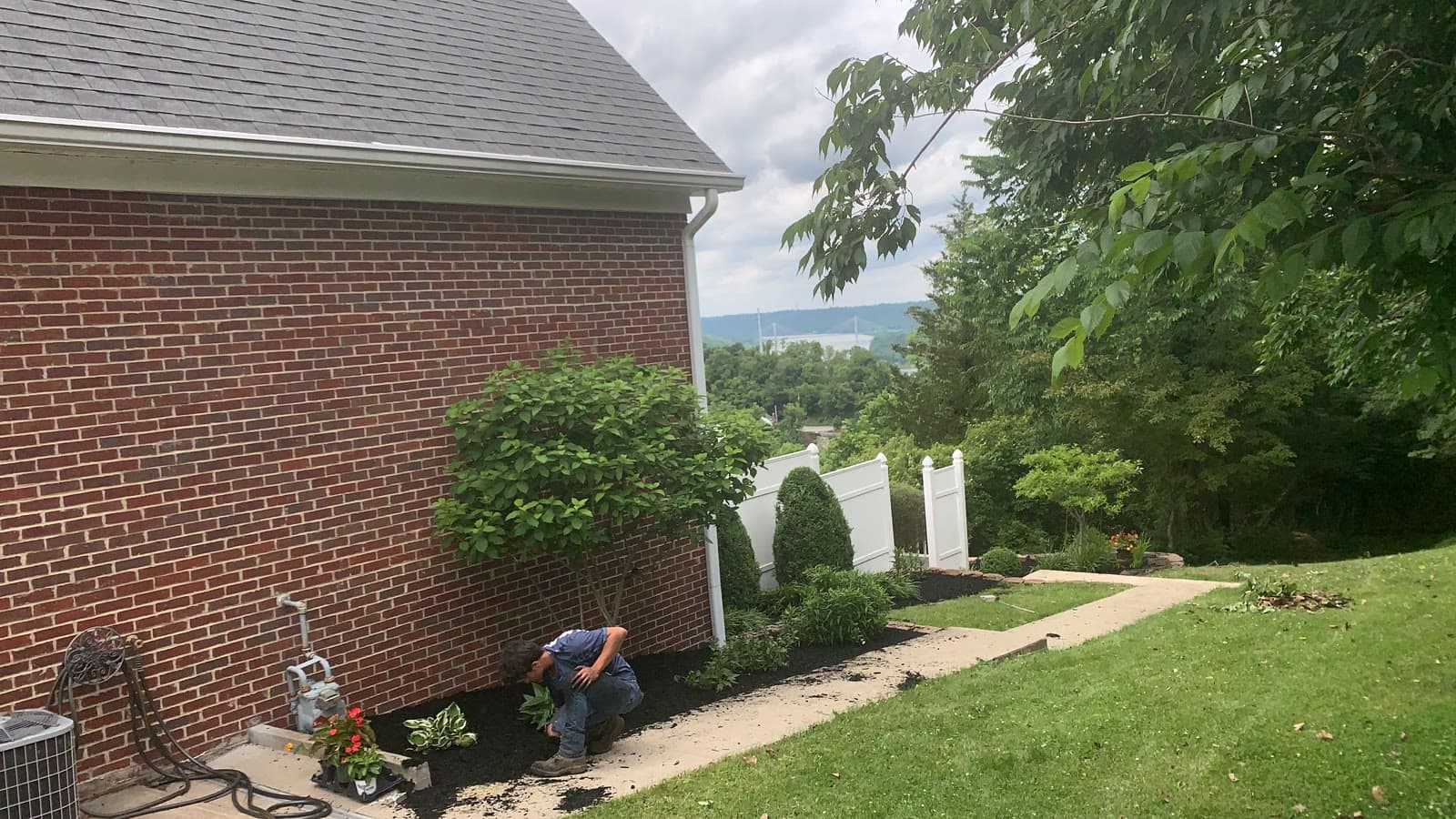
Maysville Mulch & Planting Refresh
Best current proof for a deliberate foundation plant selection matched to site conditions, spacing, and finished install standards.
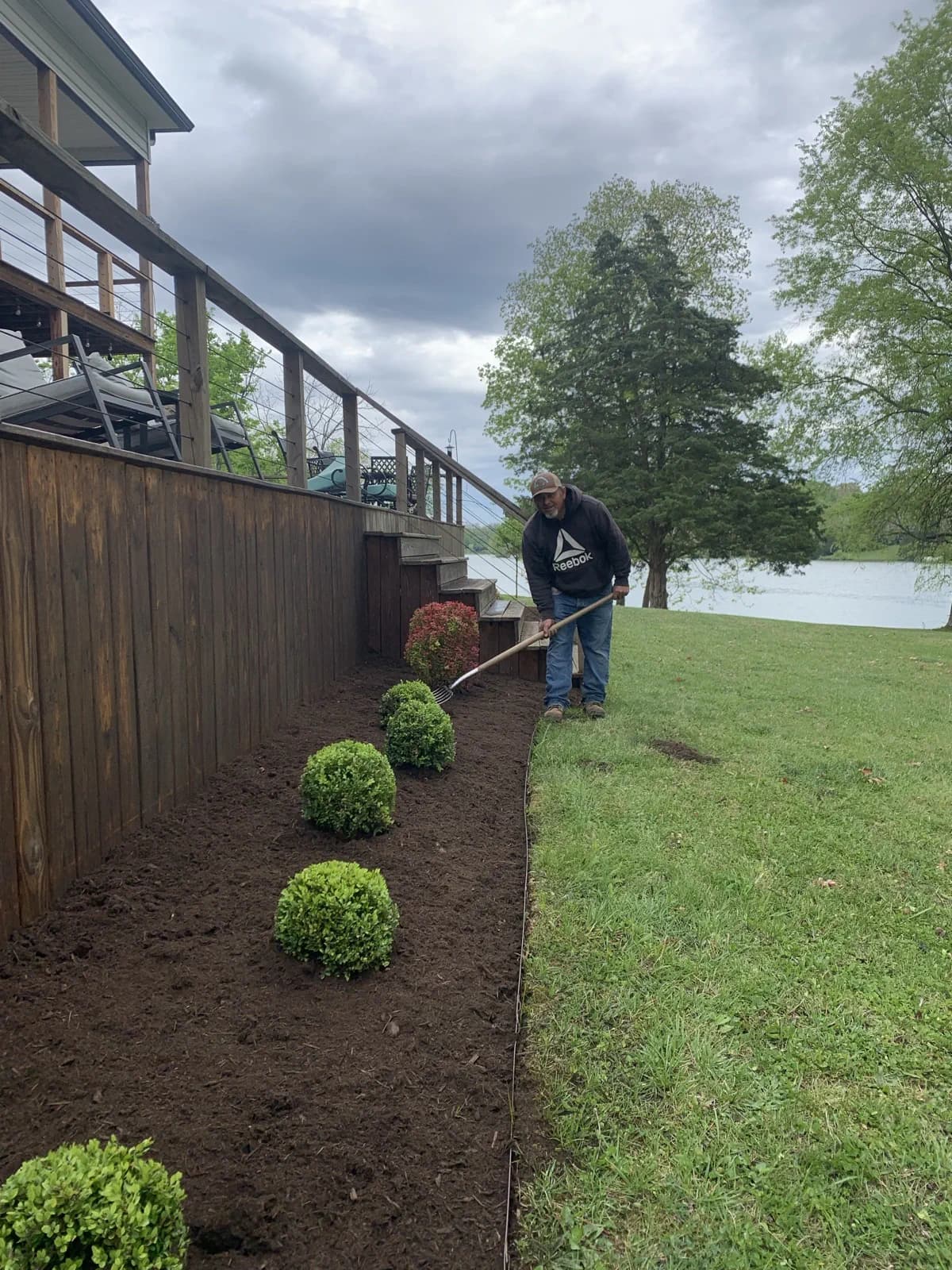
Carlisle Full Landscape Renovation
Support proof for grouped planting decisions that reflect how site conditions affect plant choice.
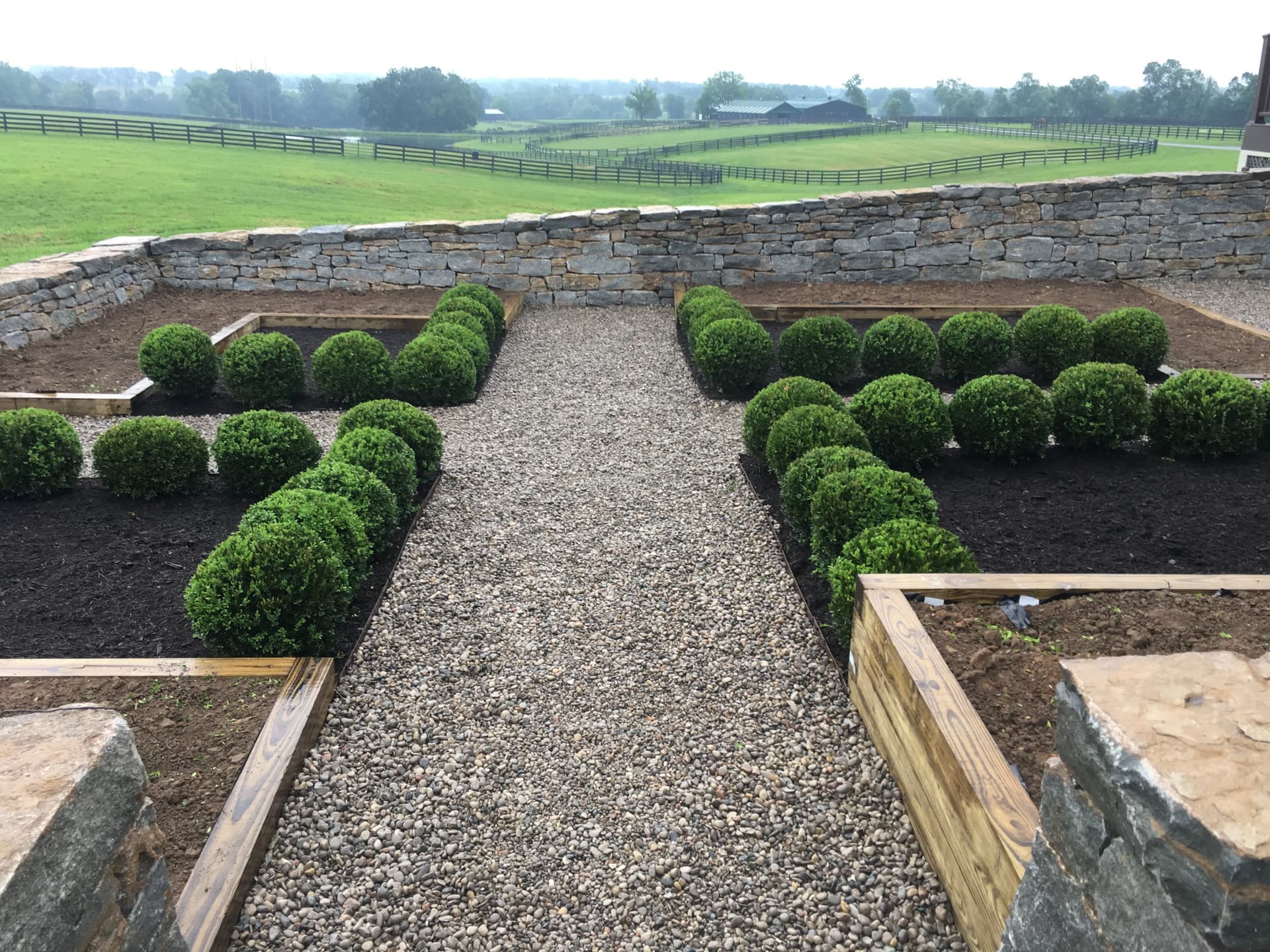
Residential Bed Renovation
Contextual support for broader replanting when the current plants are in the wrong light conditions and the bed needs a reset.
Move From Light-Condition Research Into the Right Service Page
Use the service and research pages below when the light condition is identified and plant selection is ready to move forward.
Foundation Planting by Light Condition FAQs
These questions help match plants to the amount of sun the bed actually gets.
Foundation planting by light condition
The right plant depends on the actual light the bed receives, not catalog aesthetics.
How do I know if my bed is full sun, part shade, or shade?
Watch the bed at different times of day over a few days. Full sun means 6 or more hours of direct sunlight. Part shade is 3-5 hours or filtered light. Shade means less than 3 hours of direct sun, usually on the north side of the house or under heavy tree canopy.
Can the same plant work in sun and shade?
Some plants tolerate a range, but most have a preferred zone. A hydrangea that thrives in part shade can burn in full afternoon sun. Matching the plant to the actual light is more reliable than hoping it will adapt.
Why did my foundation plants fail?
Wrong light is the most common reason. A shade-loving plant in full sun will scorch, and a sun-loving plant in shade will get leggy and stop blooming. Start with the light condition before choosing species.
What if different sides of my house have different light?
That is common. The bed plan should zone plants by the light each section actually receives. When the conditions vary enough that plant selection becomes a layout decision, design consultation can help.
Does Lexington's clay soil change which plants work?
Clay affects drainage more than light tolerance, but it matters. Plants in full sun on clay dry out differently than those in shade on clay. Both the light and the soil should inform the final selection.
Still have questions? We're happy to walk through your project.
Know your light conditions but not sure which plants fit best?
Request an estimate for plant selection and professional installation matched to your bed's sun exposure.