
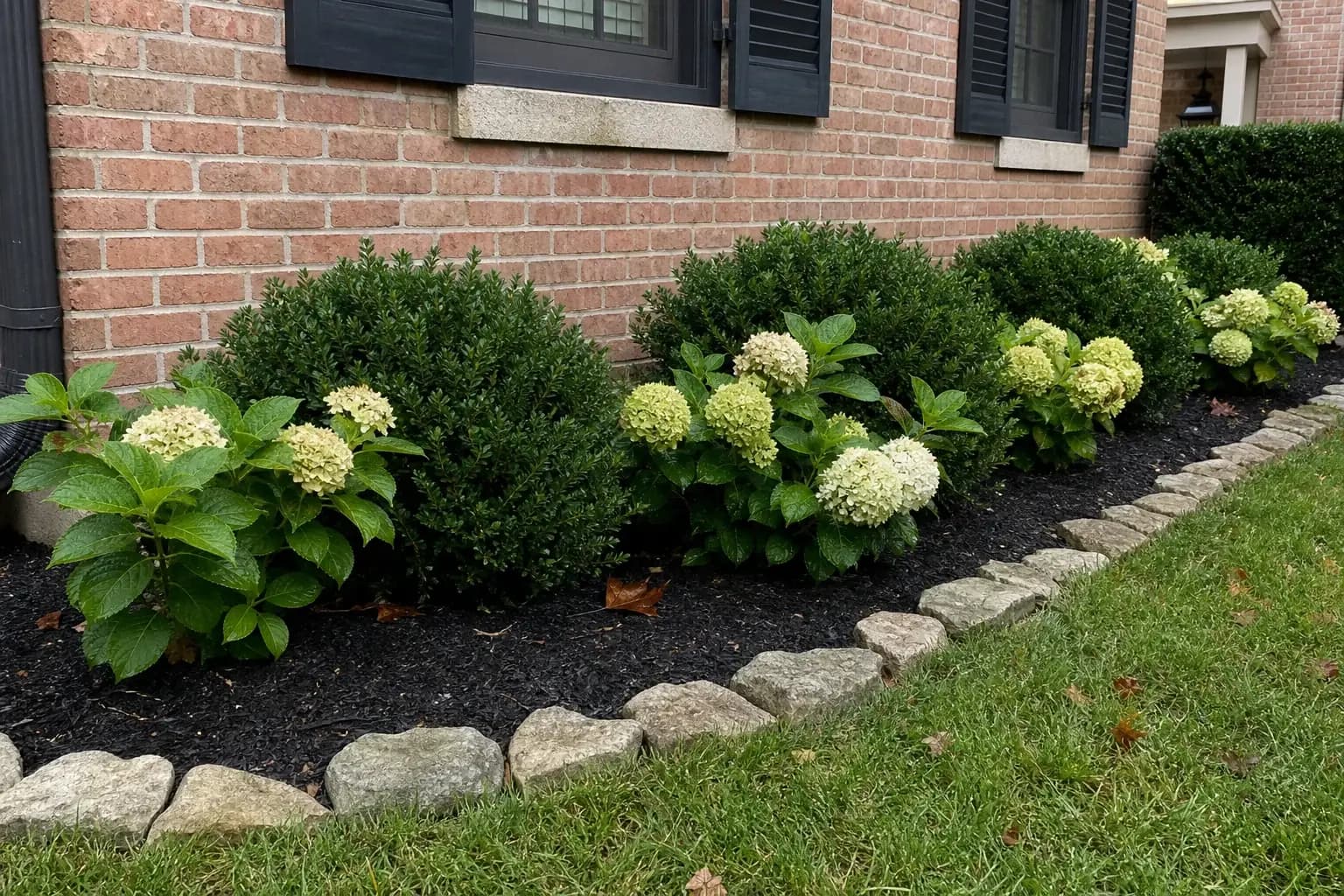
Best Shrubs and Foundation Plants for Lexington, KY
A research-first guide for Lexington homeowners comparing foundation shrubs, grouped flowering plants, evergreen structure, and ornamental trees before the property moves into planting or design scope.
QUICK ANSWER
Choose foundation plants by role, light, mature size, and maintenance level.
The best foundation plant is the one that fits the bed and the job. Boxwoods support evergreen structure, hydrangeas and lilacs add flowering volume, ornamental trees create focal points, and mixed beds need spacing that still reads clean after plants mature.
- Start with the role the plant needs to play in the bed.
- Match each plant to sun, shade, and mature size before installation.
- Move into design consultation when the layout is still unclear.
Use This Guide to Compare Planting Options Without Taking Over Privacy-Tree Ownership
This guide exists for foundation shrubs, grouped plant choices, and ornamental-tree research. It should help the reader compare fit, structure, and finished look without competing with the dedicated privacy-tree guide.
Best for
Homeowners comparing shrubs, flowering plants, and ornamental-tree options before install scope is locked
Primary handoff
Planting installation first, then landscape design when layout and structure need more planning
Guardrail
No privacy-tree takeover and no species-encyclopedia sprawl
VISUAL DIAGNOSIS
Match the planting style to the bed condition
Foundation beds can fail from poor plant choice, poor light match, or poor layout. These examples help sort the right path before installation.
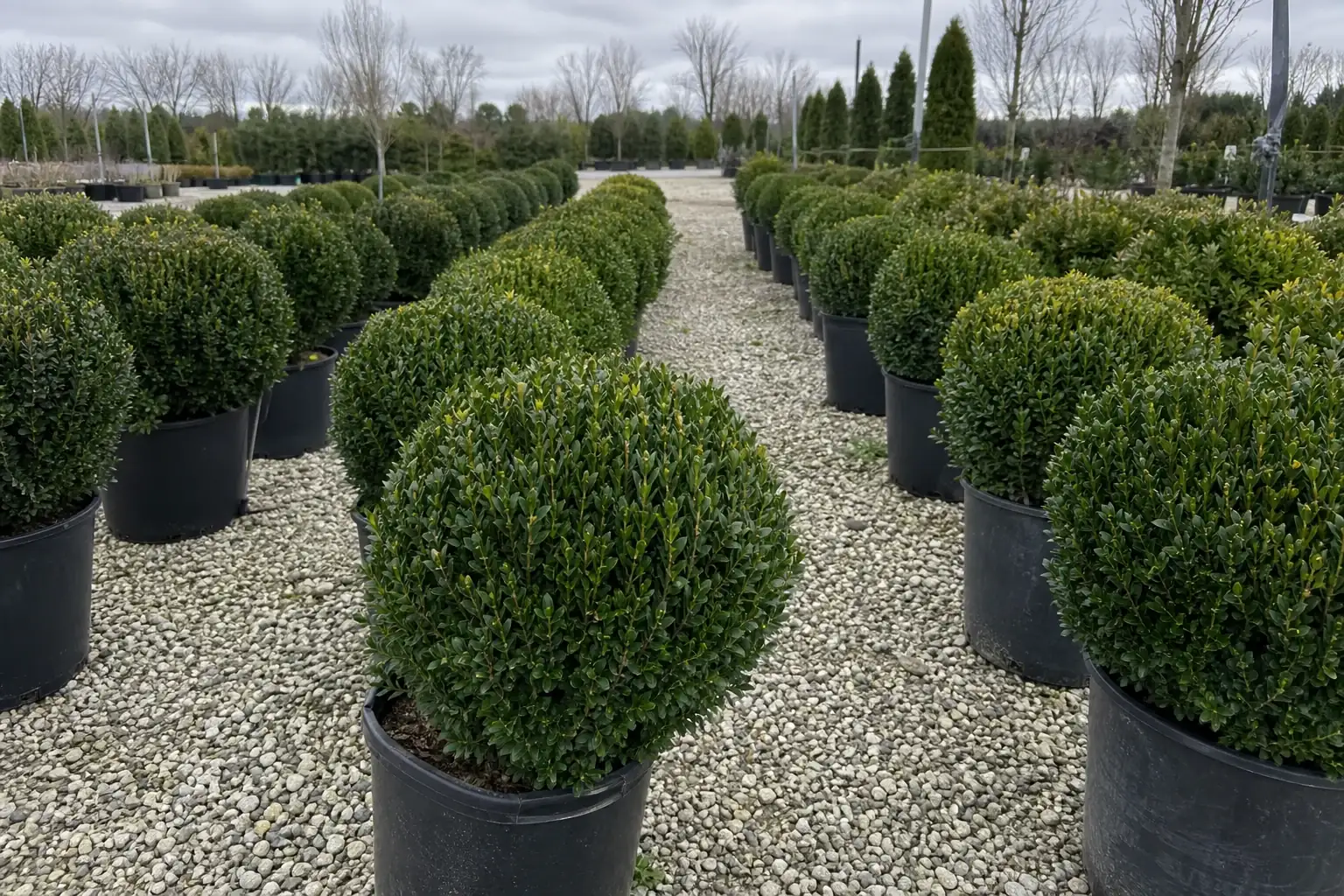
Evergreen structure
The bed needs clean shape, year-round structure, or a formal edge.
Use boxwood or other evergreen structure when the finished bed should stay defined through winter.
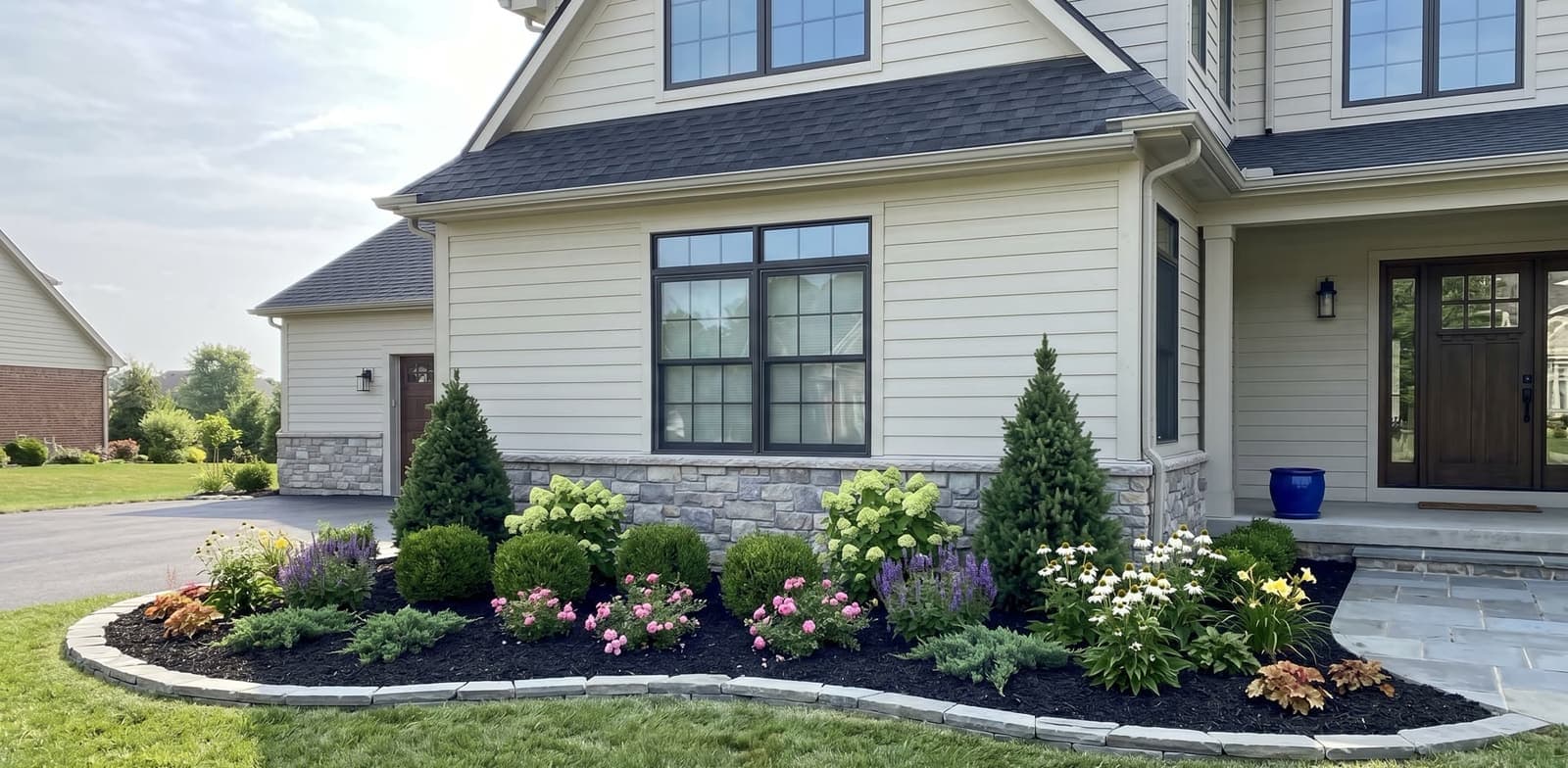
Mixed planting
The bed needs evergreen mass, flowering interest, and enough spacing to stay readable.
Use a grouped planting plan instead of selecting plants one at a time.
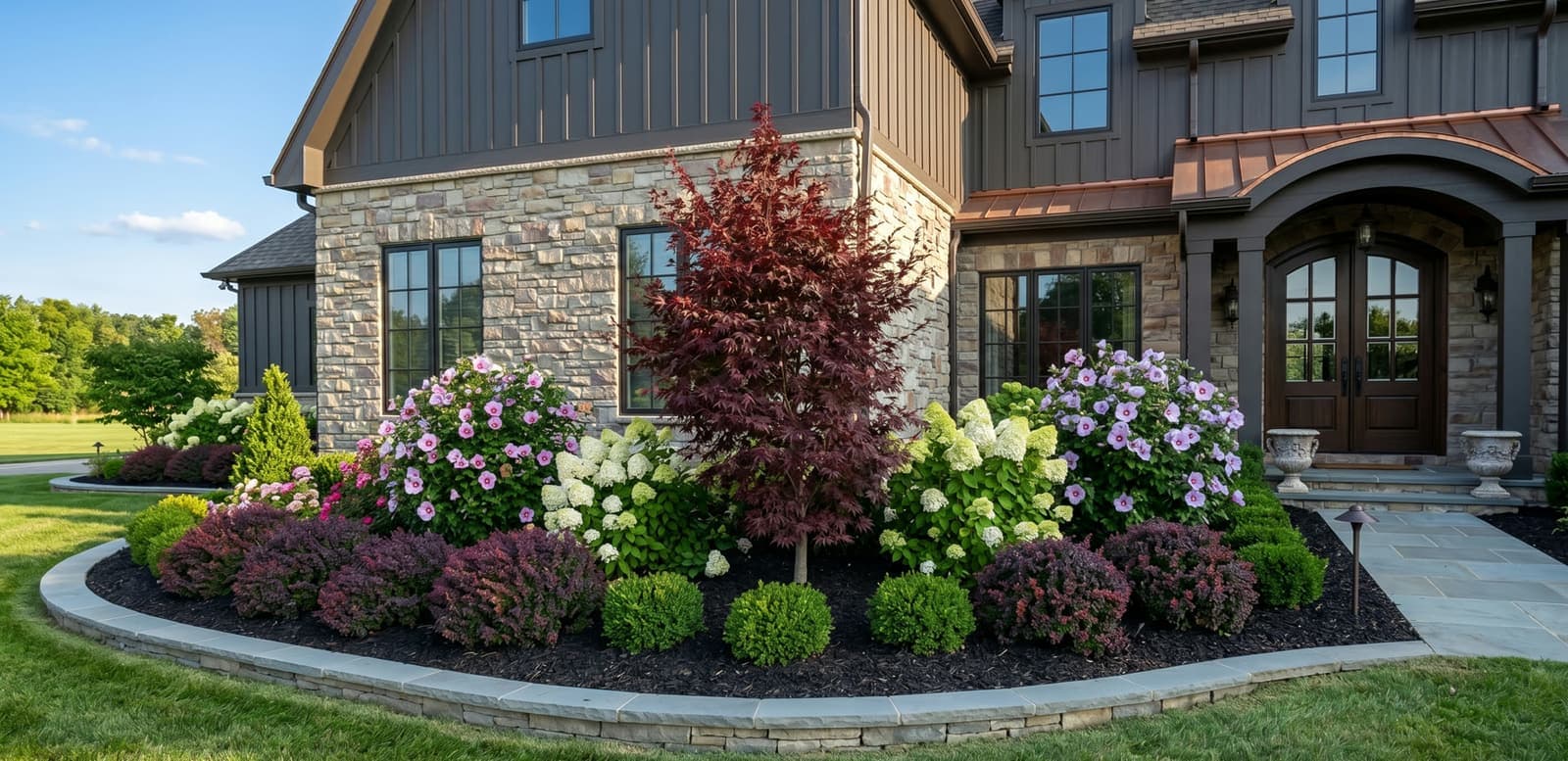
Light-driven choice
The same plant can perform differently on the sunny and shaded sides of the house.
Match plant selection to the bed's actual light exposure before buying material.
PLANTING ORDER
Build the foundation planting decision in the right order
A good foundation bed starts with structure and site fit before plant names. This order keeps the shortlist practical.
Step 1
Choose the plant role
Decide whether the bed needs evergreen structure, flowering volume, ornamental focus, or a mixed plan.
Step 2
Match light and mature size
Confirm sun, shade, mature width, and window or walkway clearance before selecting specific plants.
Step 3
Group plants into a readable layout
Use repeated groups and spacing rather than one-off plants that make the bed feel scattered.
Step 4
Route design questions early
Use design consultation when bed shape, screening, tree placement, or full layout still needs planning.
COMMON MISTAKES
Foundation planting mistakes that make beds feel crowded
Most planting problems come from choosing individual plants before the bed has a clear structure.
- Buying plants by bloom color before checking mature size.
- Using one of everything instead of grouped structure.
- Ignoring light differences between sides of the house.
- Treating a layout problem like a simple plant-shopping problem.
FOUNDATION SHRUBS
Best foundation shrubs for Lexington homes
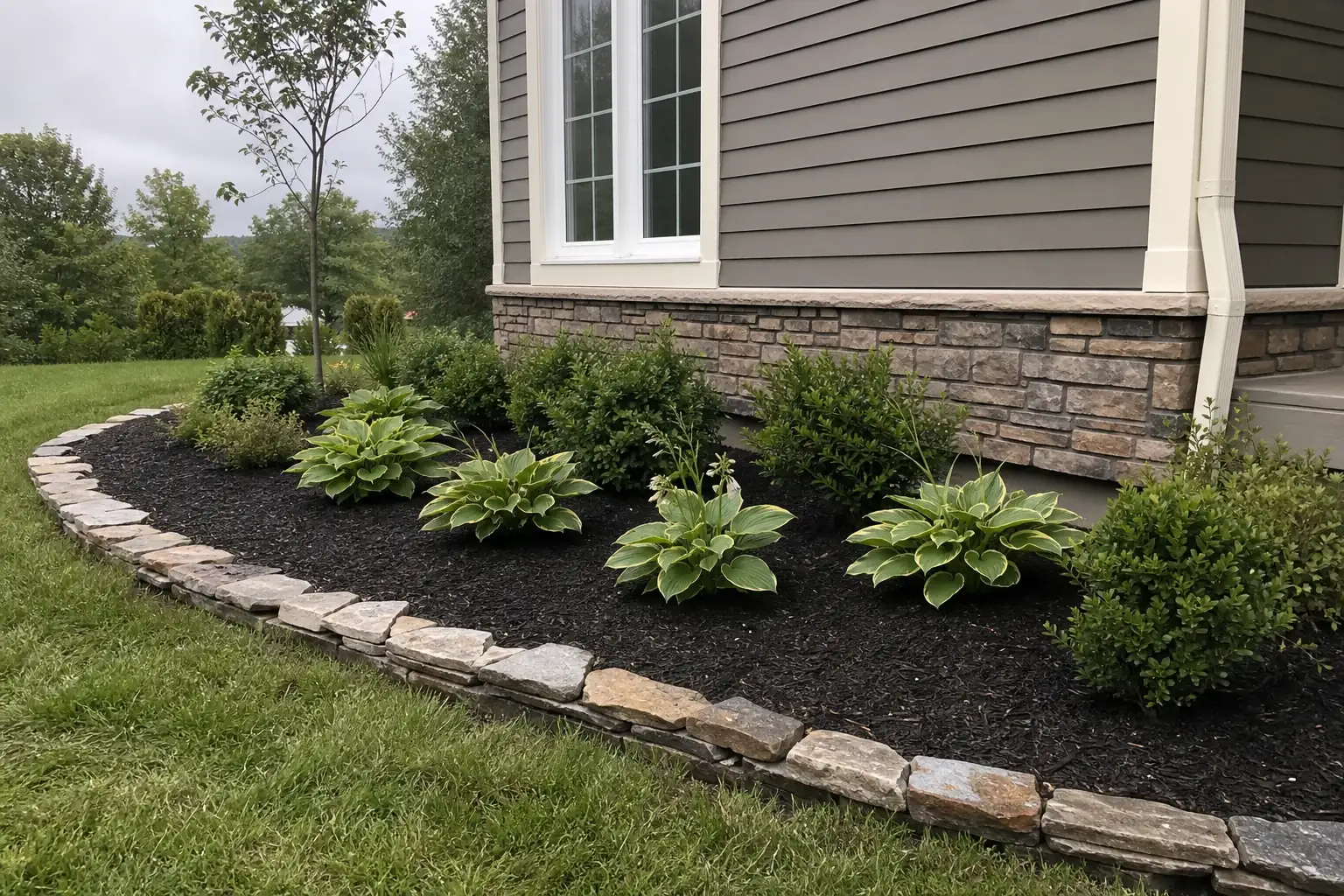
Foundation shrubs should do more than fill space. They need to scale with the house, hold structure through the season, and leave enough room for the bed to read clean once the install settles in.
That is why grouped plant language works better than a giant species dump here. The guide should help readers think about structure, maintenance, and finished look before the project becomes a live planting scope.
- •Boxwoods work when the goal is cleaner evergreen structure and a more formal edge
- •Hydrangea and lilac fit when the homeowner wants flowering volume and softer seasonal movement
- •Roses and grouped flowering plants fit best when the bed can support higher color and maintenance expectations
EVERGREEN STRUCTURE
Evergreen structure and screening options
This section can mention arborvitae, holly, and other evergreen structure options, but it should stop short of competing with the privacy-tree guide. Here the emphasis is on how evergreen material supports the whole bed rather than on pure screen ownership.
If the real question is privacy screening first, the reader should move to the privacy-tree guide. If the question is how the bed should be structured overall, this guide can stay in bounds.
FLOWERING OPTIONS
Flowering plant options for Lexington yards
Flowering plants belong here as grouped choices that support bed character and seasonal interest. Peonies, black eyed susan, hydrangea, lilac, and roses can all fit, but only when the planting plan matches the maintenance level and how the homeowner wants the space to read.
The goal is not to promise every plant on every site. The goal is to help the homeowner narrow the conversation before planting installation begins.
ORNAMENTAL TREES
When planting becomes a design decision
Ornamental trees like Japanese maple or red maple can change the whole property, which is why this guide should hand off cleanly into design consultation whenever spacing, layering, or visibility from the house becomes the bigger question.
That boundary keeps the guide honest. It supports plant selection, but it does not pretend every planting question can be solved without layout and sequencing decisions.
Current Proof for Foundation Planting and Shrub-Led Bed Planning
These proof pages support grouped plant choice, spacing, and foundation-bed improvement while staying separate from the dedicated privacy-screening branch.
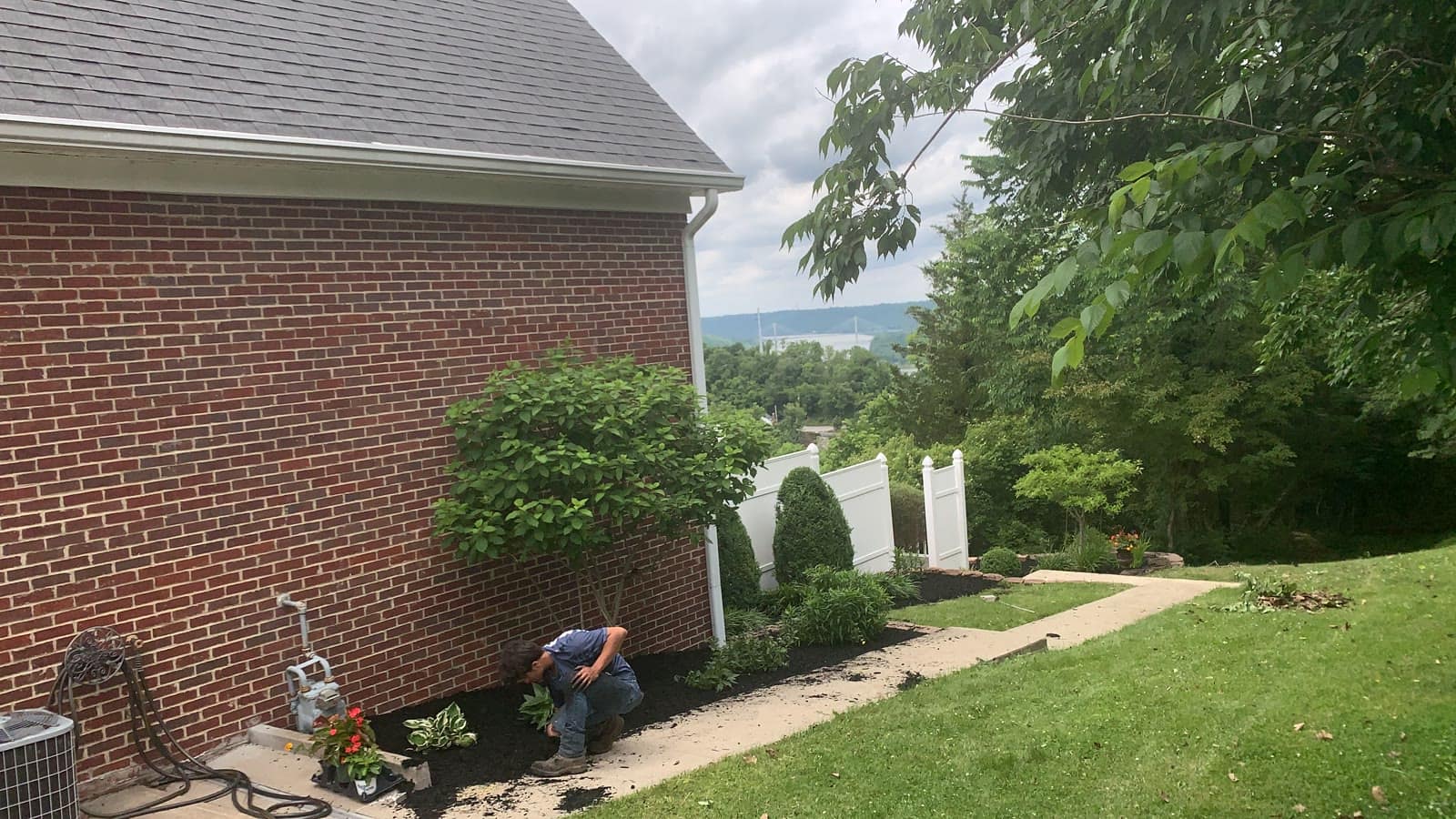
Maysville Mulch & Planting Refresh
Best current proof for foundation shrubs, spacing, and a cleaner planted structure against the house.
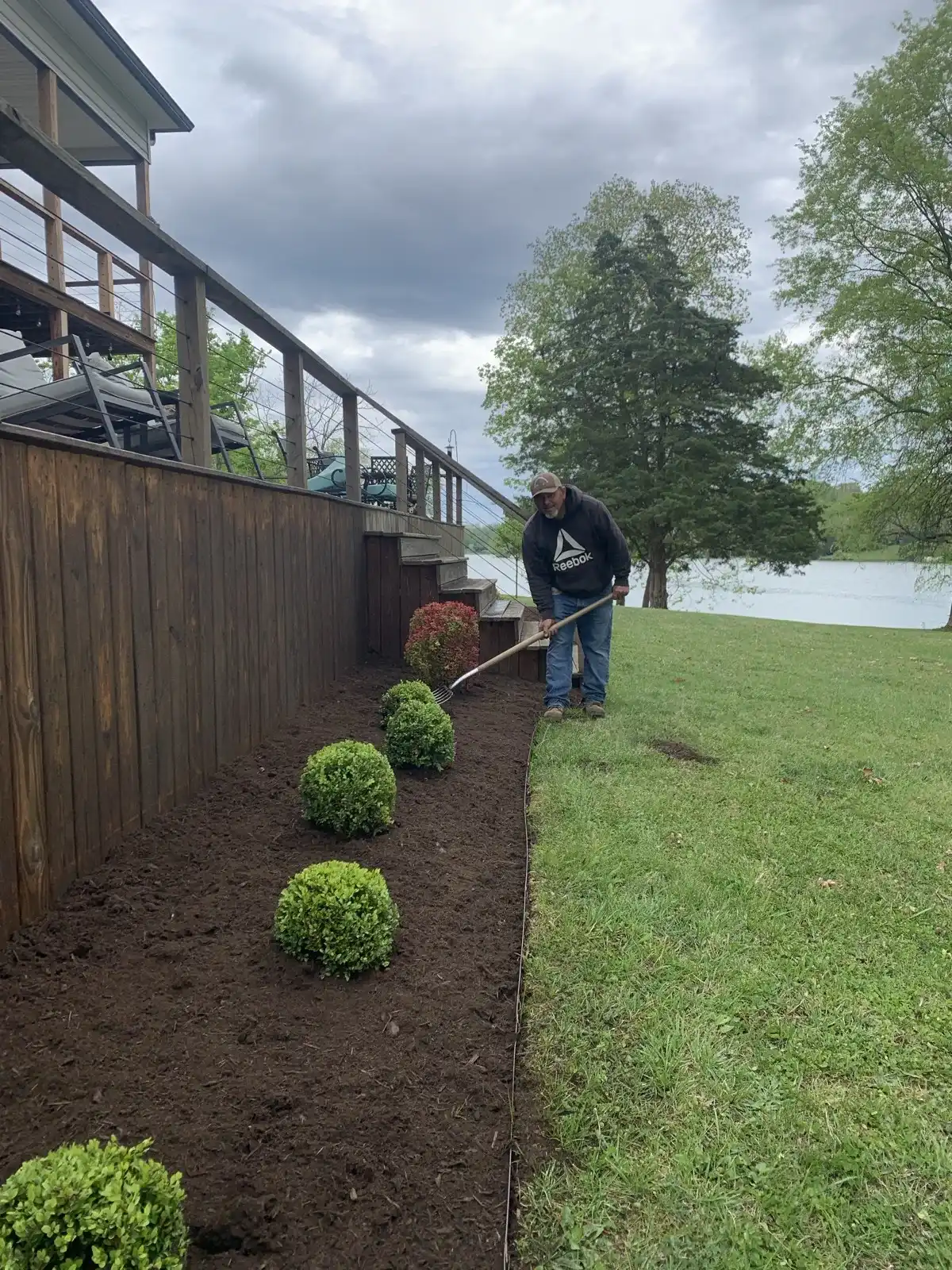
Carlisle Full Landscape Renovation
Support proof for grouped shrubs and small ornamental-tree decisions without turning the page into a tree-service branch.
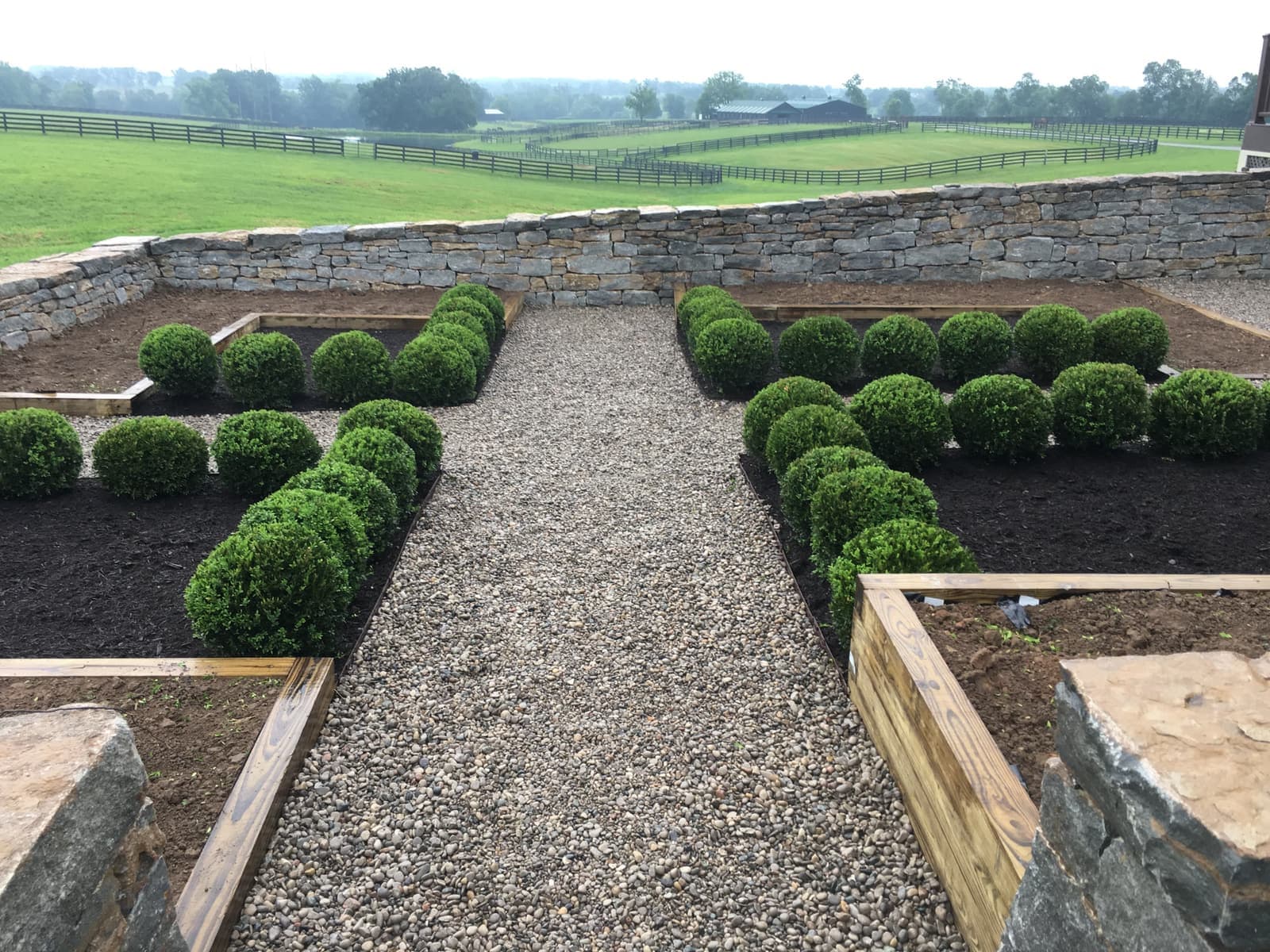
Residential Bed Renovation
Contextual support when plant choice and structure connect to a broader front-bed refresh.
Move From Plant Research Into the Right Live Service Page
Use the live pages below once the shortlist is clearer. The guide should support a better planting conversation, then hand off cleanly.
Foundation Planting FAQs
These questions stay on grouped plant selection, structure, and layout fit. They should help the reader choose a direction before the install scope is priced.
Plant-selection research
The guide stays practical and grouped. It should help the reader compare plant roles rather than pretend every species deserves its own service page.
What shrubs work best along a house foundation in Lexington?
The best fit depends on scale, sun, maintenance expectations, and how formal or soft the bed should feel. Boxwoods, hydrangea, lilac, and grouped evergreen structure are all reasonable examples when the site supports them.
Can ornamental trees fit in a foundation planting plan?
Yes, but once ornamental-tree spacing or visibility becomes the main design question, it often makes sense to move from simple planting research into landscape design consultation.
Should evergreen structure and privacy screening be treated the same way?
Not always. Evergreen structure can support the whole bed without becoming a full privacy screen. When the main question is privacy, the dedicated privacy-tree guide should take over.
Do flowering plants belong in the same bed as foundation shrubs?
They can, as long as the spacing, mature size, and maintenance expectations still keep the bed readable and not overcrowded.
When does plant choice become a design issue instead of a simple install?
Plant choice becomes a design issue when layout, sequencing, visibility, or screening structure still need to be decided before the install can be scoped honestly.
Still have questions? We're happy to walk through your project.
Ready to turn plant research into a real planting plan?
Request an estimate if you want help choosing, spacing, and installing shrubs, foundation plants, or ornamental trees, or move into design consultation if the layout still needs to be sorted first.