
Best Deer-Resistant Shrubs and Plants for Lexington, KY
A problem-solving guide for Lexington homeowners dealing with deer damage — covering which shrubs deer rarely touch, which plants deer target first, and how to build beds that hold up in deer-pressure areas.
Use This Guide to Choose Plants That Survive Deer Pressure Before You Replant
Deer damage is a plant-selection problem, not a maintenance problem. This guide helps homeowners in deer-prone areas of Lexington and surrounding Central Kentucky counties identify which plants hold up and which ones deer target first.
Best for
Homeowners dealing with deer damage or planning beds in deer-pressure areas
Primary handoff
Planting installation first, then landscape design when the bed needs a full rethink
Guardrail
Filters by deer resistance only — general plant selection stays with the foundation shrubs guide
CONTEXT
Is deer pressure actually the problem on your property?
If you have replaced the same hostas three times or watched deer strip an arborvitae row to bare stems, the issue is not maintenance — it is plant selection.
Before committing to a full replanting, confirm that deer are actually the source of the damage. Deer browsing leaves clean-cut stems at a height between two and five feet, consistent with a deer's reach. Hoof tracks in soft soil near the bed are a reliable confirmation. Timing matters too — deer typically feed at dusk and dawn, and damage is often most visible in the morning. Rabbit damage, by contrast, shows much lower on the plant and leaves clean angled cuts close to the ground. Pest damage and disease present differently again — patchy discoloration, wilting, or irregular patterns that do not follow the top-down browse pattern deer create.
Deer pressure in the Lexington area is not uniform. Outer Fayette County suburbs bordering wooded areas or farmland carry the heaviest pressure. Properties near the Nicholasville, Georgetown, and Paris corridors often deal with significant deer activity. Core Lexington neighborhoods in older, denser areas have less pressure than the suburban fringe — but no neighborhood is entirely immune, especially in late fall and winter when natural food sources run low.
RARELY BROWSED
Shrubs and plants deer almost always leave alone
No plant is 100% deer-proof under extreme pressure. A starving deer in a harsh winter will browse plants it would ordinarily avoid. The practical goal is to choose plants that are rarely the first target — species that deer tend to skip even when they are actively moving through a yard.
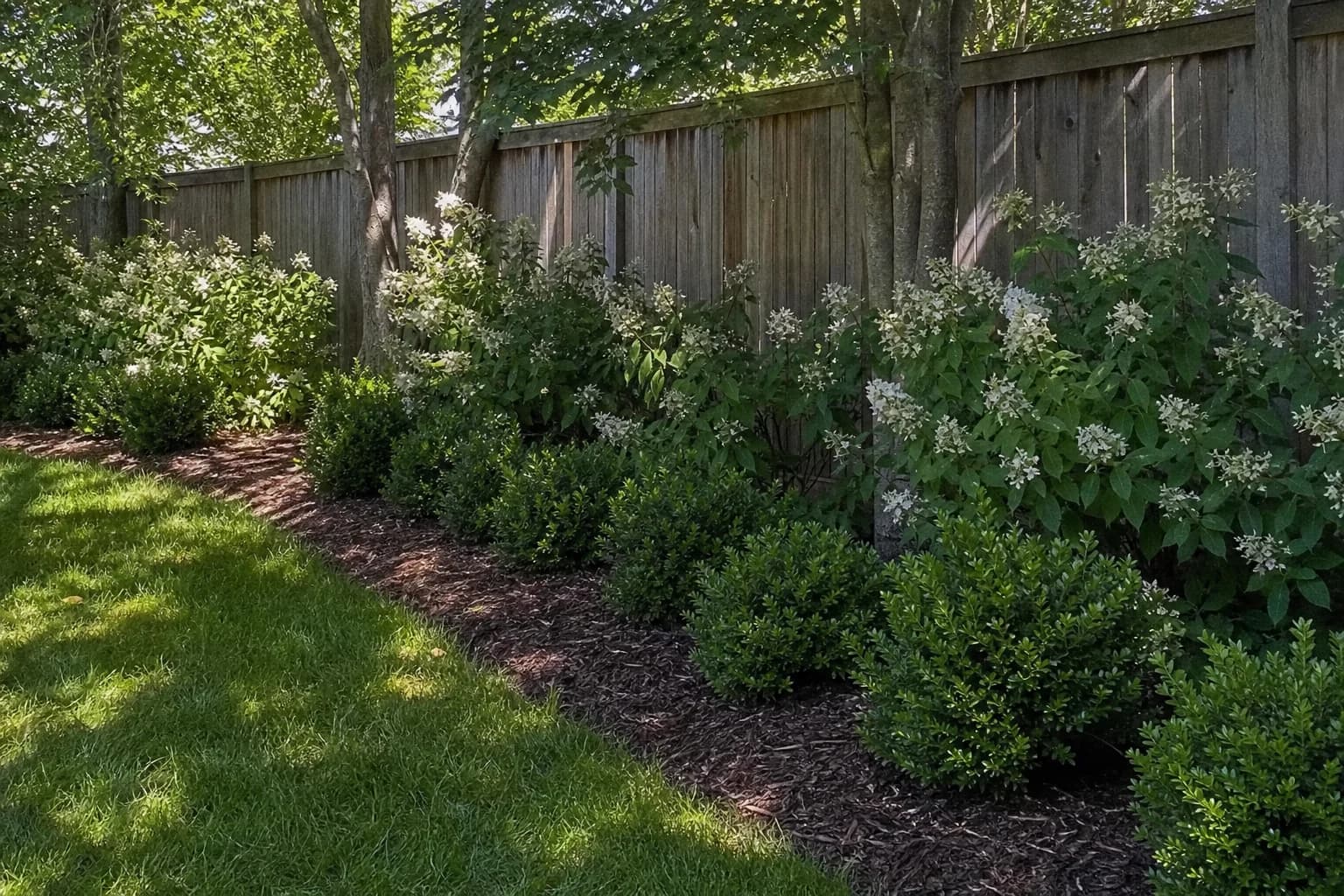
Boxwood is one of the most reliably deer-resistant foundation shrubs locally available. Deer rarely touch it, which makes it a strong choice in beds with moderate-to-high pressure. Barberry and juniper are both heavily used in Lexington landscapes and hold up well — deer generally avoid both due to their texture and scent. Lavender, Russian sage, catmint, and lamb's ear are all strongly aromatic perennials that deer consistently pass over. Ornamental grasses are almost never browsed and provide structure through winter, which also happens to be when deer pressure is highest.
Every plant mentioned here earns its place on this list specifically because deer tend to leave it alone — not for general garden merit. The same plants may appear in other guides for different reasons. Here, deer resistance is the only criterion that matters.
MODERATE RESISTANCE
Plants that hold up in moderate deer pressure but are not bulletproof
The middle tier is where expectations need to be realistic. Holly, spirea, viburnum, forsythia, and butterfly bush all have some degree of natural resistance, but none of them will hold up the way boxwood or juniper does in high-pressure areas.
Resistance within this group varies by cultivar, season, and how hungry the deer are. A viburnum that goes untouched for two seasons may get browsed heavily in a third if deer numbers are up or the winter is harsh. Holly with sharp leaves offers more protection than smooth-leafed varieties. Forsythia often avoids browse in the growing season but is sometimes targeted in late fall after other food is gone.
Planting moderate-resistance species in beds that have some protective context — close to the house, within a structure that deer approach cautiously, or surrounded by heavily resistant plants — improves their odds without guaranteeing anything.
VULNERABLE
What deer will eat first in Lexington yards
Knowing what deer prefer is as important as knowing what they avoid. The most commonly targeted plants in Lexington yards include hosta, daylily, tulip, azalea, euonymus, and Indian hawthorn. These are not bad plants — they are just the wrong choices for deer-heavy areas. Deer browse them reliably, and planting them in high-pressure zones guarantees repeated losses.
Arborvitae deserves special attention here. It is one of the most commonly planted privacy screening species in Central Kentucky, and it is also one of the most heavily browsed evergreens deer encounter. A row of arborvitae planted for privacy screening can be stripped to bare stems from the bottom up before the season is over in a high-pressure area. Arborvitae is excellent for privacy screening, but if your property has significant deer pressure and you want arborvitae screening, discuss deer mitigation options with the installer before committing to the row. See the privacy trees guide for more on arborvitae as a screening choice at /guides/privacy-trees-lexington-ky.
STRATEGY
How to combine deer-resistant plants with the rest of your bed
A practical approach in deer-pressure areas is to anchor the outer perimeter of the bed with reliably resistant species — boxwood, juniper, ornamental grasses, or barberry — and use that buffer to protect more vulnerable plants placed deeper in the bed or closer to the house. Deer are more cautious approaching areas where they cannot see clearly and cannot move freely.
In extreme-pressure areas, honest plant swaps may not be enough on their own. Physical deterrents, repellent sprays, or low fencing can sometimes do more than species selection alone. This is worth acknowledging directly rather than pretending that changing plants will always solve the problem. In moderate-pressure areas, the right plant choices typically reduce damage significantly without additional intervention.
When deer-resistant replanting becomes a full bed redesign — when the damage is widespread enough that the existing layout no longer works — that is where a design consultation fits before the install scope is defined.
BOUNDARY
When the real answer is a design conversation rather than a plant swap
If the deer damage is isolated to a few plants that can simply be replaced with resistant alternatives, a straightforward planting installation handles the scope. When the damage is widespread enough that the bed needs a broader plan — new layout, different species mix, structural changes — the replanting conversation makes more sense than swapping individual plants.
Landscape design helps when the question shifts from which plants to replace to how the bed should be rebuilt to hold up over time. That is the natural conclusion when deer damage has reached the point where the bed itself needs rethinking.
Current Proof for Replanting and Foundation Bed Work
These projects show current planting and bed-reset proof that supports the replanting conversation for deer-damaged yards.
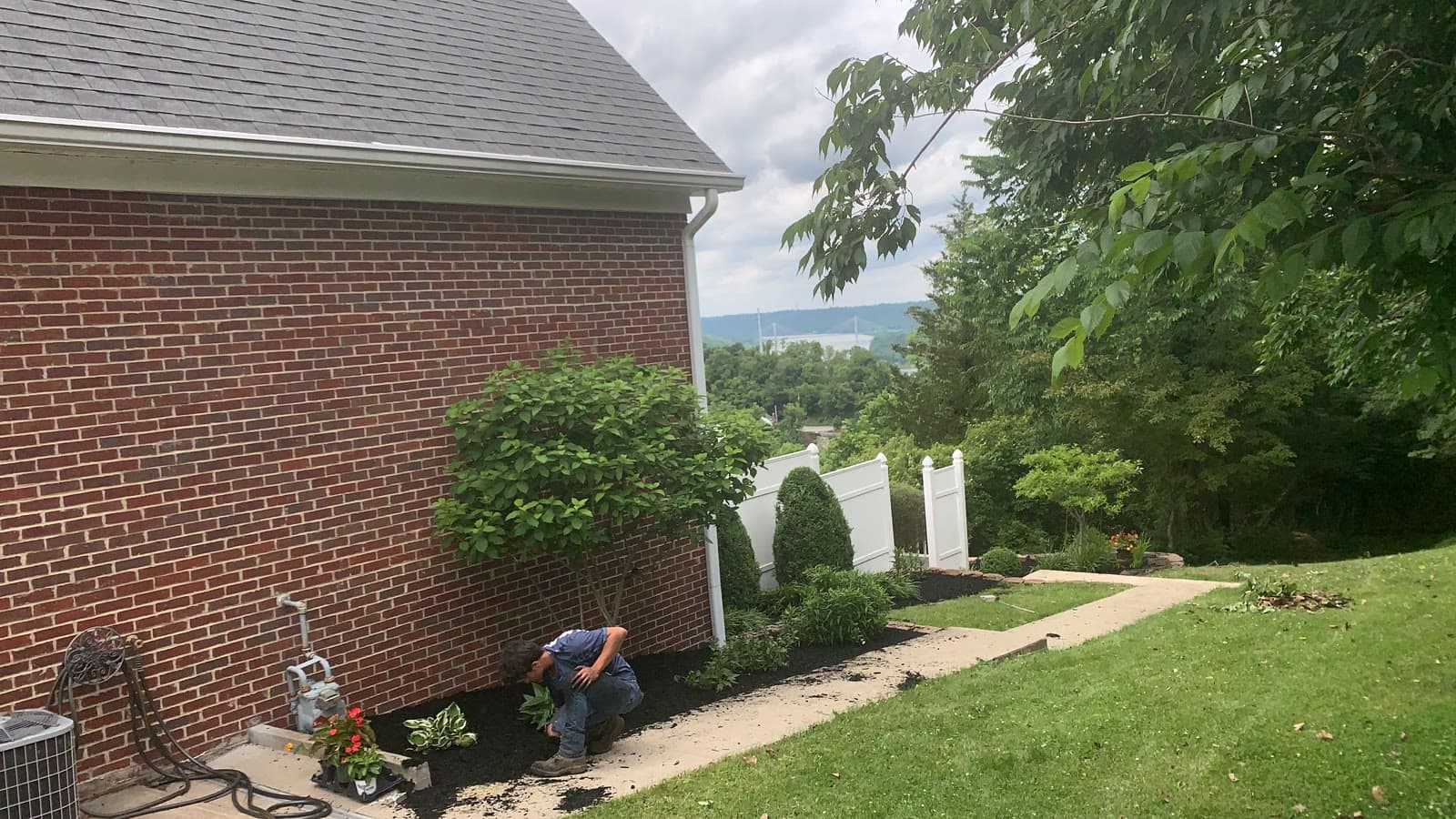
Maysville Mulch & Planting Refresh
Best current proof for a deliberate foundation plant selection, spacing, and installation that holds up over time.
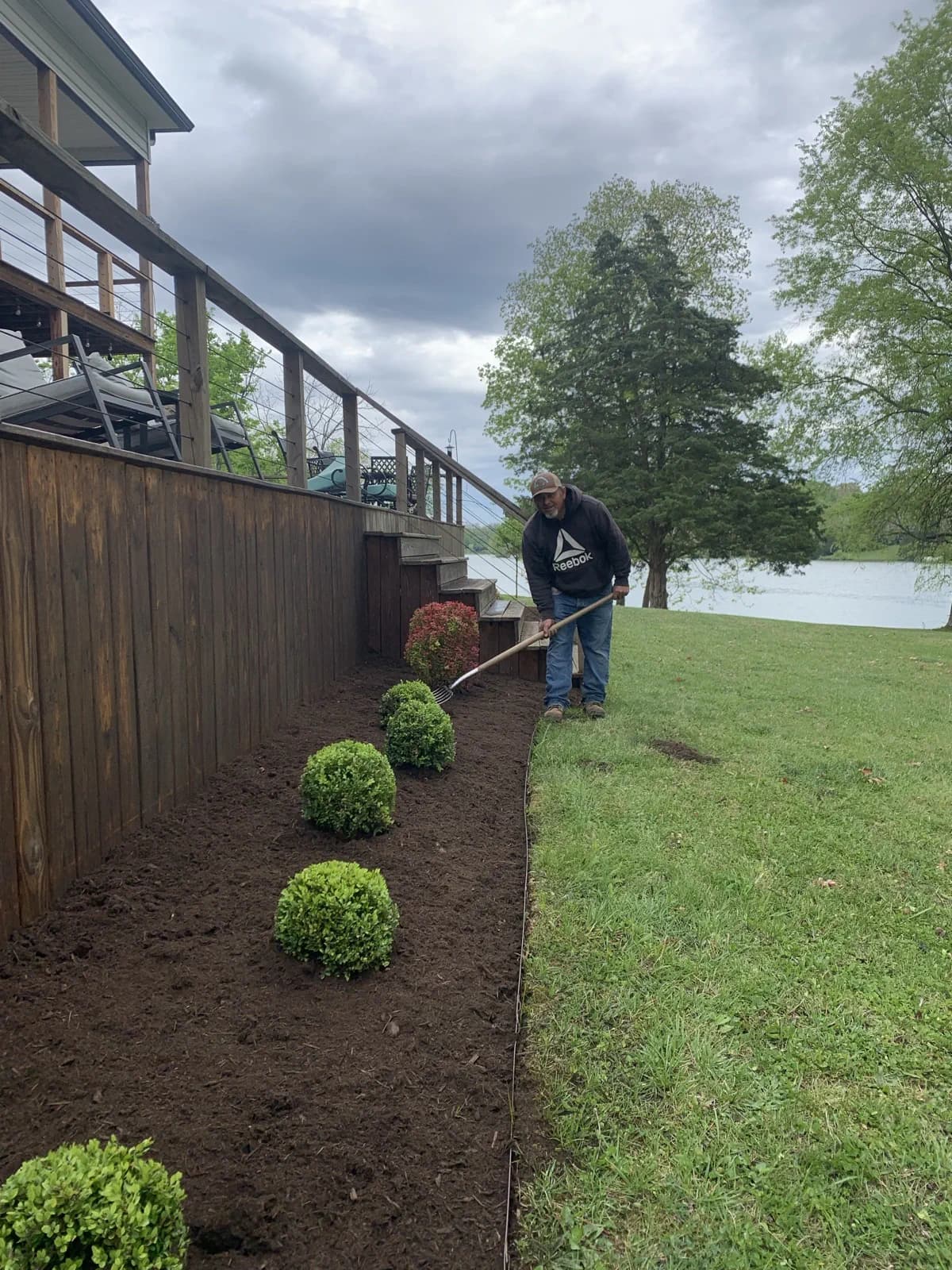
Carlisle Full Landscape Renovation
Support proof for grouped shrub and planting decisions that reflect a considered plant-selection approach.
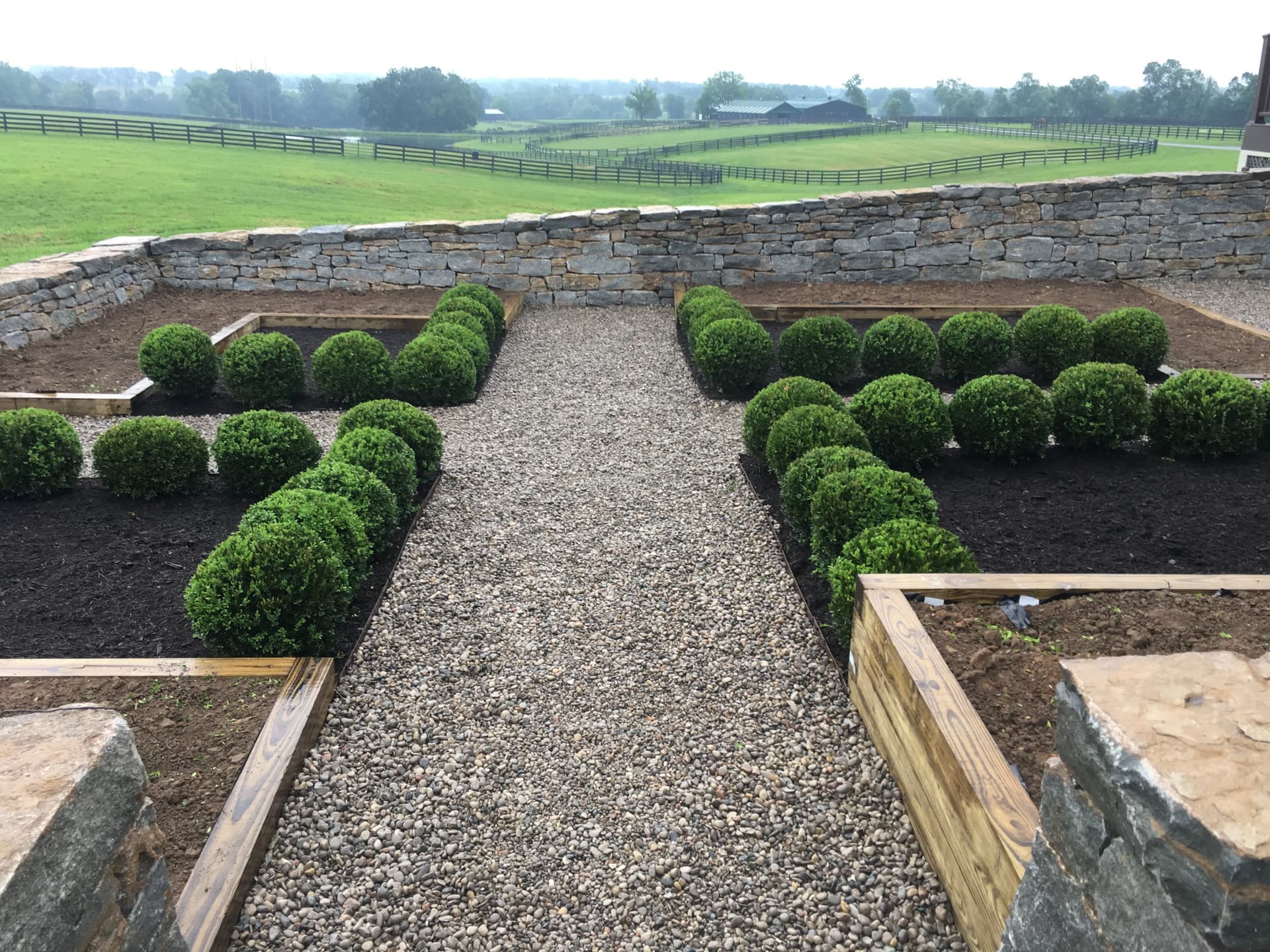
Residential Bed Renovation
Contextual support when deer damage has reached the point where the bed needs broader replanting rather than a single-plant swap.
Move From Deer-Resistant Research Into the Right Service Page
Use the service and research pages below when plant selection is clearer and the property is ready to move forward.
Deer-Resistant Planting FAQs
These questions help sort deer-resistant plant options before the project moves into installation scope.
Deer-resistant planting
The guide stays practical and problem-focused. It should help the reader choose plants that hold up, not promise outcomes no plant can guarantee.
Are any plants truly deer-proof?
No plant is 100% deer-proof under extreme pressure. Some are rarely browsed, but a starving deer will try almost anything. The goal is to choose plants that are rarely the first target.
Will deer eat boxwood?
Boxwood is one of the most reliably deer-resistant foundation shrubs. Deer rarely browse it, making it a strong choice in moderate-to-high deer pressure areas.
Are arborvitae deer resistant?
No. Arborvitae is one of the most deer-vulnerable evergreens. If your property has deer pressure and you want privacy screening, discuss mitigation options with the installer before committing to arborvitae.
What should I do if deer are eating my landscape?
Start by identifying which plants are being targeted, then consider replacing the most vulnerable species with rarely-browsed alternatives. If the damage is widespread, a broader replanting conversation may make more sense than swapping individual plants.
Is fencing better than deer-resistant plants?
Sometimes. In extreme deer-pressure areas, physical barriers may be the only reliable solution. In moderate-pressure areas, choosing the right plants can reduce damage significantly without fencing.
Still have questions? We're happy to walk through your project.
Ready to replant with deer-resistant choices that fit?
Request an estimate for plant selection and professional installation matched to your property's deer pressure.