
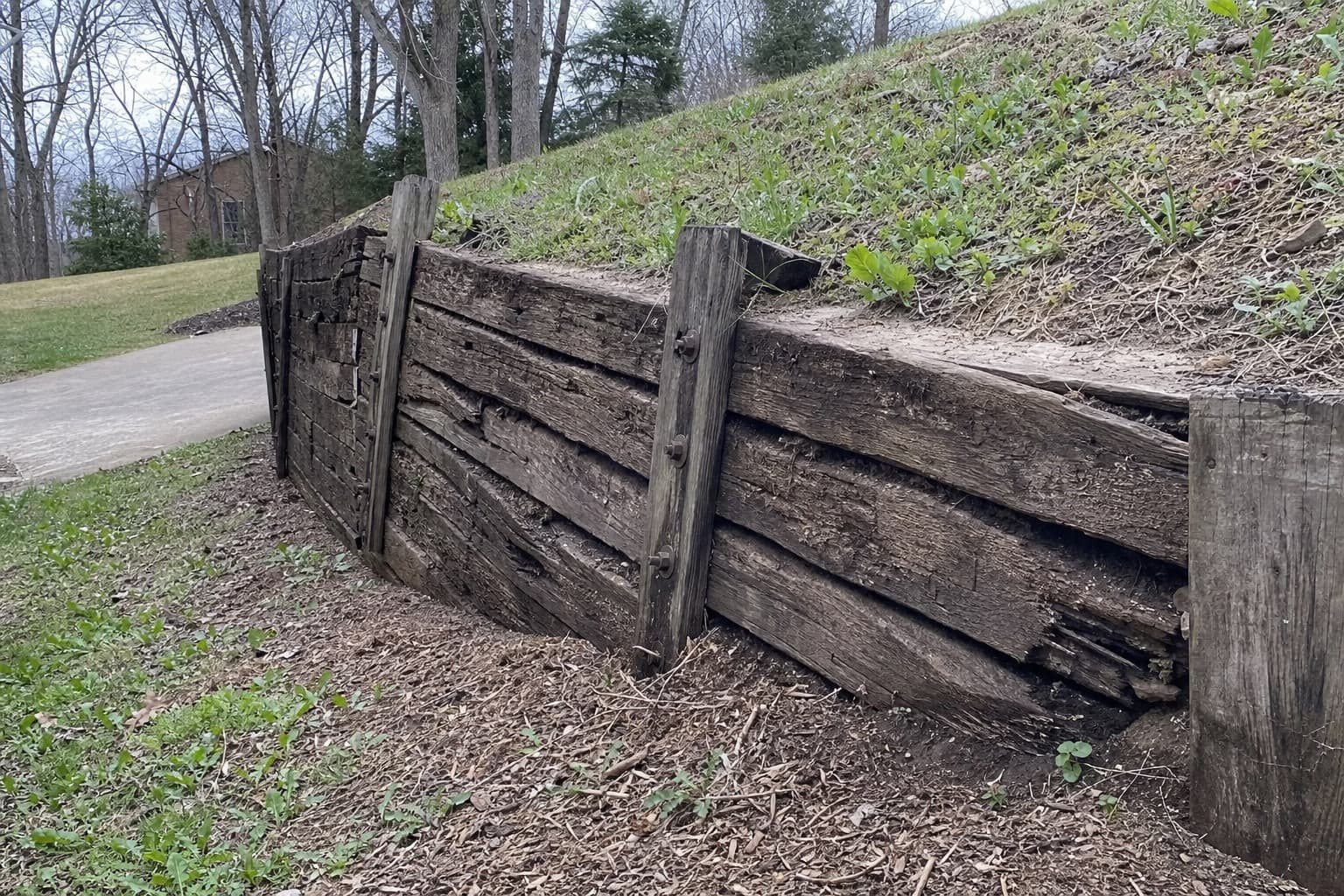
Erosion Control for Sloped Yards in Lexington, KY
A guide to diagnosing slope washout, bare soil, concentrated runoff, mulch loss, dry creek channels, planting, grading, retaining walls, and drainage corrections.
Use This Guide to Match Erosion to the Right Fix
Sloped-yard erosion is not always a retaining-wall problem. The right solution depends on whether water is sheet-flowing, concentrating, cutting channels, washing mulch, or moving soil downhill.
Best for
Sloped yards with bare soil, mulch washout, ruts, exposed roots, failing grass, or runoff cutting through the same path.
Primary handoff
Drainage, retaining walls, planting, or grading depending on the slope, water source, and soil movement.
Conversion cue
Request an estimate when erosion repeats after mulch, seed, or small DIY fixes.
THE SHORT VERSION
- Bare soil and concentrated flow are the two warning signs that erosion will keep repeating.
- Plants, mulch, erosion blankets, grading, dry creek channels, and retaining walls solve different slope problems.
- A walkthrough should find the water source before choosing a visible finish.
FIX OPTIONS
Erosion solutions depend on water speed and slope
Planting and mulch
Best for gentler slopes where roots and cover can stabilize the surface.
- •Bare soil
- •Low to moderate slope
- •Bed stabilization
- •Maintenance required
Drainage or dry creek
Best when water needs a defined path instead of spreading across a slope.
- •Concentrated flow
- •Washout paths
- •Stone channels
- •Outlet planning
Retaining wall
Best when soil needs structural support or the grade change is too steep to hold.
- •Steep slopes
- •Soil retention
- •Wall drainage
- •Higher scope
DIAGNOSIS
What changes the erosion-control scope
- Water source
Roof runoff, hardscape runoff, uphill yards, and natural slope all create different fixes.
Downspout washout should not be treated like normal bed erosion.
- Slope severity
Gentle slopes can often be planted and stabilized; steep slopes may need structure.
A wall may be needed when soil cannot hold its shape.
- Surface cover
Bare soil erodes faster than planted, mulched, or stabilized areas.
Temporary cover can matter while plants establish.
- Outlet and overflow
Water needs a safe path when heavy rain exceeds normal flow.
Dry creek channels and drains still need discharge thinking.
HANDOFF
When erosion should become an estimate request
If
Water cuts the same path every storm.
Then
Request drainage help before replacing mulch or seed again.
BEST NEXT STEP
Concentrated flow needs a water path.
See drainage serviceIf
The slope is steep or soil is sliding.
Then
Evaluate whether a retaining wall or grade change is needed.
RELATED SERVICE
Soil movement may need structure.
See retaining wallsIf
The area needs a planted, lower-maintenance stabilization plan.
Then
Use design or planting installation so the slope looks intentional.
RELATED SERVICE
Plants can stabilize and finish gentler slopes.
See landscape designRelated Proof for Sloped-Yard Scope
Use these pages to move erosion from symptom to service path.
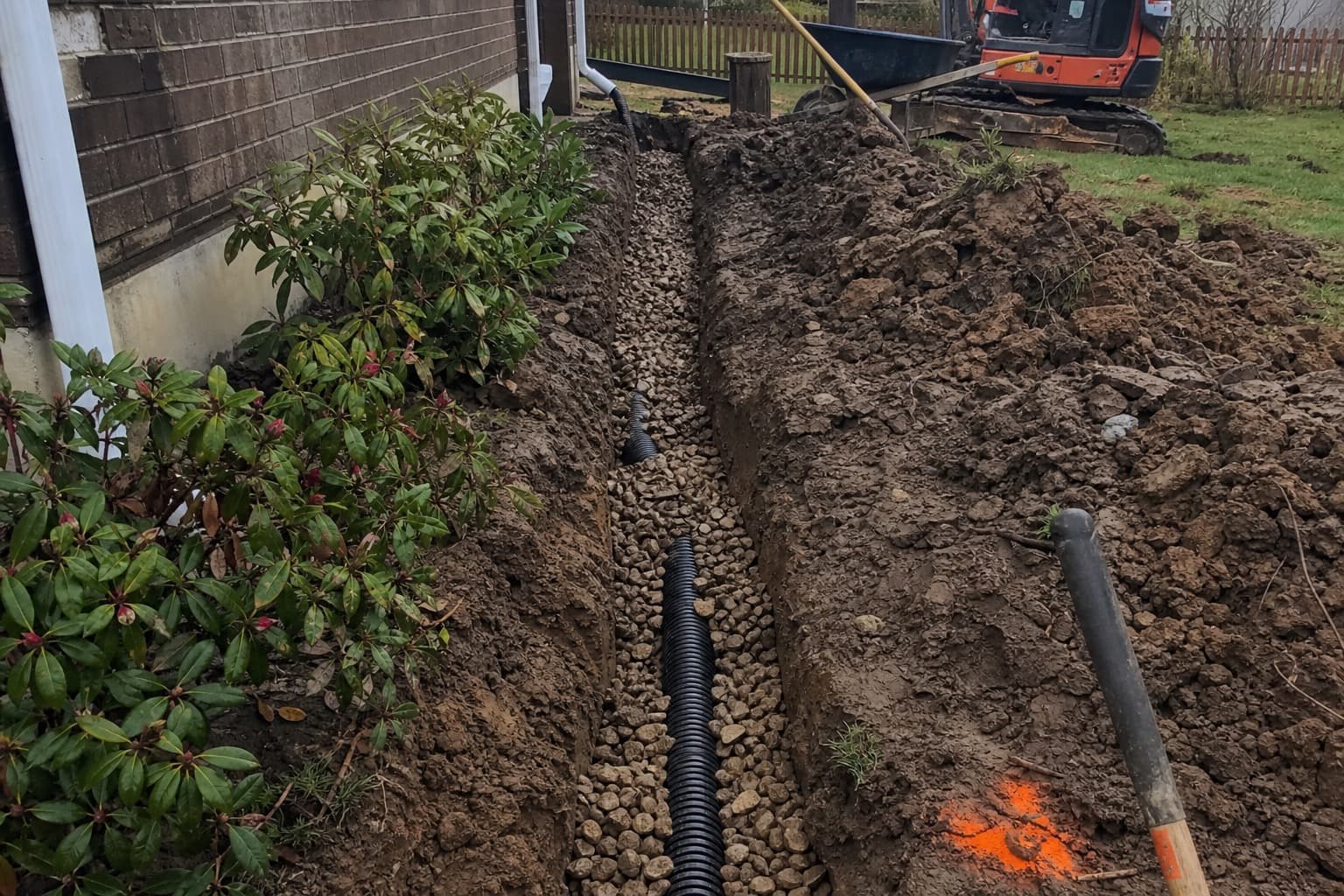
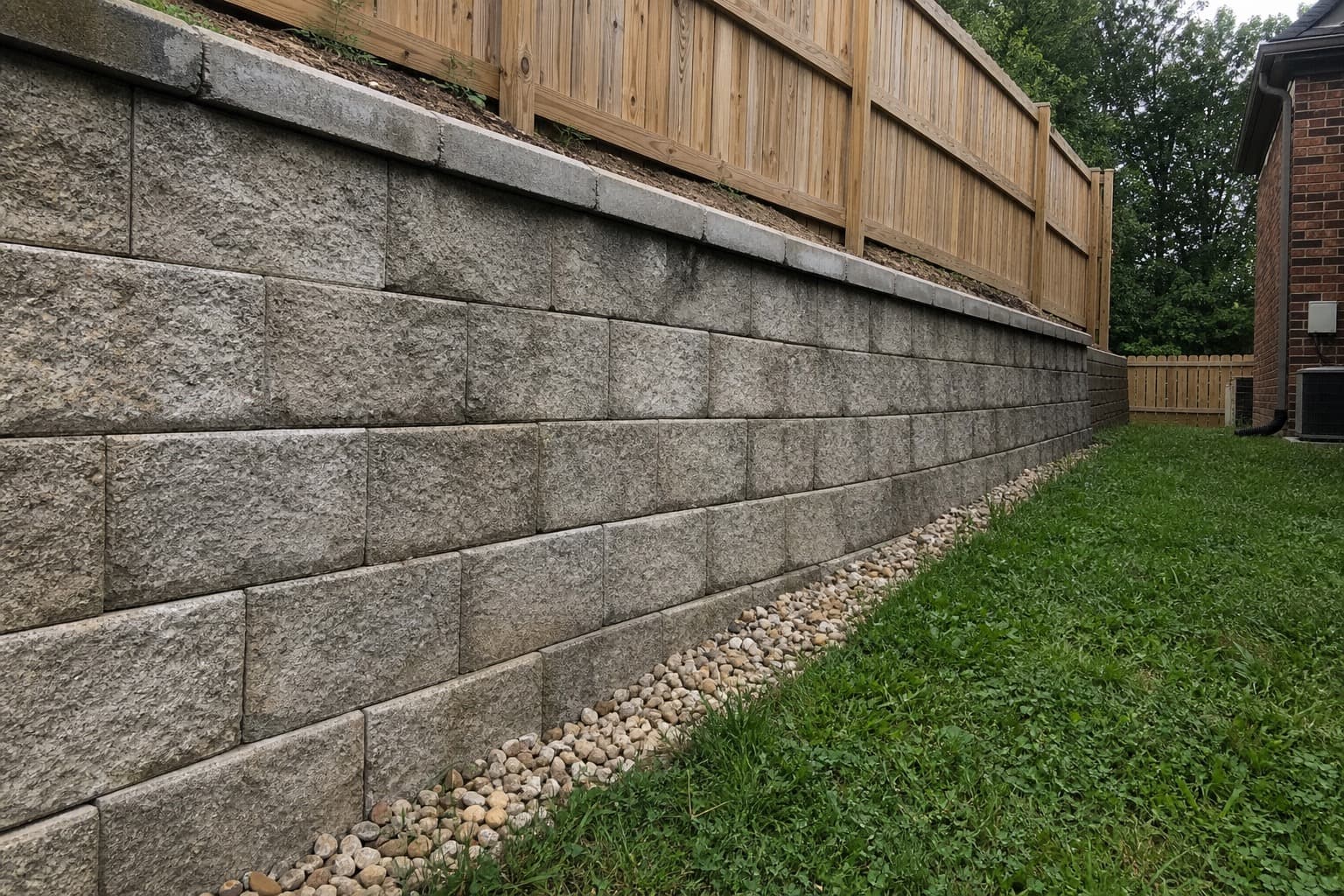
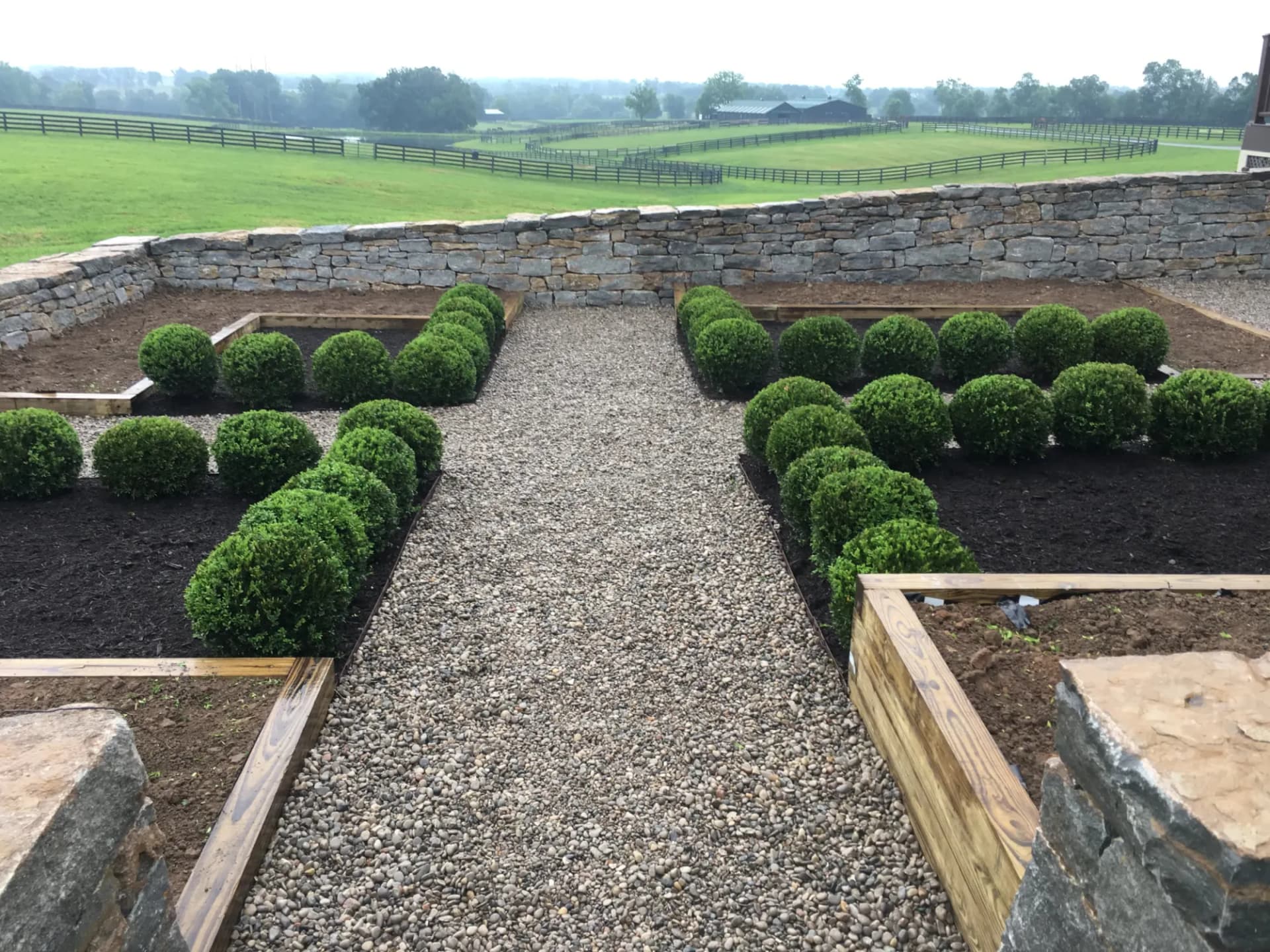
Connect Erosion to Drainage, Grading, and Planting
These pages help identify whether the fix is water movement, soil shaping, structure, or planting.
Erosion Control FAQs
Short answers for sloped-yard erosion decisions.
Will mulch stop erosion on a slope?
Mulch can help on gentler slopes, but repeated washout usually means water flow, slope, or soil stabilization needs a stronger plan.
Do I need a retaining wall for erosion?
Not always. Some erosion can be handled with grading, drainage, planting, or dry creek-style routing. Walls are for steeper or structural grade changes.
What should I photograph before requesting help?
Show the slope, where water starts, where soil or mulch moves, nearby downspouts, and the lower area where runoff ends.
Still have questions? We're happy to walk through your project.
Ready to stop the same slope from washing out?
Send slope photos after rain, the washout path, and where water starts and ends. Orlando's can confirm whether the scope is drainage, grading, wall, or planting-led.