
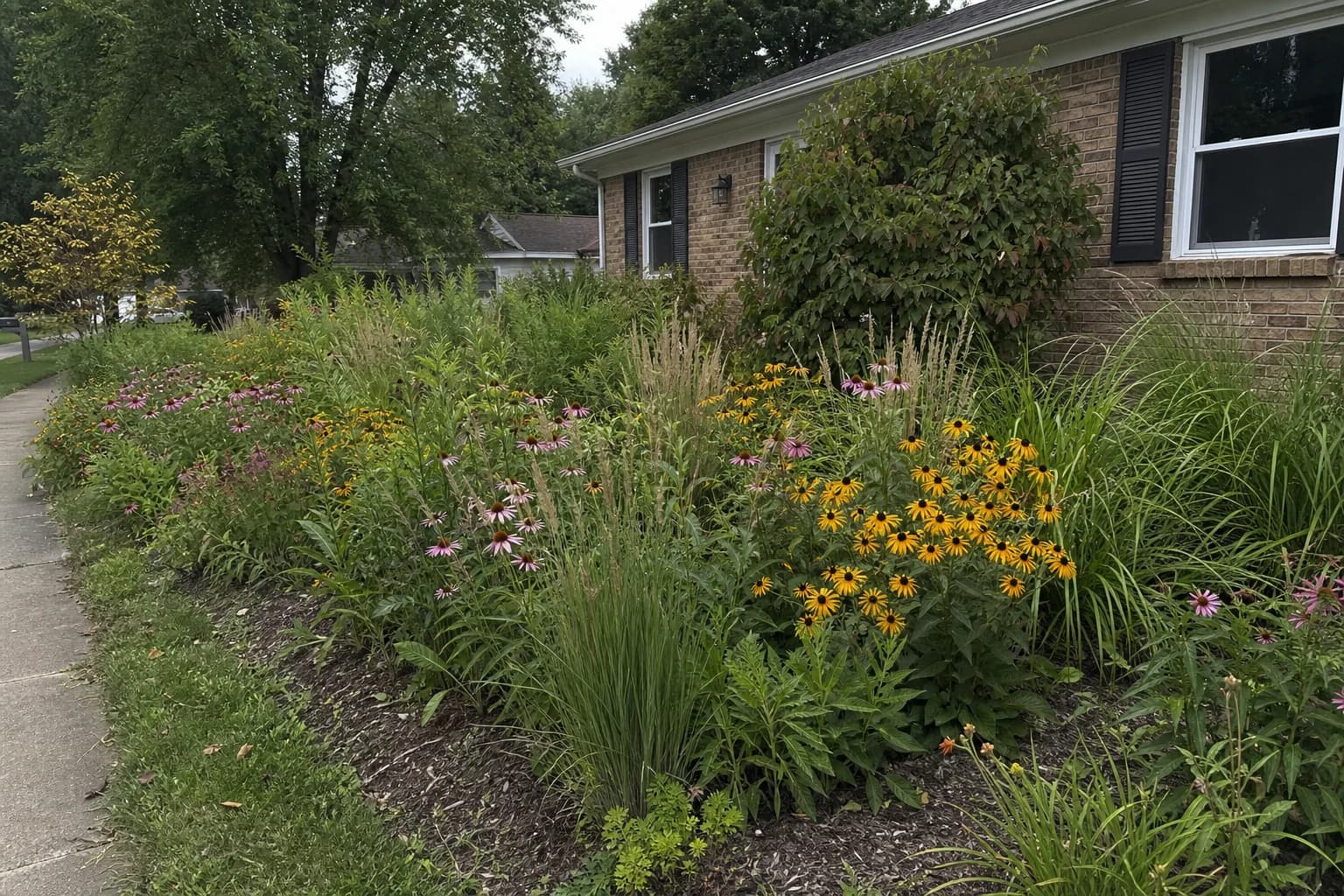
Plants to Avoid in Kentucky Landscapes and What to Plant Instead
A practical guide to problem plants, invasive tendencies, wrong-size shrubs, weak site fit, and better replacement roles for Kentucky front yards and foundation beds.
QUICK ANSWER
Avoid plants that fail the role, outgrow the space, spread aggressively, or create repeat maintenance problems.
A plant can be common and still be wrong for a Kentucky landscape if it is invasive, disease-prone, deer-prone, too large for the bed, or poorly matched to sun, shade, water, and maintenance expectations.
- Replace problem plants by role: privacy, foundation, flowering accent, or small tree.
- Avoid repeating the same site-fit mistake with a different plant.
- Native and low-maintenance choices can help, but only when they fit the actual bed.
Use This Guide Before Replanting a Problem Bed
The point is not to memorize a banned list. The goal is to avoid plants that create maintenance, invasiveness, size, deer, or site-fit problems and replace them by landscape role.
Best for
Homeowners replacing inherited shrubs, invasive plants, weak trees, or wrong-size foundation plantings.
Primary handoff
Landscape design when the whole bed needs rethinking; planting installation when replacements are clear.
Guardrail
This is a problem-and-alternative guide, not a duplicate native-plant guide.
THE SHORT VERSION
- Plant replacement should solve the original problem while filling the empty space.
- Wrong mature size is one of the most common avoidable landscape issues.
- A better alternative depends on the role the plant needs to play.
PROBLEM TYPES
The plants to avoid are usually problem categories
Invasive or spreading
Plants that escape beds or crowd out better choices create long-term maintenance issues.
- •Spreads too easily
- •Hard to remove
- •Poor neighbor fit
Wrong-size foundation plants
Shrubs that outgrow windows, walks, and entries create constant pruning pressure.
- •Too tall
- •Too wide
- •Always needs correction
Weak site fit
Plants that need different light, water, soil, or deer pressure will decline or disappoint.
- •Sun/shade mismatch
- •Water stress
- •Browsing pressure
REPLACEMENT ROLES
Choose alternatives by the job the plant needs to do
- Privacy
Use screening plants with the right mature height, spacing, and deer tolerance.
A privacy row needs future width as much as height.
- Foundation structure
Use shrubs that stay in scale with windows, walks, and architecture.
Avoid replacing an oversized shrub with another oversized shrub.
- Flowering accent
Use bloom plants that fit light and pruning expectations.
Hydrangeas need different care depending on type.
- Small tree
Use ornamental or shade trees with mature canopy and root space in mind.
A tree planted too close to the house becomes a future problem.
HANDOFF
When plant replacement needs design help
If
One problem plant needs to be swapped.
Then
Use planting installation if the replacement role is clear.
INSTALL PATH
Clear replacement work belongs on the planting page.
See plantingIf
The whole bed is overgrown, dated, or full of wrong plants.
Then
Use landscape design before replanting.
PLAN FIRST
A problem bed needs role-based replacement, not one-off swaps.
See designIf
You want lower maintenance and better regional fit.
Then
Compare native and low-maintenance choices before choosing plants.
RELATED GUIDE
Native choices can help when they fit the site.
Read native plant guideBEFORE REPLANTING
Questions to answer before replacing problem plants
What failed?
Size, disease, deer, drought, shade, invasiveness, or maintenance load?
What role is missing?
Privacy, structure, color, shade, screening, or low-maintenance coverage?
What are the site limits?
Measure bed depth, window height, light exposure, and water patterns.
How much maintenance is realistic?
Do not choose a plant that requires more pruning or care than you want long term.
Related Proof for Better Plant Replacement
Use these pages when problem-plant research should become design, planting, or low-maintenance planning.
Continue With the Right Replacement Strategy
Use these pages after identifying whether the problem is one plant, a whole bed, or a long-term maintenance mismatch.
Plants to Avoid FAQs
Short answers for homeowners replacing problem plants in Kentucky landscapes.
What makes a plant worth avoiding?
A plant may be worth avoiding if it spreads aggressively, outgrows the space, struggles in the site conditions, attracts repeated deer damage, or creates constant maintenance pressure.
Are native plants always the answer?
No. Native plants can be excellent, but they still need to fit the light, moisture, mature size, and maintenance goals of the bed.
Should I remove all problem plants at once?
If the whole bed is failing, a full redesign may be cleaner. If the issue is isolated, a targeted replacement can work.
Still have questions? We're happy to walk through your project.
Ready to replace problem plants with better-fit choices?
Send photos of the bed, problem plants, light exposure, and maintenance goals so Orlando's can recommend whether design or planting is the right next step.