
Green Giant vs Emerald Green vs Leyland Cypress for Kentucky Privacy Screens
A Lexington-focused comparison of Green Giant Arborvitae, Emerald Green Arborvitae, and Leyland Cypress for privacy-tree rows, spacing, deer pressure, clay-soil fit, and estimate planning.
QUICK ANSWER
For most Lexington privacy rows, start with Green Giant if you have room.
Green Giant Arborvitae is usually the first comparison point for a fast evergreen screen in Lexington when the site has enough room. We typically install 8–10 ft trees at ~5 ft on-center: immediate screening that still grows in. Most popular: Green Giant and Emerald Green arborvitae.
- The common install recommendation is 8–10 ft trees at ~5 ft on-center when the site supports that privacy-row path.
- Emerald Green is already positioned on the site as the tighter, cleaner formal screen option.
- Leyland Cypress can be part of the comparison, but the local catalog docs should confirm growth, mature size, spacing, and Kentucky fit before numbers are published.
Use This Guide Before Choosing a Privacy-Tree Row
Green Giant Arborvitae, Emerald Green Arborvitae, and Leyland Cypress are often compared by homeowners who want privacy fast. We typically install 8–10 ft trees at ~5 ft on-center: immediate screening that still grows in. Most popular: Green Giant and Emerald Green arborvitae.
Best for
Homeowners comparing arborvitae and Leyland-style screening before requesting privacy tree installation.
Primary handoff
Privacy tree installation when the goal is an evergreen row, with tree planting when the project is not a screen.
Data guardrail
Green Giant values come from the current plant catalog; Emerald Green and Leyland numeric specs need catalog confirmation before quoting.
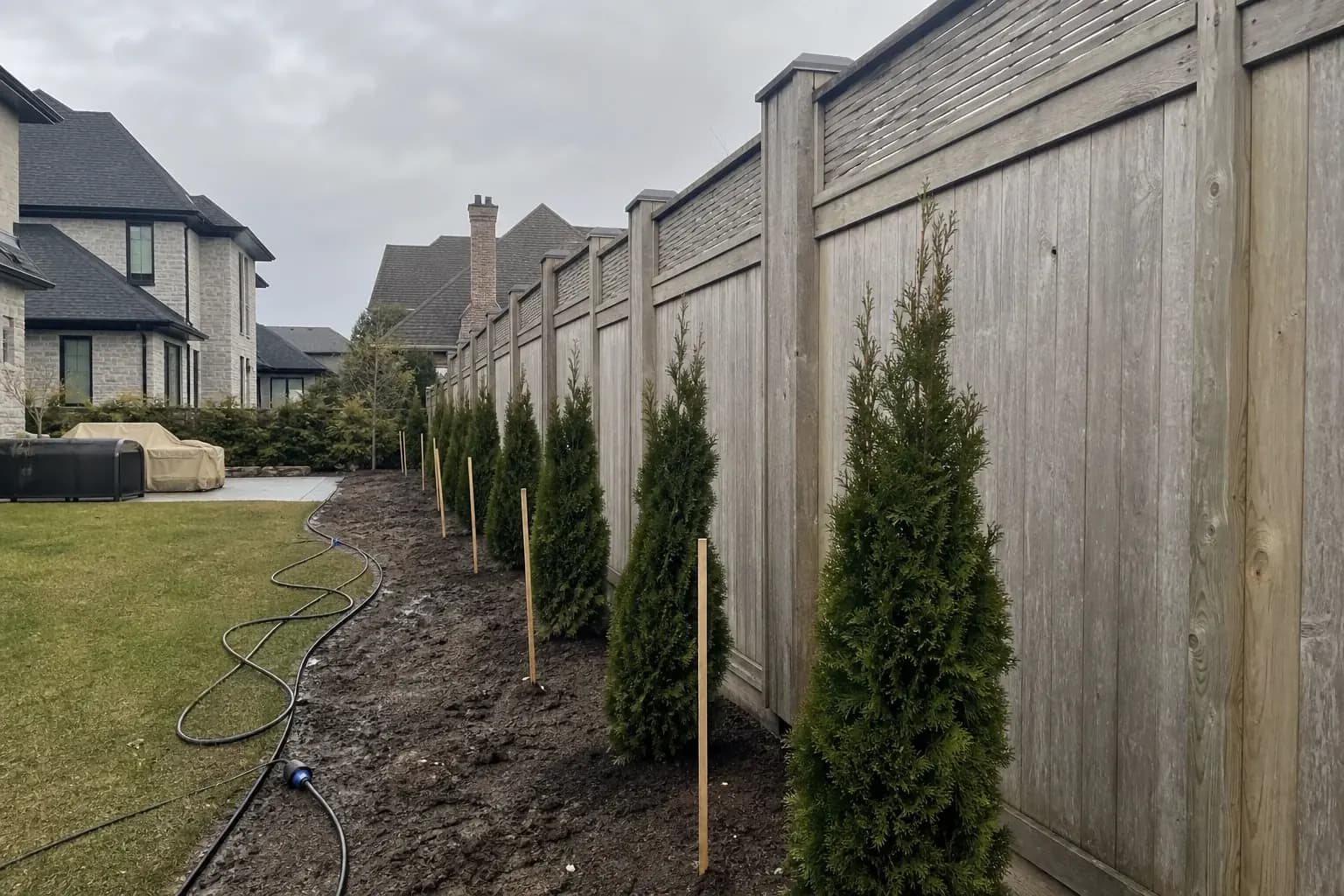
What the privacy-tree decision looks like on a real property
The species decision affects spacing, finished width, water demand, and how quickly the row reads as a screen. These examples show installation and mature-screen context rather than a generic plant list.

Install day
Privacy rows need layout, access, and spacing confirmed before the holes are dug.
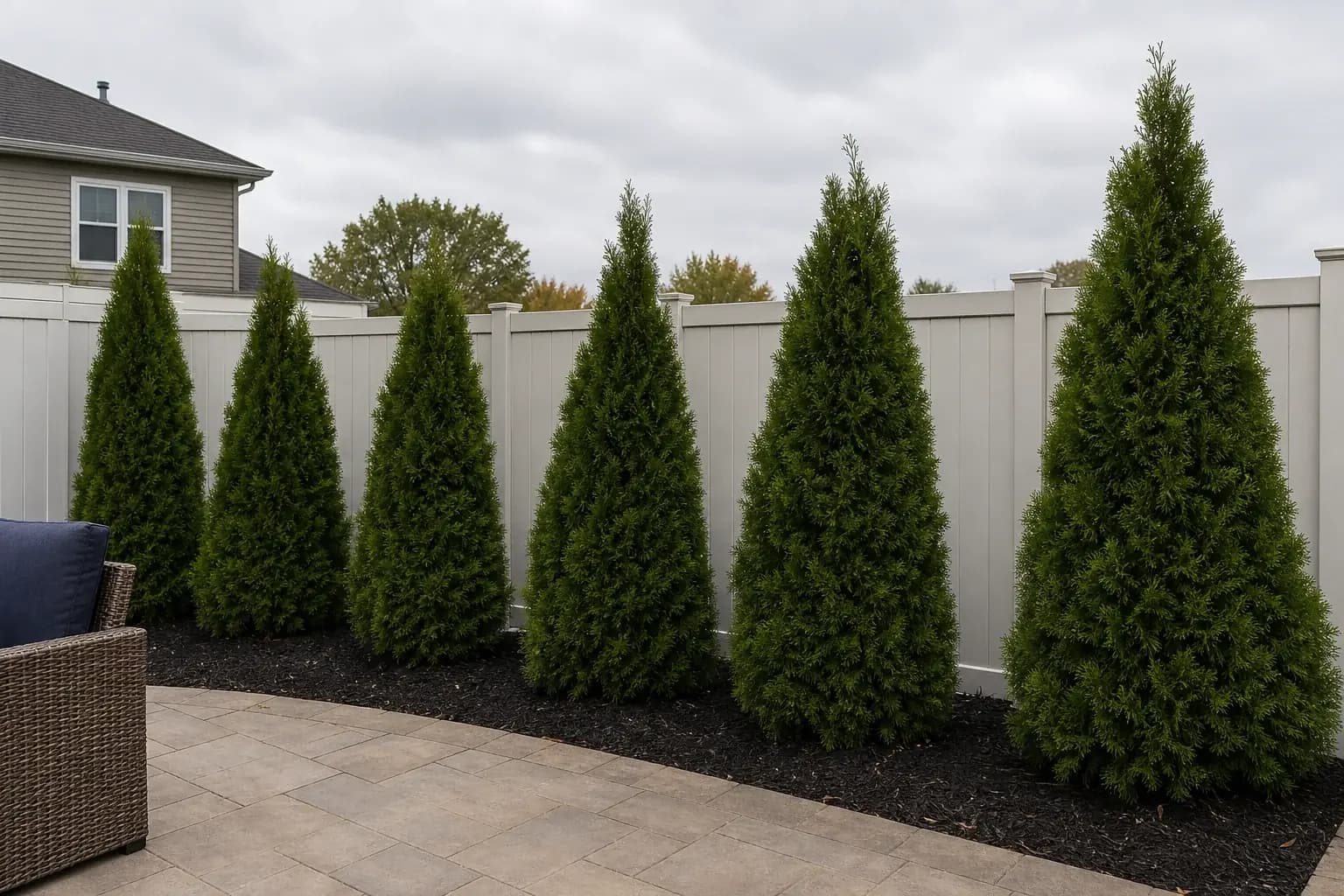
Mature row
A clean finished screen comes from choosing the tree for the mature row instead of the first-day look alone.
COMPARISON TABLE
Green Giant vs Emerald Green vs Leyland Cypress at a glance
Use this as a decision table, not a quote sheet. The current site has structured Green Giant data, but Emerald Green and Leyland Cypress numeric values still need the tree catalog before publication.
- Growth rate
Green Giant Arborvitae is marked fast-growing in the plant catalog. Emerald Green is positioned on the site as a tighter, medium-growth screen. Leyland Cypress growth rate should be confirmed from the tree catalog before using a number.
Fast growth helps only when mature size, spacing, water, and deer pressure still fit the property.
- Mature size
Green Giant is listed at 50-60 ft mature size in the plant catalog. Emerald Green and Leyland Cypress mature size are not in the current structured catalog and should be confirmed before quoting.
A privacy screen that fits in year one can become the wrong tree if mature height and width were never checked.
- Spacing
We typically install 8–10 ft trees at ~5 ft on-center for immediate screening that still grows in. Emerald Green and Leyland Cypress spacing should be confirmed against the tree catalog and the desired screen timeline.
The ~5 ft on-center recommendation creates faster visual fill while still leaving room for the row to grow in.
- Deer resistance
Green Giant is not deer resistant in the catalog, and the existing deer guide treats arborvitae as highly vulnerable to browsing. Emerald Green is also arborvitae, so deer pressure needs to be discussed before committing to a row.
On high-pressure properties, the installer should discuss mitigation or alternative screening choices before ordering arborvitae.
- Kentucky clay-soil fit
Green Giant is described as a commonly used fast evergreen screen in Lexington. Any of the three still needs drainage, planting depth, and watering reviewed because Lexington clay can hold water and slow establishment.
Poor drainage or a buried root flare can undermine the screen even when the species choice is reasonable.
CHOICE
Which privacy tree should you choose?
Choose the tree by the finished row and site conditions first. Speed matters, but it is only one part of a screen that has to live in Kentucky soil.
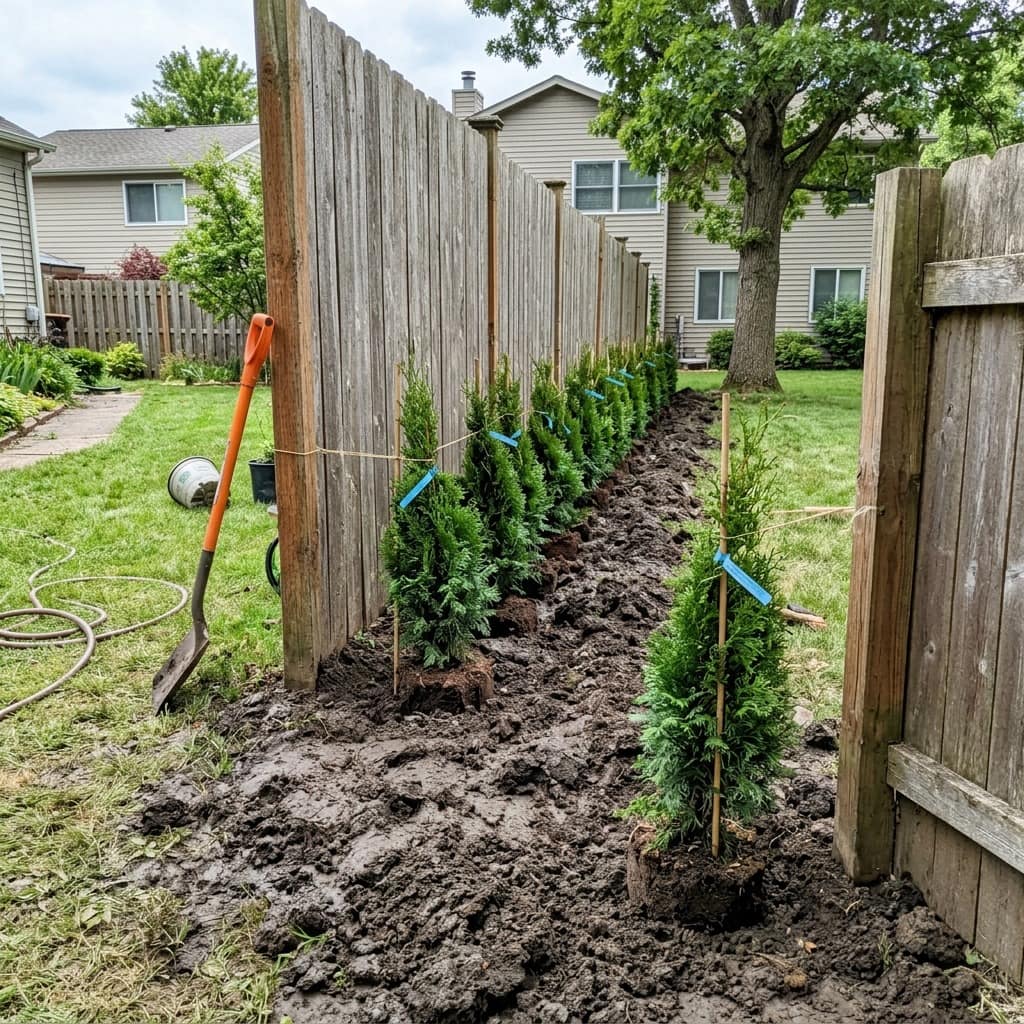
FAST SCREEN
Green Giant Arborvitae
Best starting point when the property has room for a taller, faster evergreen screen and deer pressure is manageable.
- •Catalog mature size: 50-60 ft
- •Common install path: 8–10 ft trees at ~5 ft on-center
- •Catalog flags: evergreen, fast-growing, not deer resistant
TIGHTER FORMAL ROW
Emerald Green Arborvitae
Best starting point when the screen needs a narrower, tidier look and the site can support arborvitae care and deer-risk management.
- •Use when mature width is the limiting factor
- •Good fit for formal rows when spacing is confirmed
- •Catalog specs should confirm exact height, spacing, and growth rate before quoting
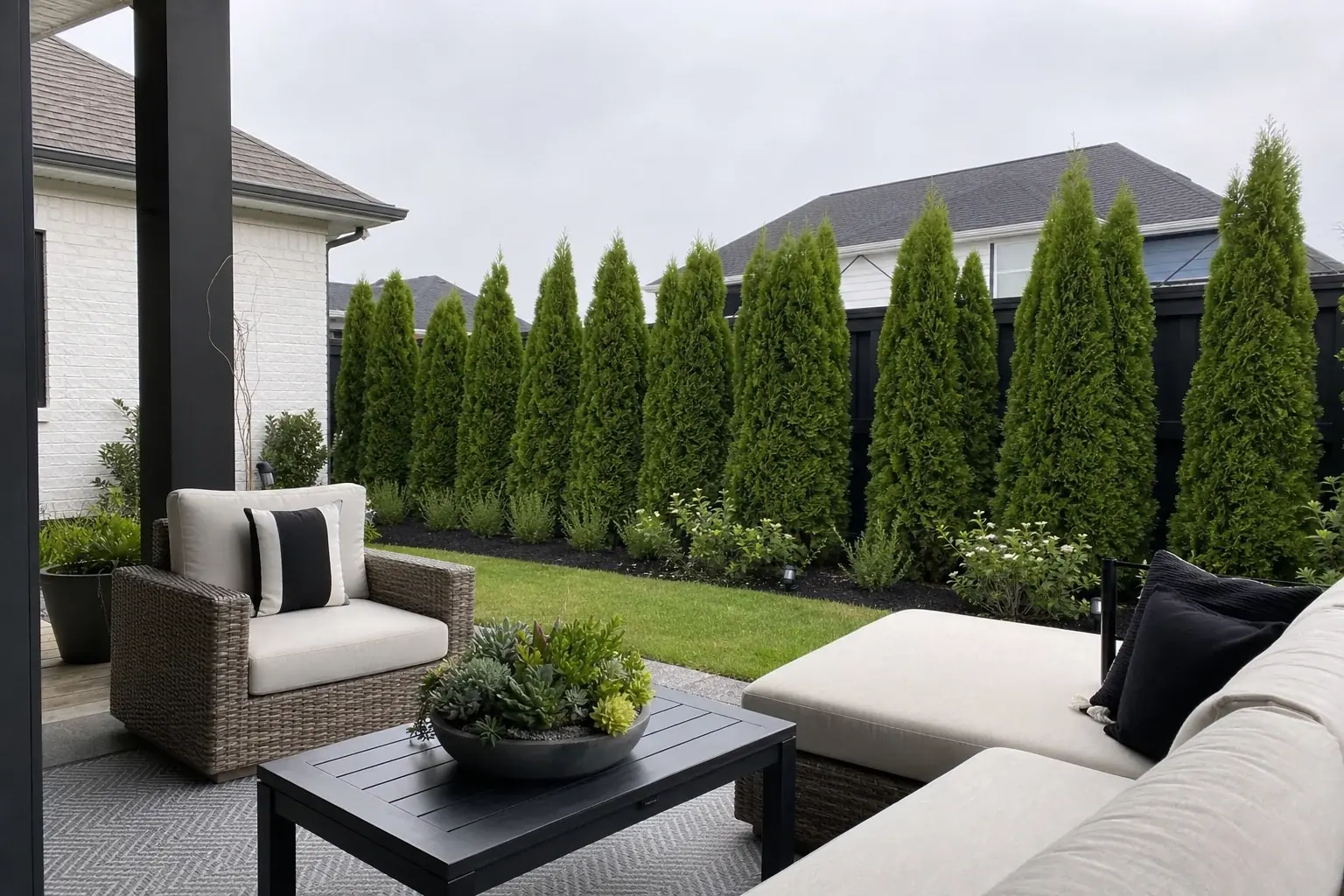
SITE-SPECIFIC REVIEW
Leyland Cypress
Best treated as a comparison option, not the default, until exposure, drainage, mature size, spacing, and catalog availability are confirmed for the Kentucky site.
- •Confirm local availability before planning the row
- •Confirm Kentucky clay and drainage fit before ordering
- •Do not publish spacing or growth numbers without the tree catalog
SPACING
How far apart to plant arborvitae and Green Giants
We typically install 8–10 ft trees at ~5 ft on-center: immediate screening that still grows in. Most popular: Green Giant and Emerald Green arborvitae.
The spacing decision should still be made on site. A tighter Green Giant row can fill visually sooner, but it also creates more root and canopy competition as the trees mature. A wider row takes more patience but gives the trees more room to become a durable screen.
If the question is how far apart to plant arborvitae in general, do not treat every arborvitae cultivar the same. Green Giant, Emerald Green, and other arborvitae types have different mature sizes and row behavior. Confirm the exact cultivar before marking the line.
- •Use the ~5 ft on-center recommendation for the common 8–10 ft install path when the site supports it.
- •Confirm Emerald Green spacing from the catalog before publishing a number.
- •Confirm Leyland Cypress spacing and Kentucky fit before treating it as the selected screen.
- •Plan for mature size and desired coverage timeline instead of the first-day gap alone.
COST
What Green Giant arborvitae cost depends on
Green Giant arborvitae cost includes more than the tree price. Height, stock type, row length, access, delivery, staking, mulch rings, soil conditions, and first-year aftercare all shape the estimate. The tree planting cost guide explains why public one-size pricing is not useful at /guides/tree-planting-cost-lexington-ky.
A single privacy row can be more efficient than several unrelated one-tree installs, but it is still a row project. The crew has to confirm layout, spacing, access, watering expectations, and whether the screen qualifies for the installed-tree warranty.
The clean path is to compare species here, use the tree-planting-cost guide for cost drivers, then request a property-specific estimate once the row length and tree size are known.
INSTALLATION
Planting depth and watering still decide whether the screen establishes
Privacy trees fail when the install ignores establishment basics. Holes should be wide enough for root growth, but not too deep. The root flare needs to sit at or slightly above grade, especially in Kentucky clay where buried roots and trapped water can create long-term stress.
Privacy tree installs can qualify for a 1-year plant warranty. Warranty applies with proper watering - twice daily, morning and evening. Watering outside peak sun prevents scorch.
Mulch rings help hold moisture and protect the root zone, but mulch should not be piled against the trunk. A privacy screen is a living row, not an instant fence, so first-year care matters as much as species choice.
Current Proof for Arborvitae and Privacy-Tree Installation
These project examples support the spacing, installation, and finished-row conversation while the species-specific tree catalog is confirmed.
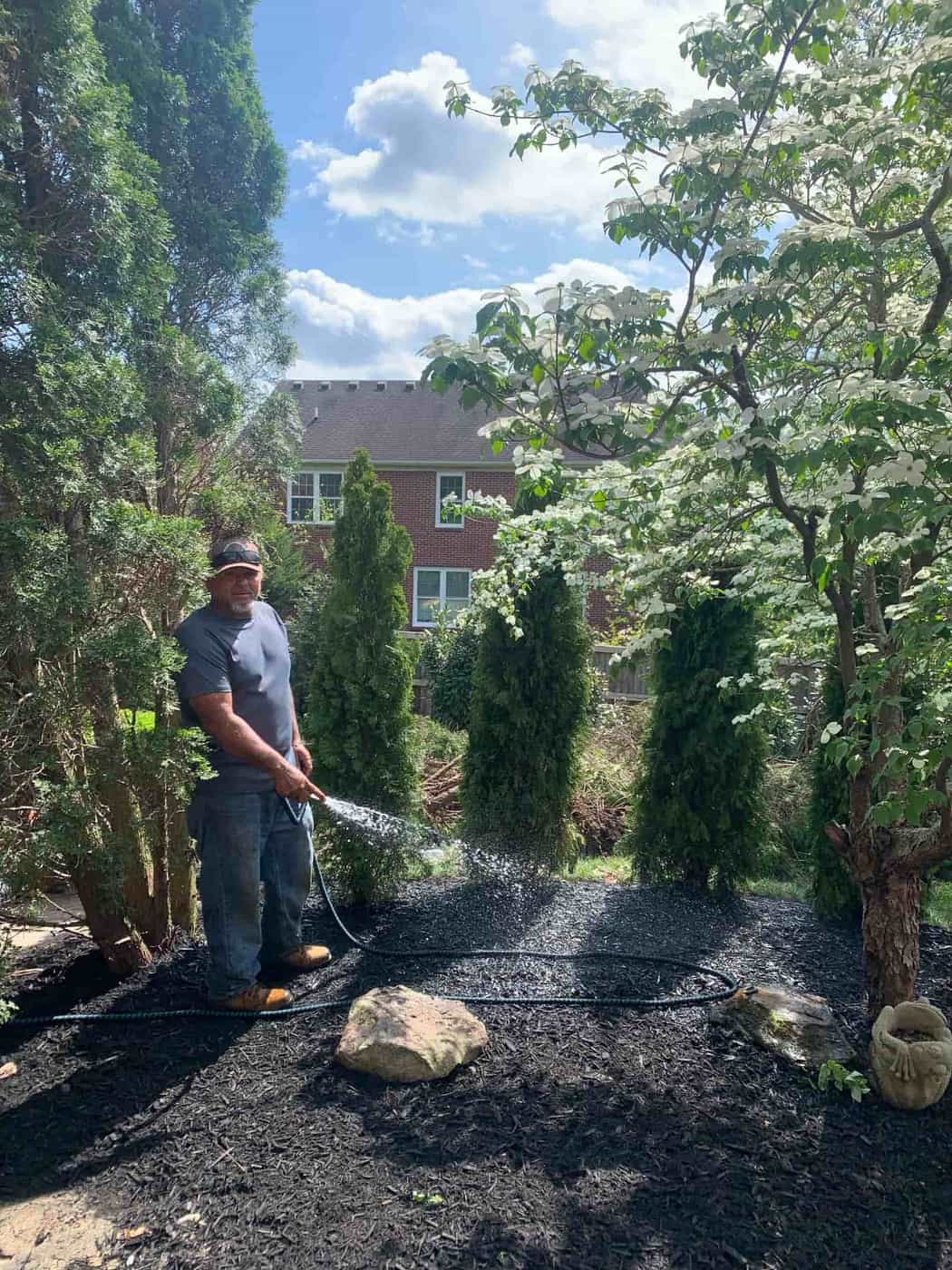
Privacy Tree Row Install
Direct arborvitae row proof for privacy-tree spacing, installation, and finished presentation.
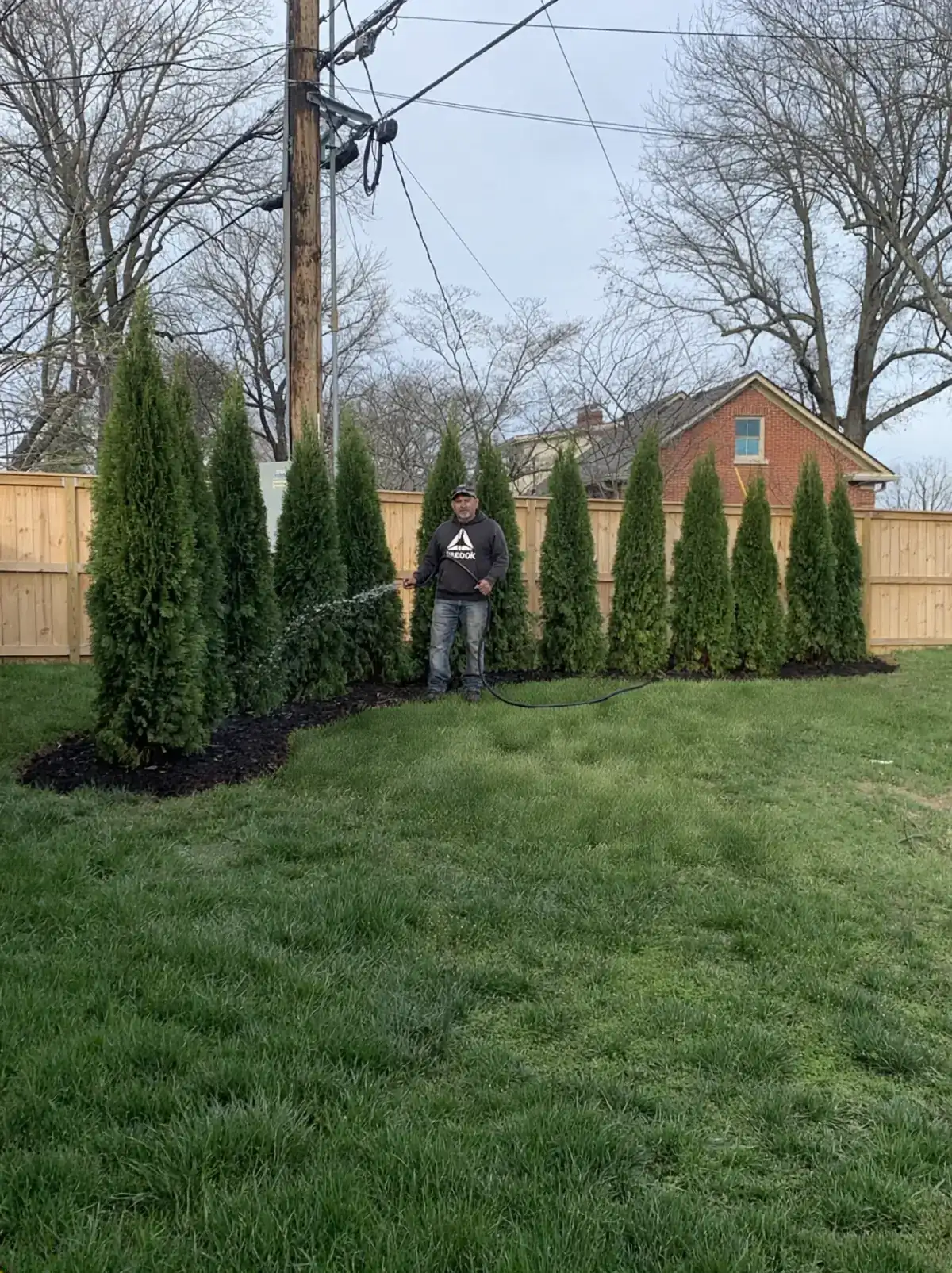
Lansdowne Privacy Screen
Additional privacy-screen proof for evergreen row installation and supplier context.
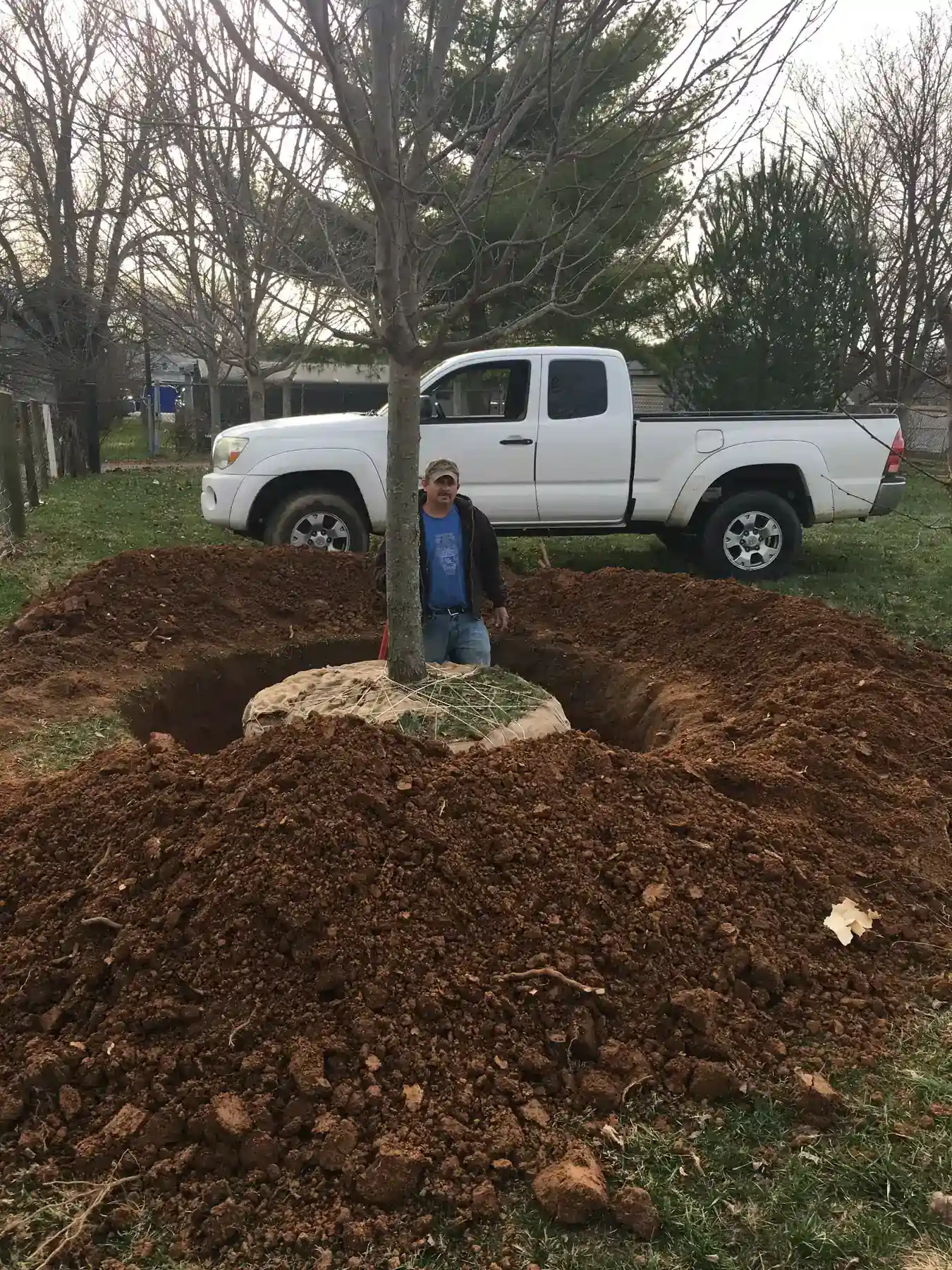
Large Tree Install & Mulch Ring
Useful context for larger evergreen planting, root-ball handling, excavation, and a finished mulch ring.
Move From Species Comparison Into the Right Next Step
Use these pages once the comparison has narrowed the screen type, spacing question, and cost conversation.
Green Giant, Emerald Green, and Leyland Cypress FAQs
Short answers for homeowners comparing privacy-tree choices, spacing, cost drivers, and establishment care.
Privacy tree comparison
These answers stay conservative where the current catalog does not support exact species numbers.
Green Giant vs Emerald Green Arborvitae: which is better?
Green Giant is the better starting point when the goal is faster evergreen coverage and the site has room. Emerald Green is the better starting point when the row needs a narrower, more formal look. Deer pressure matters for both because arborvitae is vulnerable to browsing.
Leyland Cypress vs Green Giant: which should I choose in Kentucky?
Start with Green Giant for most Lexington privacy-row comparisons because it is already in the site's plant catalog and service copy. Treat Leyland Cypress as a site-specific option until catalog availability, mature size, spacing, winter exposure, and drainage fit are confirmed.
How far apart should I plant Green Giants?
We typically install 8–10 ft trees at ~5 ft on-center: immediate screening that still grows in. Most popular: Green Giant and Emerald Green arborvitae.
How far apart should I plant arborvitae?
Confirm the exact arborvitae first. We typically install 8–10 ft trees at ~5 ft on-center for the common privacy-screen path, but Green Giant, Emerald Green, and other arborvitae types should still be matched to mature size and site conditions.
How much does Green Giant arborvitae cost installed?
Installed cost depends on tree height, stock type, row length, access, delivery, support work, and aftercare. Use the tree planting cost guide for the cost drivers, then request a project-specific estimate: /guides/tree-planting-cost-lexington-ky.
How should I water newly planted privacy trees?
Privacy tree installs can qualify for a 1-year plant warranty. Warranty applies with proper watering - twice daily, morning and evening. Watering outside peak sun prevents scorch.
How deep should privacy trees be planted?
Do not bury the root flare. The root flare should sit at or slightly above grade, and the hole should be wide enough for root growth without planting the tree too deep in Kentucky clay.
Still have questions? We're happy to walk through your project.
Ready to choose the privacy tree row that fits your property?
Request an estimate for species selection, spacing layout, installation, and aftercare guidance for your Lexington-area privacy screen.